
Ectocarpus
-
Looking for help managing ectocarpus. I followed protocol for cleaning sori (scraped off any fouling, sanitized in an iodine bath, desiccated, etc) and I’m still seeing ectocarpus in 6 of my seed spool tanks. I have been hyper vigilant about cross contamination, so I’m fairly certain it did not spread, and each tank was seeded from different mother blades of kelp (each sanitized in the same way).
is there a way to stop the ectocarpus from spawning with the kelp? Is there a way to eliminate it once it’s seen on the spools? I have been using germanium dioxide in all water changes as well as in the spore-release water and inoculation water. I have also desiccated the spools, some up to one full hour out of water daily, some I have done a freshwater bath, some I have sprayed with a hose, some I have sprayed with a saltwater hose, some i have done 48 hours of darkness, and still others i have starved of nutrients for 48 hours with a double dose of GEO2… and yet the ectocarpus continues to grow on these spools.
I am willing to try anything at this point since these spools cannot be sold (my remaining spools seem to be free from contamination). Mostly I’m looking for advice for next season so this doesn’t happen again.
@ashley_hamilton It looks like Elizabeth has tried most of the techniques that I am aware of. Is there anything else in your toolbox that you could share with her?
@elizabeth_savage19 could you tell us more about your water treatment system? It would be helpful to know more, in case there is something our team can recommend for next year.
@kendall_barbery we use water from an underground saltwater well (120 feet deep) which is put through a 0.5um filter and then UV sterilized. All tanks and airlines are washed with dawn dish soap and 91% rubbing alcohol prior to water changes, I use aluminum foil for a lid so it is disposed of/new with every water change.
@kendall_barbery we use water from an underground saltwater well (120 feet deep) which is put through a 0.5um filter and then UV sterilized. All tanks and airlines are washed with dawn dish soap and 91% rubbing alcohol prior to water changes, I use aluminum foil for a lid so it is disposed of/new with every water change.
@elizabeth_savage19
The most common source of contamination tends to be the sori tissue itself -- it sounds like you took all the right steps, but I'm curious what concentration of iodine did you use and how long did you dip each piece? Also, did you dip each piece separately or in groups? (sometimes when dipping in groups, parts of the blades can get stuck to one another & the entire surface area may not get thoroughly cleaned).
It also sounds like you took many remediation precautions as well. As reference, here is the lesson for managing Ectocarpus contamination. The main guidance being short periods of desiccation & lowering the light levels. However, if the kelp growth is keeping up or outcompeting the Ectocarpus, then it's best to leave it in place & picking off the long, feathery pieces right before outplant (Ectocarpus spp. has the ability to reproduce asexually via fragmentation, so pulling it off of a spool can risk spreading it to others nearby)
Also, just want to flag that germanium dioxide is used to managed diatoms. It actually slows the growth of the kelp, so if you aren't seeing diatoms best not to use it so the kelp can grow (hopefully) quicker than any other competitors such as Ectocarpus.
I hope this helps! Please let me know if you have more questions/observations and sending photos from under the microscope or of the spool is always helpful too
@ashley_hamilton we are using a 10% iodine solution, 5mL iodine mixed into 1 liter of sterile seawater. The sori is dipped for 30+ seconds, and I do 2-3 pieces at a time. However, I stir them constantly to make sure all surfaces are touched. I will do them individually in the future. no measures so far have helped to eliminate or even slow down the growth of the ectocarpus, so hopefully someone has another way to control this for future sporophyte seasons. Thanks for your help.
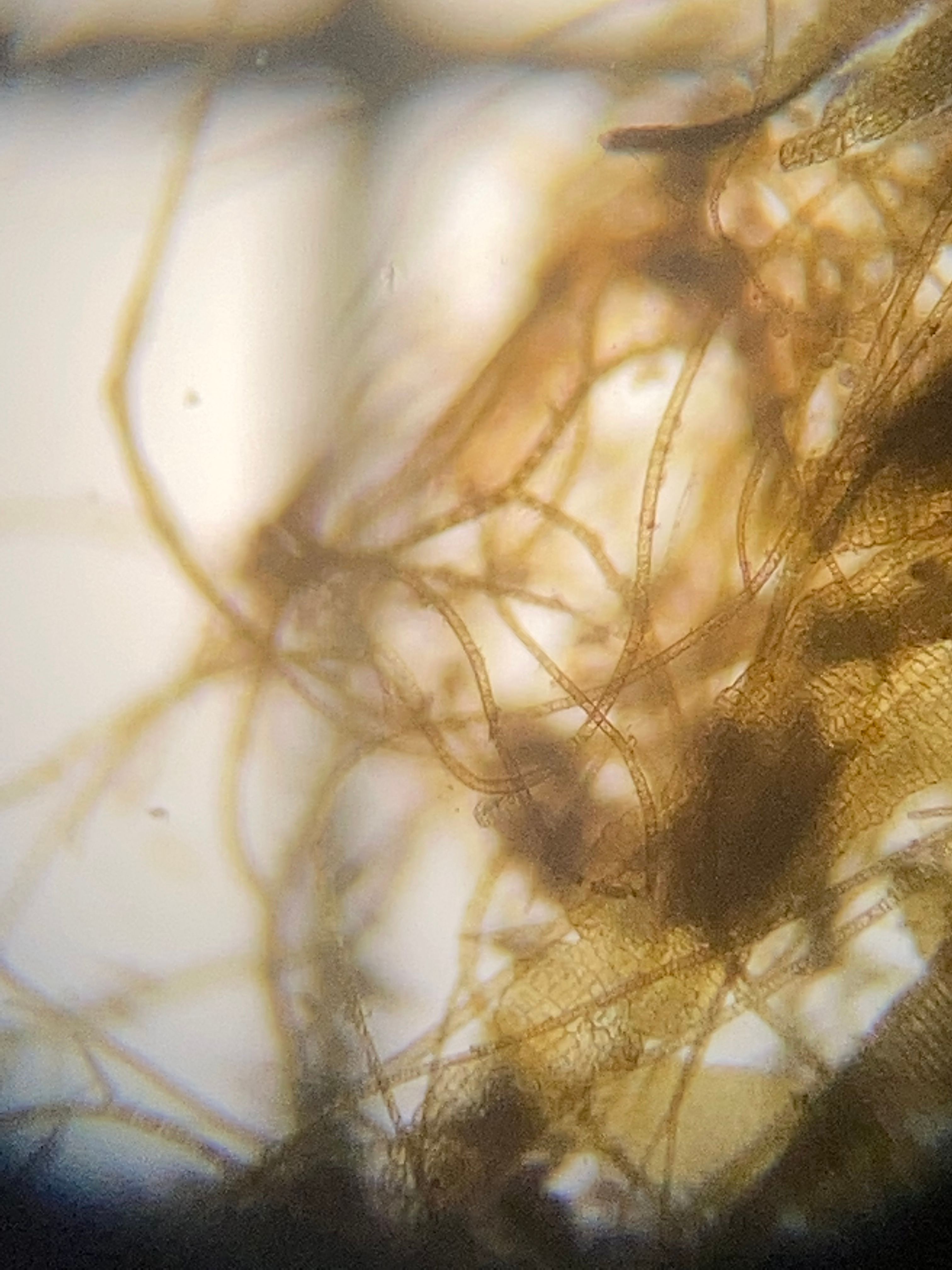
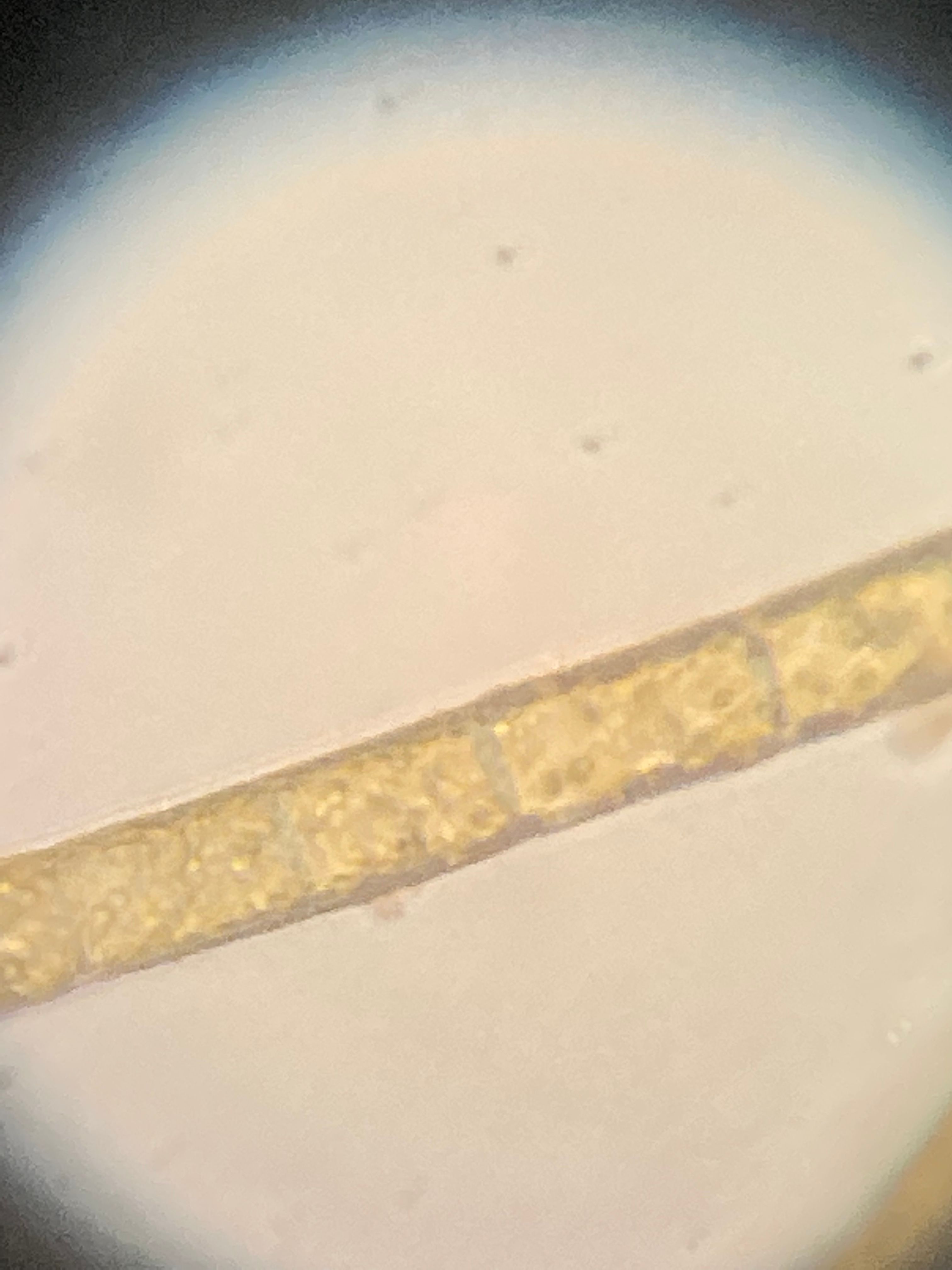
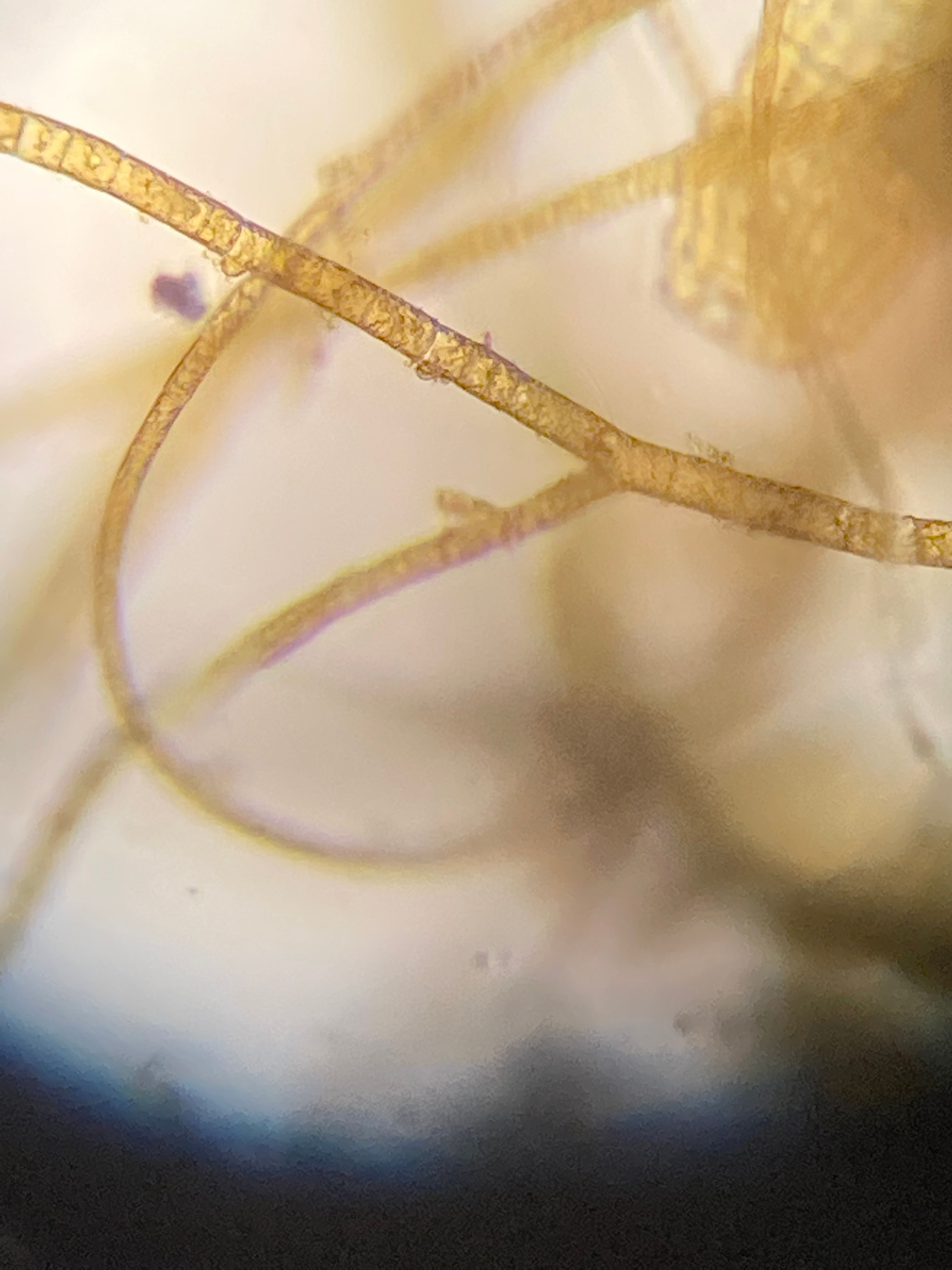
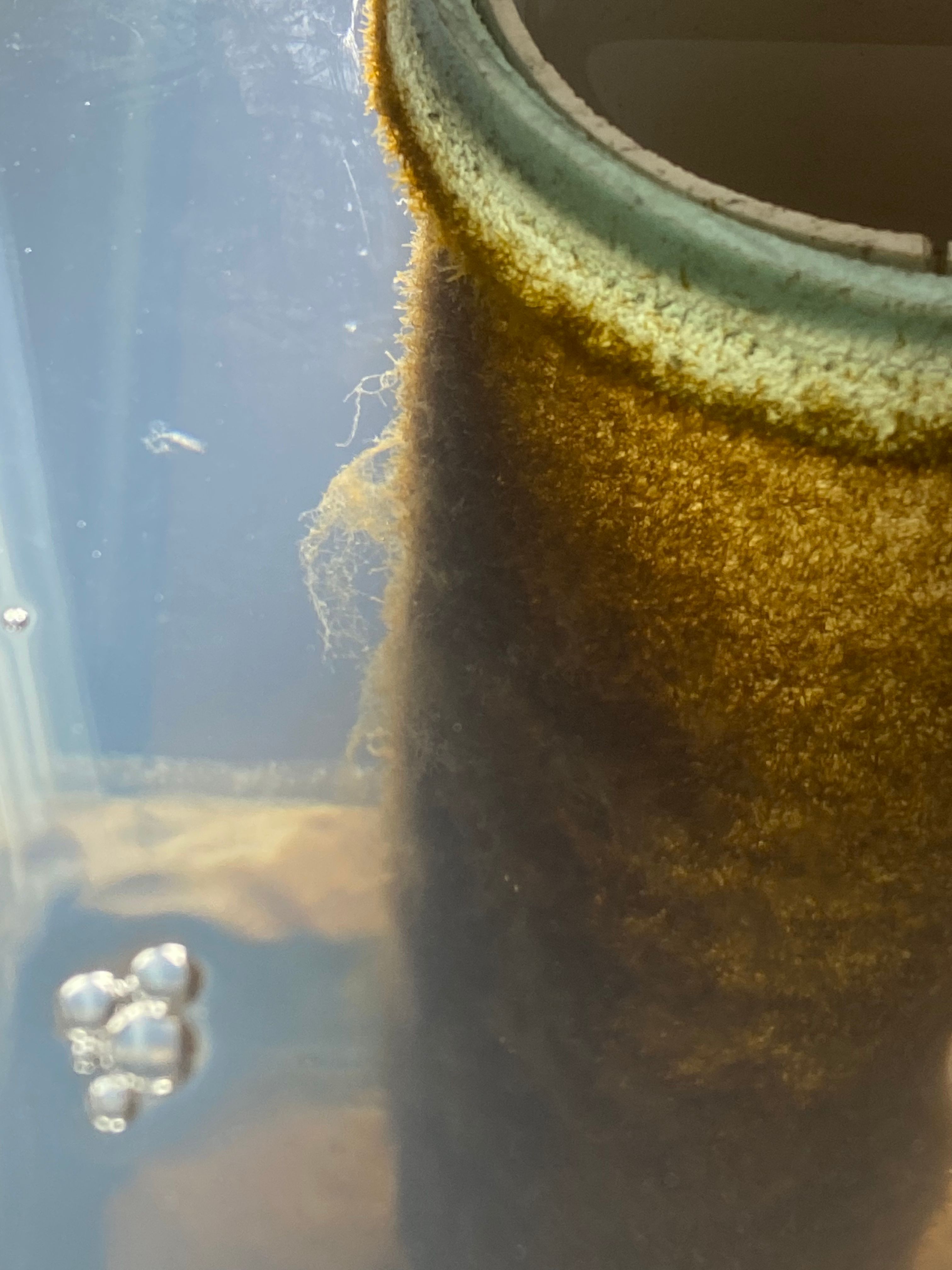
@ashley_hamilton we are using a 10% iodine solution, 5mL iodine mixed into 1 liter of sterile seawater. The sori is dipped for 30+ seconds, and I do 2-3 pieces at a time. However, I stir them constantly to make sure all surfaces are touched. I will do them individually in the future. no measures so far have helped to eliminate or even slow down the growth of the ectocarpus, so hopefully someone has another way to control this for future sporophyte seasons. Thanks for your help.



