
Dropper weights
-
Hello Greenwave Folks,
I've been going through the courses on farm setup and gear selection on the greenwave site which has been very helpful. One topic that has not come up much though is dropper weights. I've seen in other kelp manuals that they are quite common, and heard from some folks who deploy them, but it seems like they are not typically deployed in the setups demonstrated in the greenwave courses. Are they necessary for growing sugar kelp, or are flotation buoys enough to control the depth without weight? I would be curious what peoples thoughts or experiences here are. Thanks!
-Stuart
START A DISCUSSION
Hi @stuart_ryan , you are correct. Some manuals and farm designs employ dropper weights to help maintain the depth of the growline. We've seen that this may be a bit more important with some of the floating kelps (like Nereocystis) but even then the effort to sink those lines can be futile. What we have explored, and what you'll see in some of the farm designs represented in the Hub, are longlines that are meant to be under tension and, when kept under proper tension--at least the theoretically, the lines will maintain their proper depth/position in the water column. The other thing that we have observed is that the more parts and pieces that are included in a longline, the more points of contact there are and therefore the more opportunities for chafe and wear. So, when and where possible, the simpler the system the better.
As the crops grow and the weight on the line increases, the lines may stretch and tension will need to be adjusted and/or buoys added to the longline to prevent excess sag (when cultivating Saccharina and Alaria, for example).
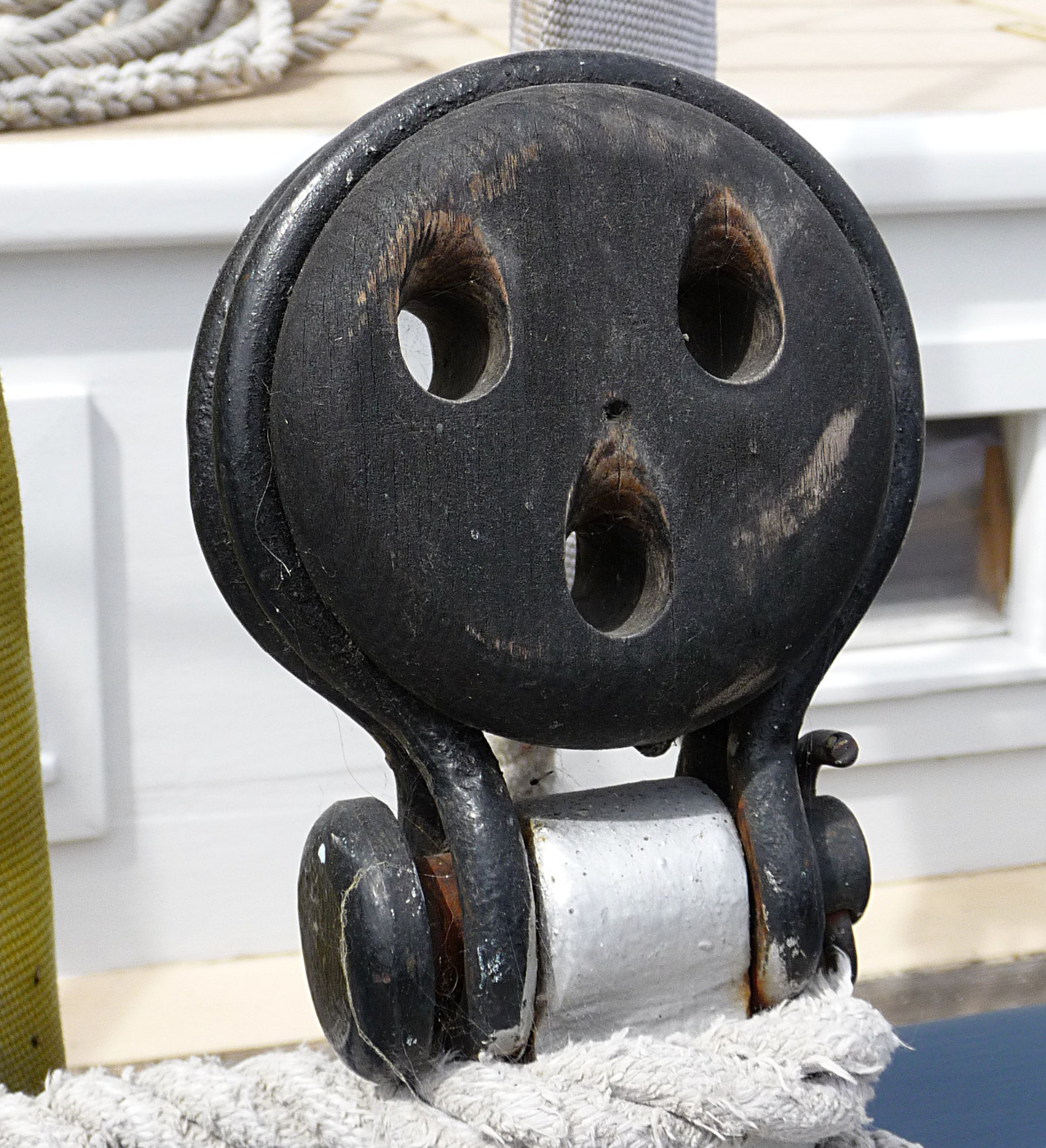
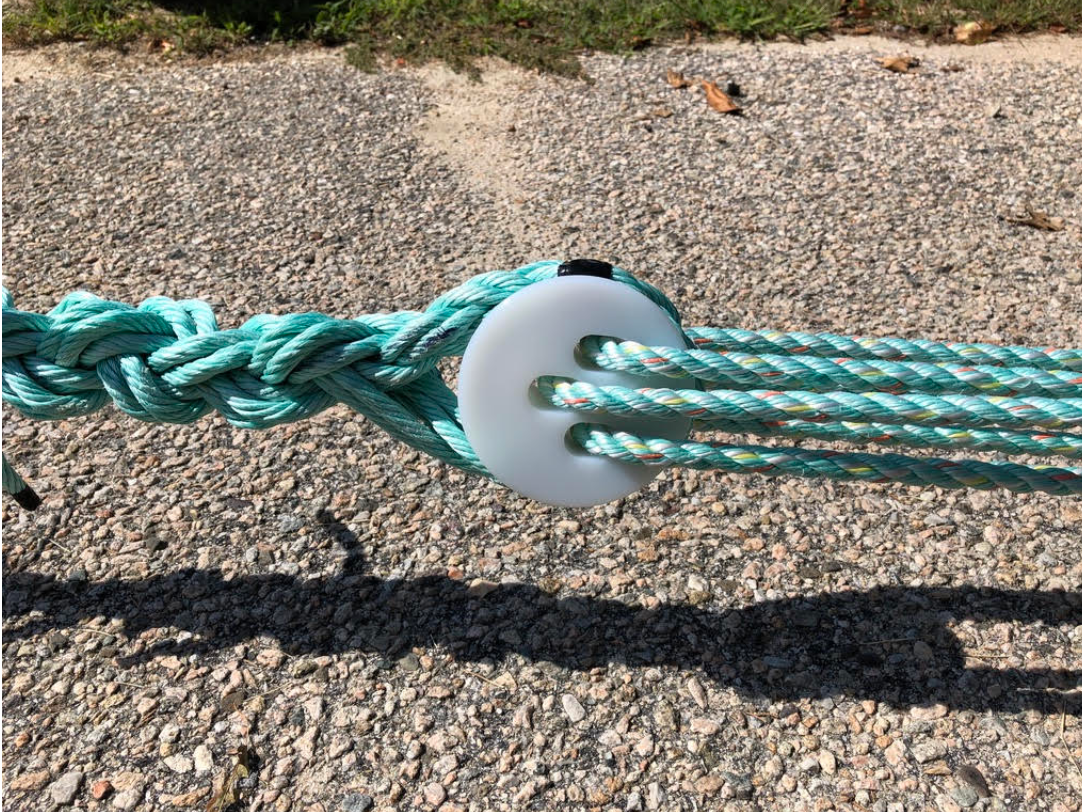
@clifford_goudey has shared his dead-eye tensioners in other posts; it's a three holed block, traditionally used in the rigging on sailing vessels. When a couple of tensioners are added to the mooring line, or other part of the farm system, it basically becomes a simple pulley to allow a farmer to take up slack on a mooring line without resetting an anchor.
Here is a deadeye from an old sailing vessel (thanks Wikipedia):
Here is Cliff's version:
There are lots of farm designs that aren't represented in the Hub, and we'd love to include new examples in the future. If you're reading this post: what have you tried? What recommendations do you have for other farmers?
Kendall,
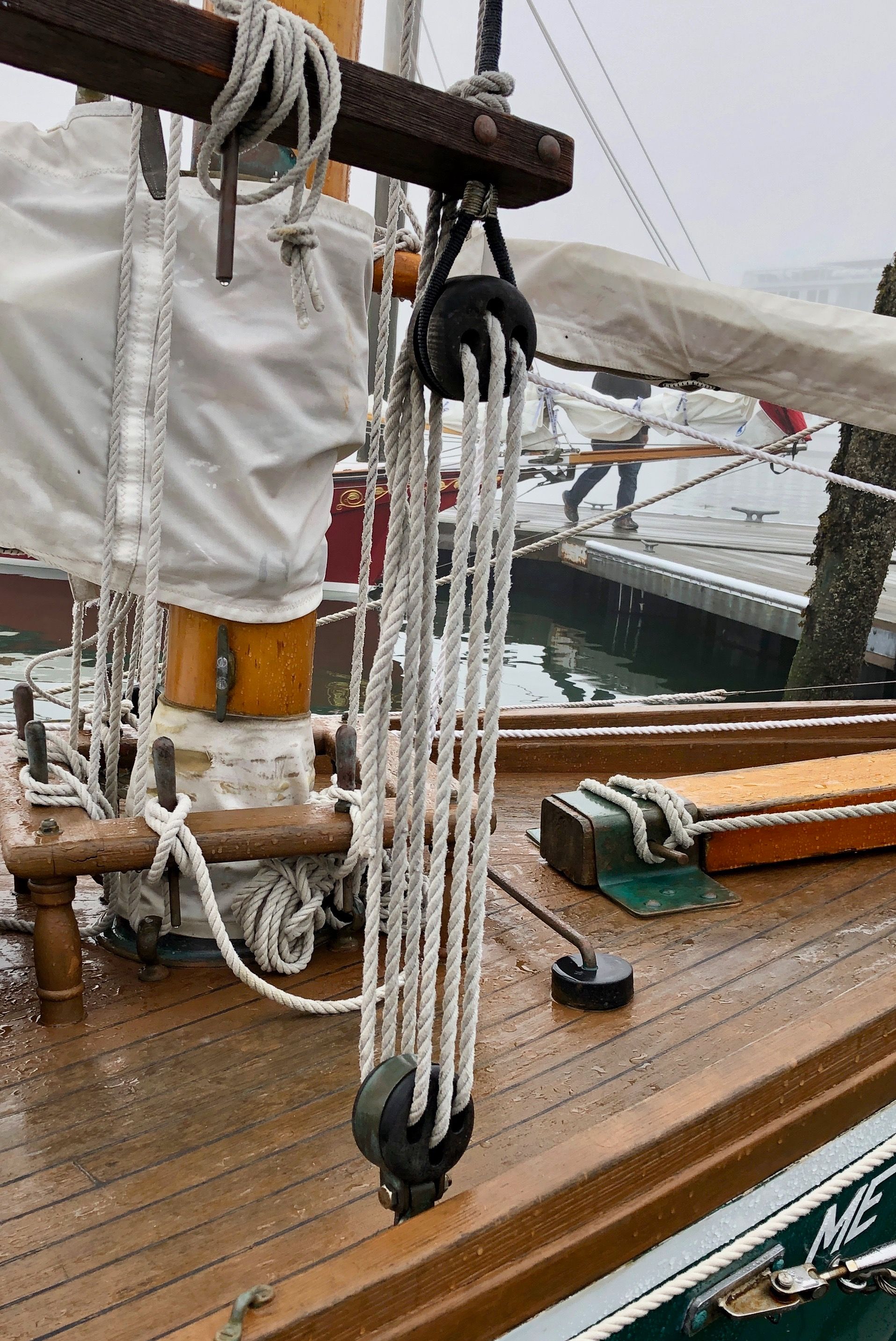
Here is a more reveling photo of the tradition use of deadeyes: this photo taken in Rockland, Maine last summer of a Friendship Sloop, and being used to maintain the tightness of shrouds in place of today's more common turnbuckle.
In answer to Stuarts question, I agree with Kendall, proper pretension can help control the depth of growlines. If they are slack and if floating poly line is used, then they will come to the surface early in the season when crop weight is small or nonexistent. Drop weight can be a cure to this problem but so can sinking or neutrally buoyant line. Also, some farms use small-diameter PVC pipe as a jacket for buoy lines. This both adds weight and assured the buoy line does not spin up because of the growline torque than can happen with 3-strand ropes.
The pipe can also ease the concerns of NOAA Protected Species folks, as a jacketed buoy line is clearly not an entanglement risk. However, there can be chafe where the rope exits the end of that pipe, so it's something to watch.
Cliff
@kendall_barbery and @clifford_goudey thanks so much for the info. I'll plan on using neutrally bouyant line and keeping tension to avoid dropper weights. One less set of heavy items to load on the boat is always a plus. @clifford_goudey I'm curious about your comment on buoy lines "spinning up" with tension. Do soft shackly connections help alleviate that problem or perhaps bouy swivels that are frequent used on lobster gear? Thanks!
Stuart, you wrote, "I'm curious about your comment on buoy lines "spinning up" with tension."
I'm told it can happen but have never seen it. I know that when making growlines and pulling them out of the center of a bundle there is a lot of built-in twist. If that isn't relaxed somehow, then that twist will create torque as the line tightens. That twist can make it difficult to hank them up, so you'll know if its going to be a problem.
Cliff
@kendall_barbery Where can you get the deadeyes?
@theodore_willis, you asked, Where can you get the deadeyes?
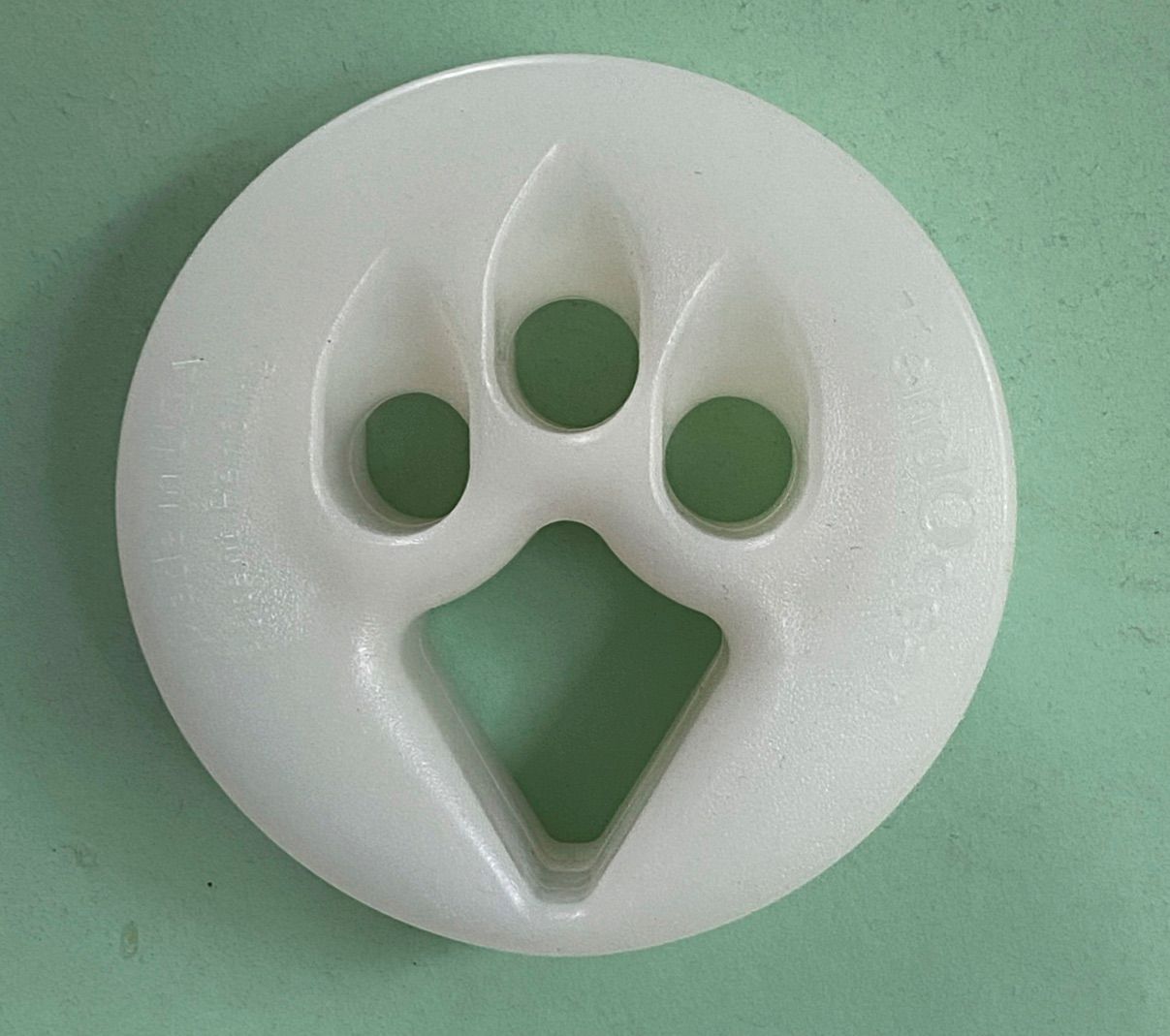
The one in the photo above was from a batch I had CNC machined. They seemed to be solving a key problem so I had a mold fabricates and have had a production run made in high density polyethylene that are quite affordable.
Contact me at cliff@cagopudey.com and I'll provide the details on buying some.
Cliff
Kendall,

Here is a more reveling photo of the tradition use of deadeyes: this photo taken in Rockland, Maine last summer of a Friendship Sloop, and being used to maintain the tightness of shrouds in place of today's more common turnbuckle.
In answer to Stuarts question, I agree with Kendall, proper pretension can help control the depth of growlines. If they are slack and if floating poly line is used, then they will come to the surface early in the season when crop weight is small or nonexistent. Drop weight can be a cure to this problem but so can sinking or neutrally buoyant line. Also, some farms use small-diameter PVC pipe as a jacket for buoy lines. This both adds weight and assured the buoy line does not spin up because of the growline torque than can happen with 3-strand ropes.
The pipe can also ease the concerns of NOAA Protected Species folks, as a jacketed buoy line is clearly not an entanglement risk. However, there can be chafe where the rope exits the end of that pipe, so it's something to watch.
Cliff
@kendall_barbery and @clifford_goudey thanks so much for the info. I'll plan on using neutrally bouyant line and keeping tension to avoid dropper weights. One less set of heavy items to load on the boat is always a plus. @clifford_goudey I'm curious about your comment on buoy lines "spinning up" with tension. Do soft shackly connections help alleviate that problem or perhaps bouy swivels that are frequent used on lobster gear? Thanks!
Stuart, you wrote, "I'm curious about your comment on buoy lines "spinning up" with tension."
I'm told it can happen but have never seen it. I know that when making growlines and pulling them out of the center of a bundle there is a lot of built-in twist. If that isn't relaxed somehow, then that twist will create torque as the line tightens. That twist can make it difficult to hank them up, so you'll know if its going to be a problem.
Cliff
@kendall_barbery Where can you get the deadeyes?
@theodore_willis, you asked, Where can you get the deadeyes?

The one in the photo above was from a batch I had CNC machined. They seemed to be solving a key problem so I had a mold fabricates and have had a production run made in high density polyethylene that are quite affordable.
Contact me at cliff@cagopudey.com and I'll provide the details on buying some.
Cliff