
Improving productivity and cost effectiveness of seaweed farming
-
Scientists at Woods Hole, Uconn and Cornell have been working hard to develop a selective breeding program for sugar kelp. The goal of their research is to improve productivity and cost effectiveness of seaweed farming. The figure below shows an easy way to follow their seeding process :
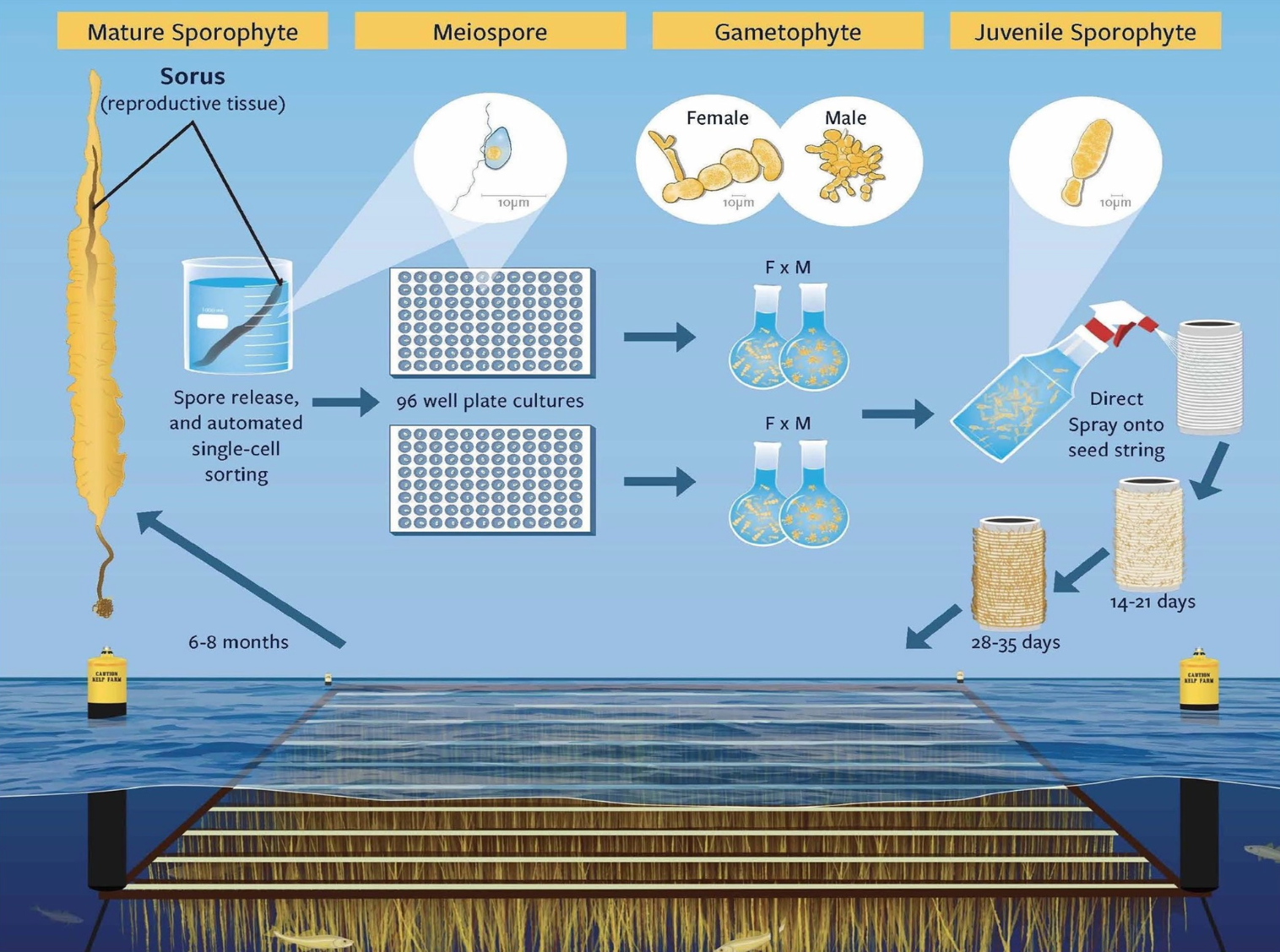
- Sorus tissue is collected and released within a beaker
- The spores are stored in culture plates (vs introduced immediately to a spool, like in traditional hatchery seeding)
- Under the right conditions (light color & intensity, temperature and nutrients) the gametophytes will grow but not develop into the next life stage
- Eventually, you are able to ID male and female gametophytes, cross specific individuals and induce them into sporophytes
- The sporophytes are sprayed onto a spool and outplanted on a farm
With the right maintenance and care, gametophytes can be stored and grown indefinitely, therefore used to seed with season after season.
Check out the link to the full article(https://academic.oup.com/g3jou...), and reach out to the fellow community members involved in this impressive research! @schery_umanzor @david_bailey
START A DISCUSSION

@ashley_hamilton - @david_bailey I'd be curious if you could share any updates from this project so far. What have been preliminary take-aways? Does selective breeding look like it could make it to the average farm or hatchery level within the next 2-3 years?