Troubleshooting Marker Buoy Gear
-
Every farm needs marker buoys to warn other boaters that their is gear in the water and to use caution. These buoys require upkeep throughout the season to make sure they are functioning properly and the symbols/lettering are easily visible.
Depending on the amount of activity at the farm site, these buoys can easily chaff and need to be maintained to ensure the safety of the farm and others. We have had to troubleshot a couple different riggings to prevent buoys breaking free in heavy weather events. This is more of a concern for farmers in less protected areas.
What we have found is that connecting a line directly to the buoy creates too much chaff at that connection point. By placing a shackle/swivel at the surface connection this reduces the amount of chaff on the system. The shackle is able to absorb most of the energy from the waves and swivel allows the buoy to twist and turn in choppy weather.
These buoys are surrounding the farm and should have a small amount of scope to prevent them from swinging into the farm and entangling in gear. A 2:1 scope should be more than enough to account for tides and waves in heavy weather events. Chain is used at the bottom of the system to prevent chaffing the line at the anchor and 1" poly line is used to the surface connection. The chain makes up about 1/3 of the bottom rigging and the remain 2/3 is the 1" poly line to the surface.
Marker buoys are light and don't require a lot of weight to keep them in place. We found that using a 75 lb Dor-Mor anchor type works well. We have used mushroom anchors in the past, but gear can get easily get hung up on the shank of the anchor if not properly set. This can cause unwanted chaff towards the bottom of the rigging, which can make it difficult to identify and fix.
These are some of the things we have learned rigging buoys over the years. Are there any farmers that have struggled with rigging marker buoys? Let us know what you've learned and how you troubleshoot.
The Image below is of the most recent marker buoy rescue mission that broke free in heavy winds off of Bluff Point State Park in Groton, CT. Jill on the left and marker buoy on the right.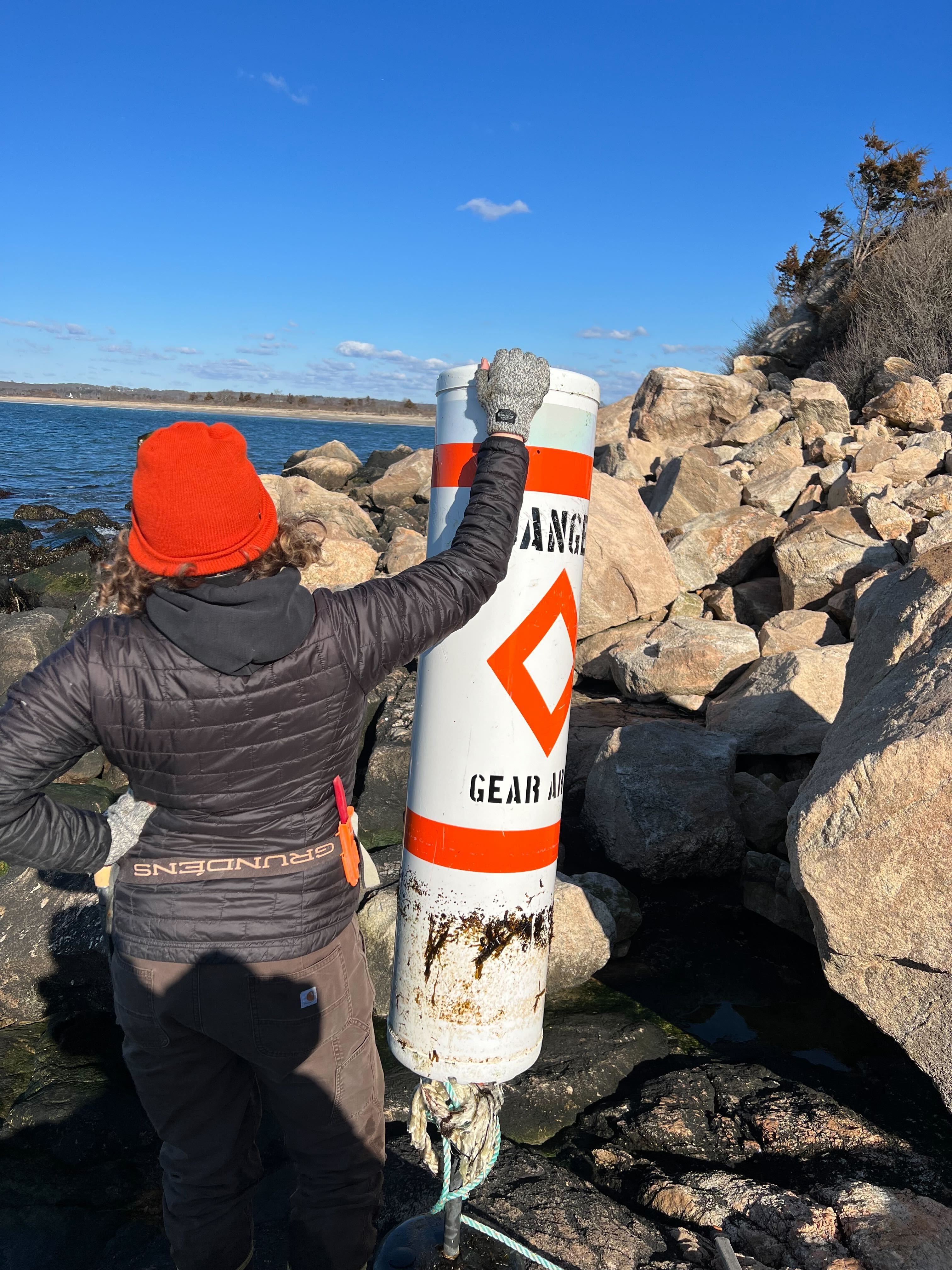
@jill_pegnataro
Jill, thank you for the tips. This is our first year and we have learned a lot as we had a string of severe weather events immediately following outplanting…
we lost our marker buoys in the “bomb cyclone’ that hit us last month. We recovered one about 1/4 mile away. We had 80 pound bucket anchors, 1/3 chain, the rest 1” rope with shackles connecting everything. Maybe when our new buoys arrive we will try dor mor anchors instead.
@mica_oherlihy What was left hanging from the recovered buoy or was the system intact and had simply moved?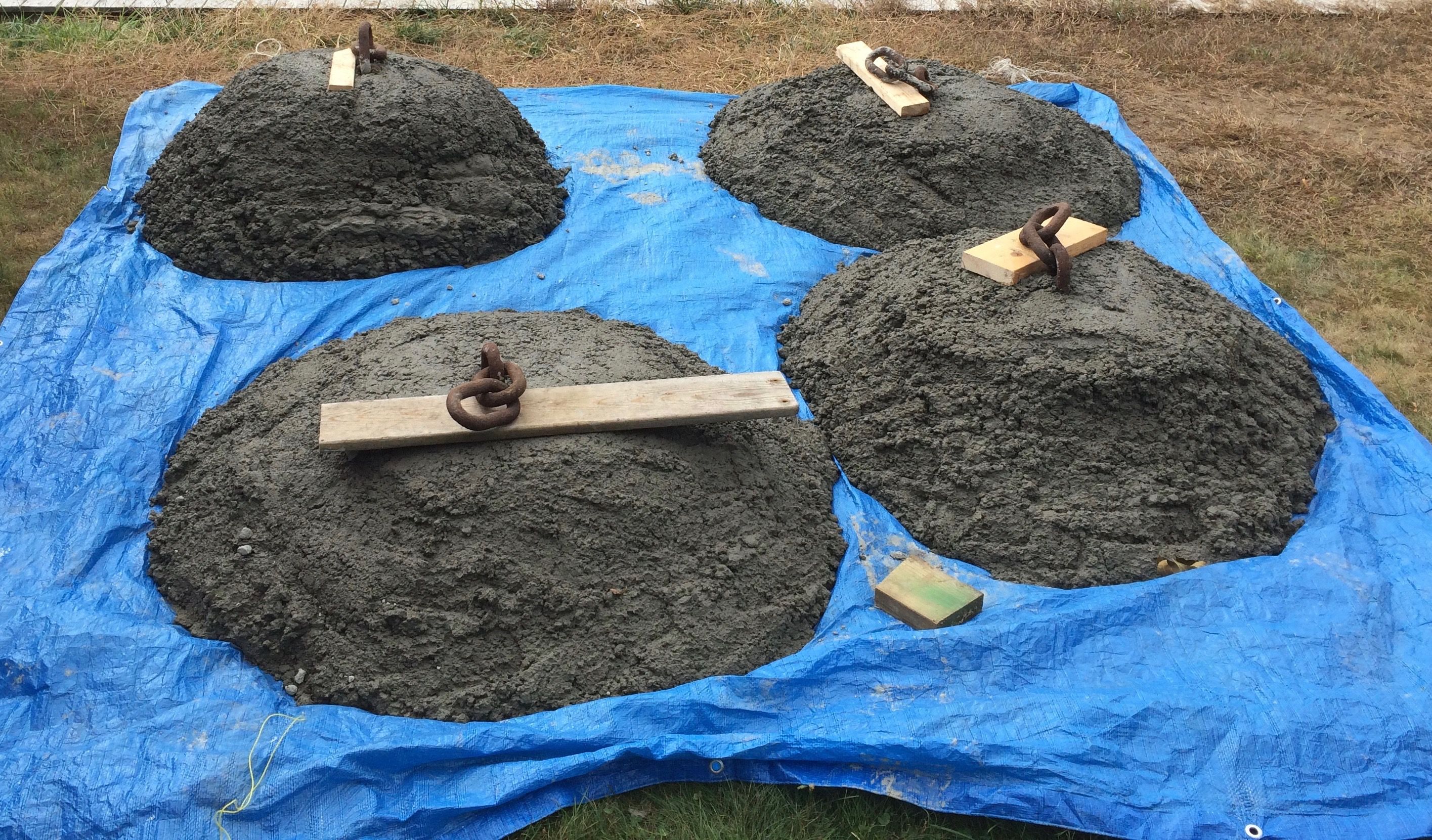
Because of the density of cast iron, Jill's 75 lb Dor-Mor anchor still weighs 65 lbs when submerged. Your 80 lb bucket weighs 46 lb when submerged, but will be laying on its side and prone to rolling around. Concrete deadweight anchors are fine in this application, but rounded heap is better. A heap 2' in diameter and 1' tall will weigh around 300 lbs dry and will weigh 172 lbs submerged.
I do this a lot for boat anchors, with these weighing around 800 lbs with some 1" chain embedded.
@mica_oherlihy What was left hanging from the recovered buoy or was the system intact and had simply moved?
Because of the density of cast iron, Jill's 75 lb Dor-Mor anchor still weighs 65 lbs when submerged. Your 80 lb bucket weighs 46 lb when submerged, but will be laying on its side and prone to rolling around. Concrete deadweight anchors are fine in this application, but rounded heap is better. A heap 2' in diameter and 1' tall will weigh around 300 lbs dry and will weigh 172 lbs submerged.
I do this a lot for boat anchors, with these weighing around 800 lbs with some 1" chain embedded.
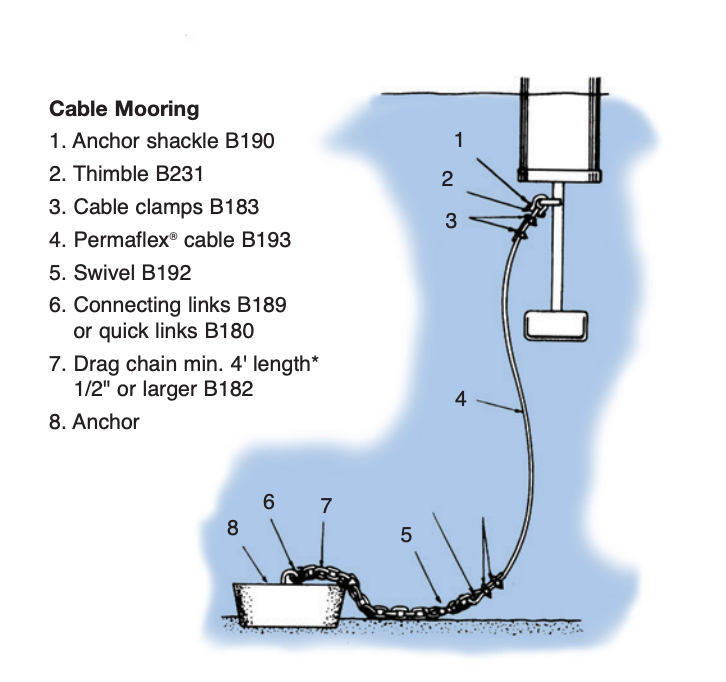
@jill_pegnataro @clifford_goudey for our Humboldt Farm, we used the rigging recommended by the buoy manufacturer (basically coated cable - PermaFlex -attached to a 300# flat concrete anchor; see attached image from Rolyan Buoys, one of a handful of RMB manufacturers in the states). Our site is pretty protected from the forces of the open ocean, but currents can reach 3.5+ knots. Our bottom is muddy, so the anchors stick pretty well. We've only had the gear in the water for about 18 months, but all looks good -- no wear observed and they haven't budged. Cliff's homemade anchor is of equivalent weight, likely really good at sticking to a muddy bottom, particularly, and a lot cheaper than a manufactured concrete anchor. We've found that swivels are key for these single point systems!