
Kelp! How do you know if your crop is healthy?
-
There are a couple of things farmers should be looking for to see if the kelp is happy
 and growing well.
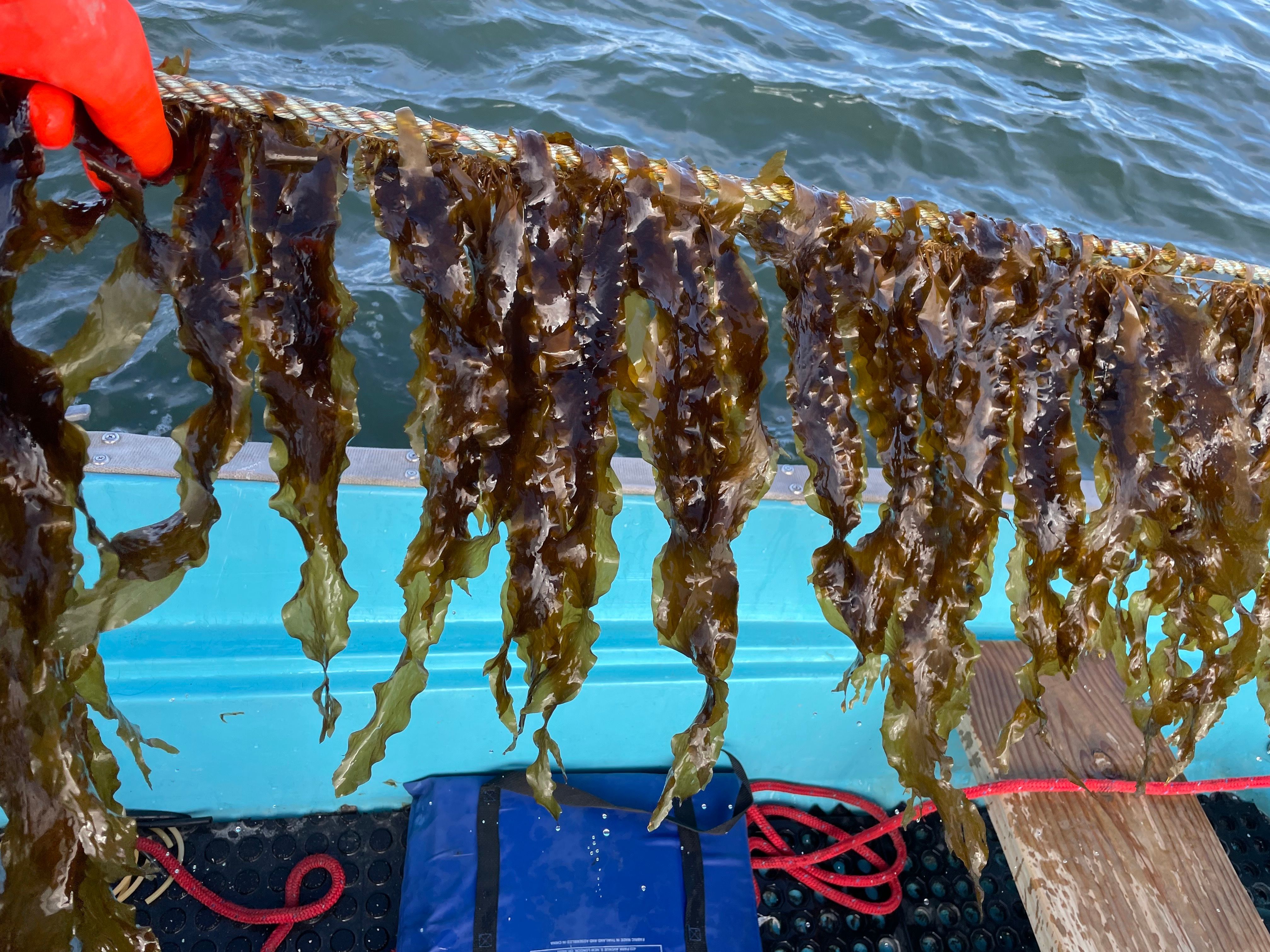
Color: The color of the kelp is very important. If the kelp is happy and growing well, it will have a dark brown or chocolate color (As seen in the image below). This means that the tissues are packed with nutrients absorbed from the water column. If the kelp is deprived of nutrients it will be translucent and have a pale yellow color. Typically, this caused from outplanting later in the season. There are more nutrients present in the water column when the temperatures are warmer.
Density: The density of the kelp on the growline is another indicator of health. Farmers should be looking for a density similar to the photo below. If the density is higher, the kelp will be competing for light and the blades will be less consistent. Some of the kelp will have better access to light and there will be big and small blades along the growline. If the line is less dense, overall the blades will be bigger (less competition for light) but yields will be lower at the end of the season. The optimal density is somewhere in the middle.
Length: The length of the kelp will tell farmers if the kelp is growing well. Growth rates will be higher in the beginning and end of the season. The kelp should continue to grow throughout the entire season, but it will slow down considerably when the days are shorter (Less sunlight) and the water temps are colder (Less nutrients). If the kelp is outplanted later and absorbs less nutrients in the fall it will have less growth in the winter months.
Another factor that could be affecting growth rates is the depth of the growline in the water column. If the kelp is too low in the water column is could be missing out on light. If the growline is too high, it could be getting too much light. Optimal depths for growlines are around 4-5 feet. Depending on the location of the site and bottom type farmers should be using a secci disk to measure water turbidity for optimal growline depth.
If you are a farmer please post pictures of your kelp and we can help access if the kelp is looking good and on track for harvest!
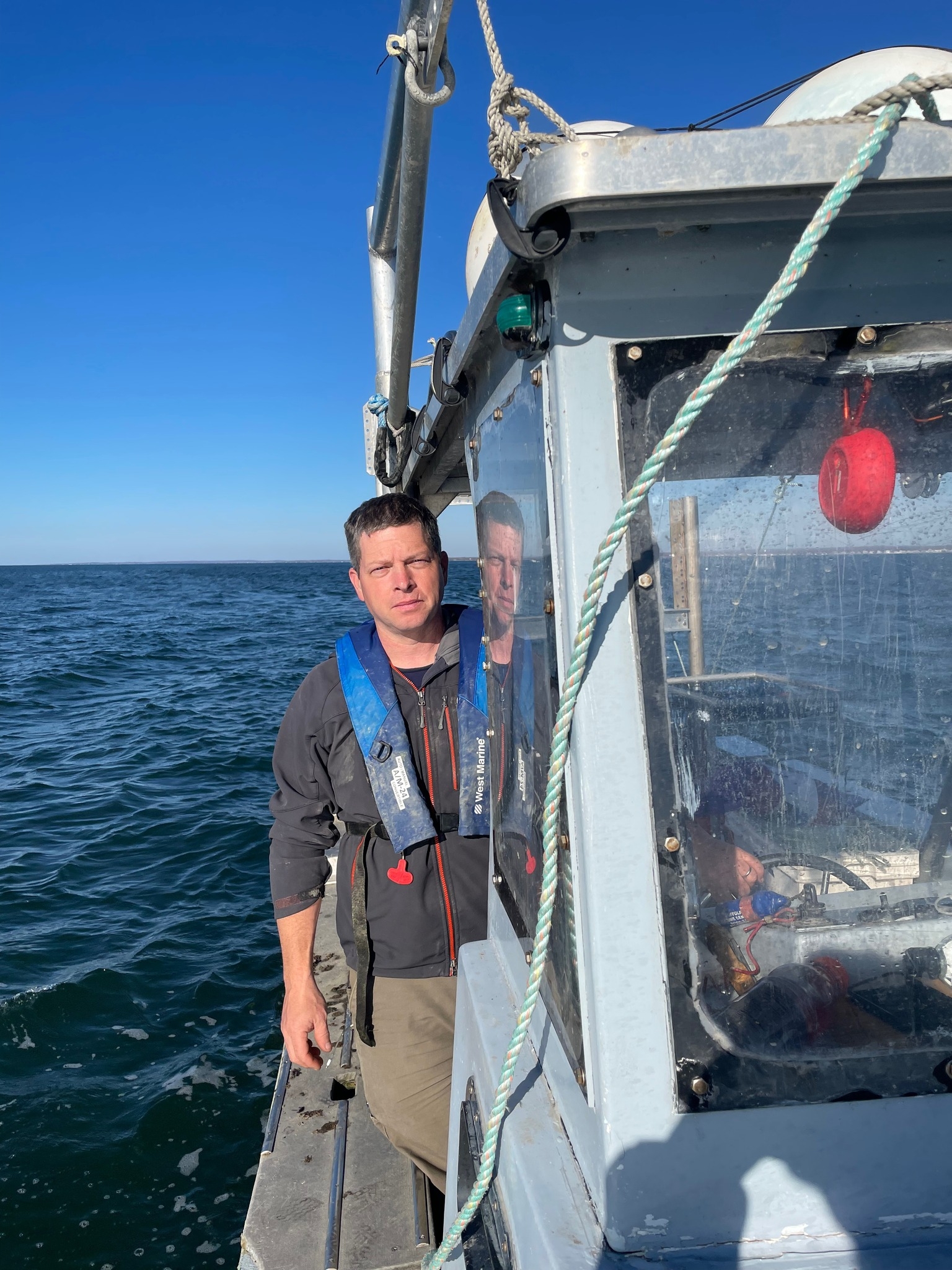
@jill_pegnataro
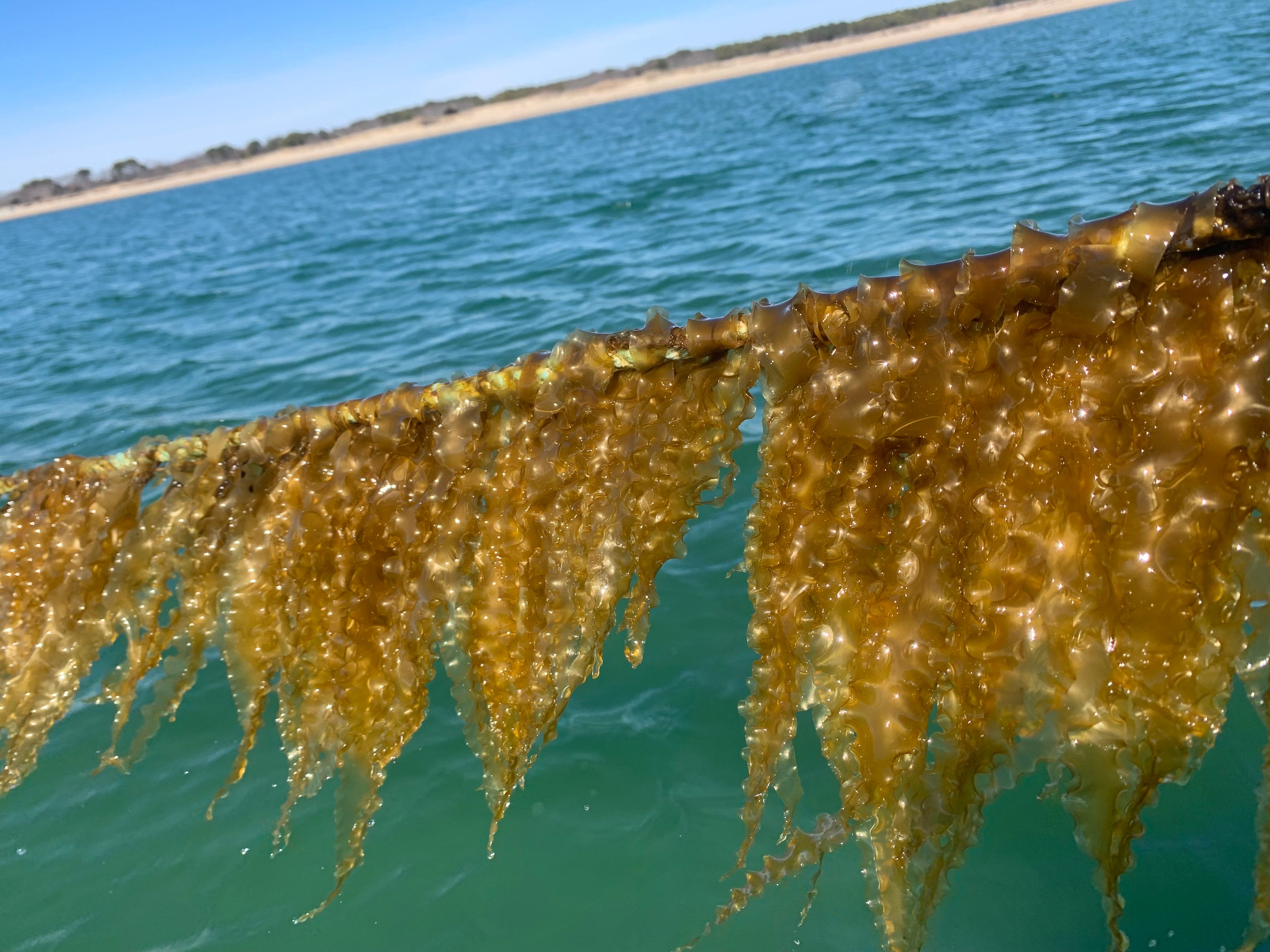
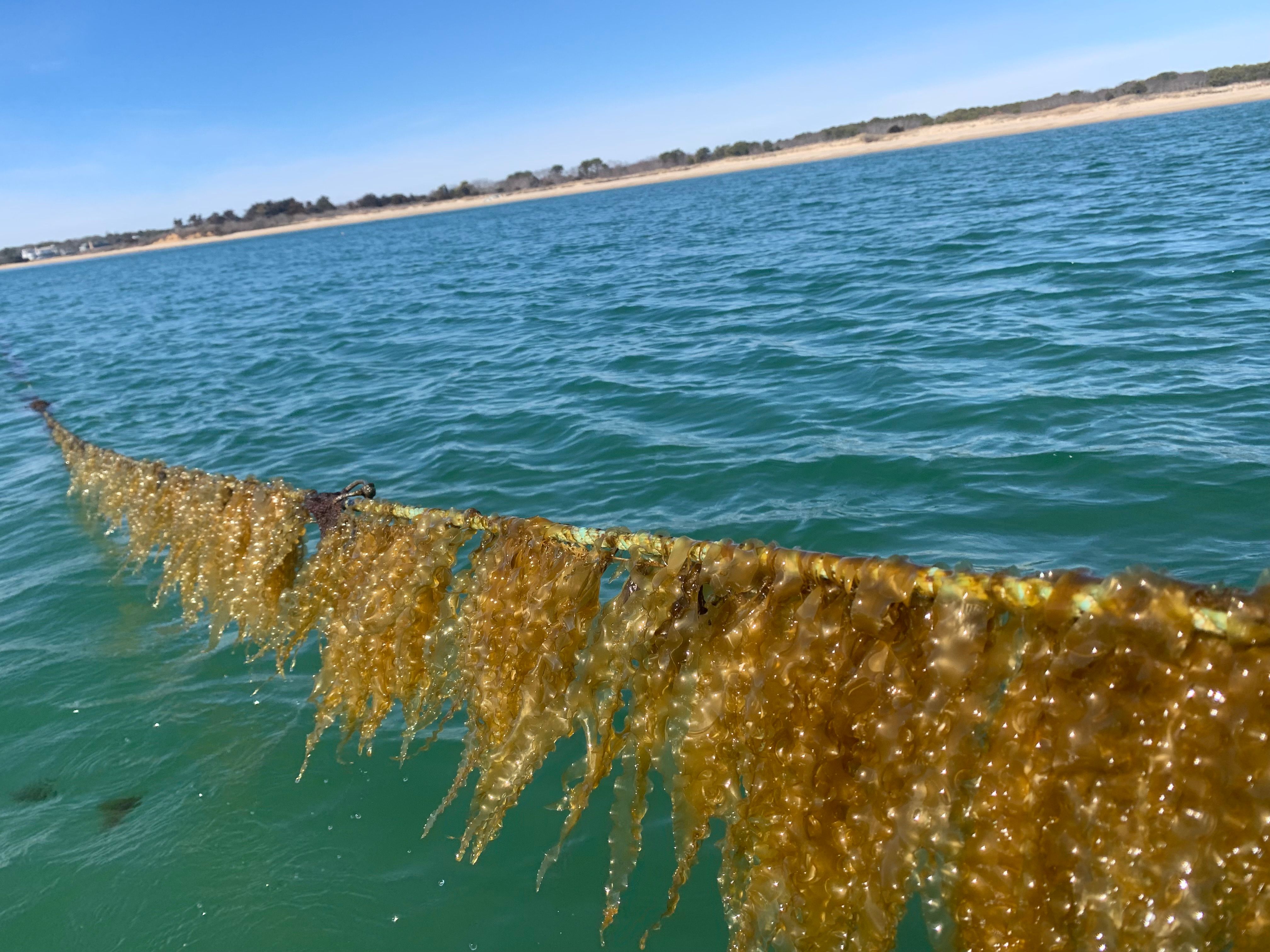
Hi Jill, this is our first year trying two lines of kelp in Vineyard Sound waters of Falmouth, MA near the mouth of Waquoit Bay.
The lines were out planted on 12/10/22 with seed from Green Wave. About 30-50% of the lines look like the photos below (taken on 3/1/23). We have some bare patches and thinner areas on the rest of the lines. A few weeks ago we had filamentous algae over set on most of the lines.
We are collecting water samples but they won't be analyzed until the end of the season. Water temperature on the site is around 38-40F right now. It is an exposed site to the south and in the lee of Washburn Island to the north. Water depth is 8-10' with the lines set at 4'.
What do you think? Looking too light in color? Could it still darken up enough with increasing water temperature?
Thanks, Matt
@matthew_weeks Hi, Matthew. Have you taken any water or kelp tissue samples at your site? It might be helpful to know whether your site is enriched by ocean upwelling of nitrogen, or impacted by land-based runoff, etc. @Schery_umanzor at University of Alaska Anchorage created the Nutrient Extraction Testkit to help farmers assess source nitrogen. Schery, are kits still for sale and/or protocols available to share?
One way that farmers test out ideal growing depth on their sites is to drop a vertical seeded line, or deploy a horizontal longline at an angle, and then track growth along the depth profile.
On the site that Jill described, 4-5 feet is best. Other farmers set their longlines at 6-8 feet or more. This can depend on site, species, and other factors. In such shallow water, your lines at 4 feet depth may be a safe bet, particularly if light is penetrating to that depth, and you may not have too much stratification at such a shallow site. But it may be worth testing a vertical line in the future, if you have the time and capacity.
@matthew_weeks Hello, The kit is likely to be distributed by Alaska Sea Grant. I will share more info once I learn more (University of Alaska Fairbanks )
)
@matthew_weeks Hi, Matthew. Have you taken any water or kelp tissue samples at your site? It might be helpful to know whether your site is enriched by ocean upwelling of nitrogen, or impacted by land-based runoff, etc. @Schery_umanzor at University of Alaska Anchorage created the Nutrient Extraction Testkit to help farmers assess source nitrogen. Schery, are kits still for sale and/or protocols available to share?
One way that farmers test out ideal growing depth on their sites is to drop a vertical seeded line, or deploy a horizontal longline at an angle, and then track growth along the depth profile.
On the site that Jill described, 4-5 feet is best. Other farmers set their longlines at 6-8 feet or more. This can depend on site, species, and other factors. In such shallow water, your lines at 4 feet depth may be a safe bet, particularly if light is penetrating to that depth, and you may not have too much stratification at such a shallow site. But it may be worth testing a vertical line in the future, if you have the time and capacity.
@matthew_weeks Hello, The kit is likely to be distributed by Alaska Sea Grant. I will share more info once I learn more (University of Alaska Fairbanks )
)