Week 2: How to Start a Kelp Farm: Guided Course & Community
-
Join this discussion if you are part of the How to Start a Kelp Farm Guided Course and Community. (To learn with us, register here.)
We’d love to know how your Site Evaluation Workbook is progressing:- Which communities (commercial, recreational, Indigenous) are most likely to be impacted by your farm?
- What can you do to limit the impact, and even turn it into a net positive?
- How do you intend to get buy-in from each of these groups?
Feel free to share any other thoughts about this week’s course. (See the full course program.)
Be in touch!
-Lindsay
START A DISCUSSION

@lindsay_olsen
Hi, put this in the wrong section, but I am moving it here. Sorry.
You wanted feedback to help with your presentation. I have two suggestions. First don't ask for feedback on the forum as all you will get is feather fluffing. Everyone wants you to feel good (as do I) so they may not be as open as you might hope for. Ask for private or anonymous feedback. Secondly, your interviews are too subject specific to be meaningful to the masses. Example, Kelp needs to be less than 59 degrees... What type of the 10,000 kinds of algae was she referring to? Better would be how to grow seed, seed the trawling lines, Feed the lines out, what to look for during growth and how to harvest. How to is good, testimonials are not as they say, we are trying to sell you something. Then, it sounds like what they are selling is to talk everyone out of farming. Over all, it's effective and instructful for those specific cases. But the people listening in from Sweden and Australia probably won't relate to indigenous people's claims on anything. Hope this helps and good luck...
@bob_llewellyn Hi Bob, Thanks for your honest feedback -- I appreciate it! I'm sorry that you're finding the speakers too case and site-specific to be useful or relevant to you. Part of the downside of offering an open enrollment course and inviting everyone to join is that it's hard to tailor content for such a geographically dispersed audience. My goal is to bring you the stories and voices of real farmers and experts in our network, which admittedly is very US-centric. I agree that we don't have much to offer folks who are interested in warm water species or farming internationally at the moment.
It sounds like you're hungry for more of the operational details of seaweed farming. This course is designed to help folks decide if farming is right for them, and advise on the process of starting a farm. We plan to hold future courses that focus on the operational side of running a seaweed farm. In the mean time, I suggest you try turning your Hub dashboard to Ocean Farming: Run in the top left of the home screen, and checking out the courses designed for active farmers. In particular you might enjoy the how-to videos and content in farm installation, outplanting, monitoring and maintenance, and harvest.
Thanks for the suggestion to solicit anonymous feedback -- we have a survey planned for the end of the course.
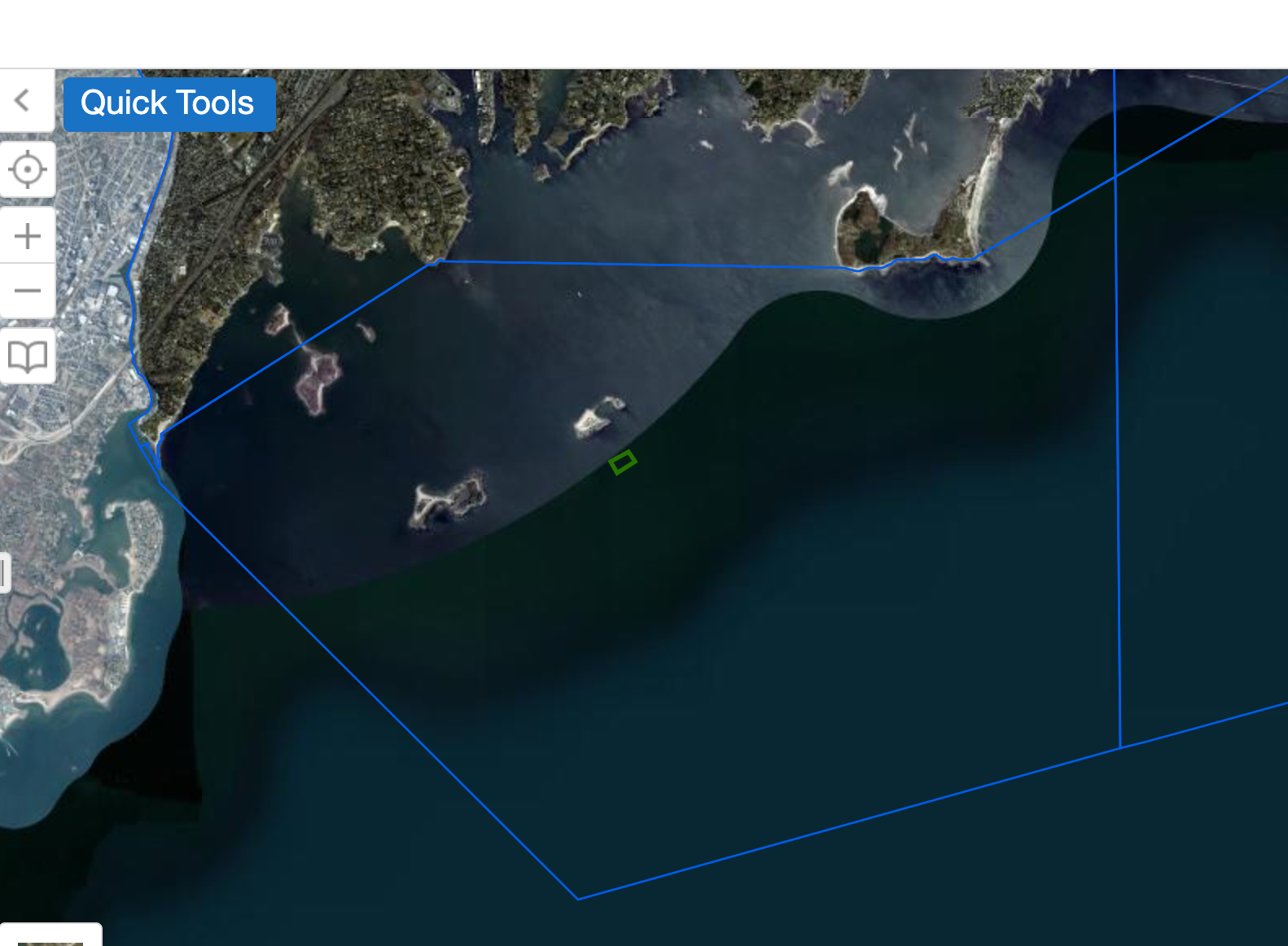
@lindsay_olsen Great second week of insight and inspiration. Got familiar with the CT ECO Aquaculture Mapping Atlas and was surprised that there were really only a handful of seaweed parcels that appear with the CT Seaweed filter (the green rectangles like this example below.) Are those active kelp farms, or plots that have been permitted? Is kelp farming permittable within all the blue quadrants? If so, good to learn that there may be ample options for siting.
Meanwhile, since Peconic and Gardiner's Bays seem interesting, I checked that out, but I did notice that the link for The Suffolk County Shellfish Aquaculture Lease Maps seems to be broken.
https://www.suffolkcountyny.gov/Departments/Economic-Development-and-Planning/Planning-and-Environment/Environmental-Planning-and-Aquaculture/Shellfish-Aquaculture-Lease-Program/Progam-Maps
With places like NJ and Delaware with no regulatory permitting process in place, are there efforts underway to get those states engaged? That's something I would be interested in working on if it's on the horizon.
@jack_mason Hi Jack! Glad that you found the CT Eco mapping atlas. I believe the blue quadrants in your image are "shellfish jurisdiction lines." The green rectangles I believe are "CT seaweed license areas" which means they are basically a lease in state waters. These are determined on a case-by-case basis with a particular farmer/operator. There are several that have been leased/permitted, but not all are active. The filled-in green parcels (if you select the "aquaculture gear" layer on the selection menu on the left) are active seaweed farms.
I'm tagging @michael_doall here who is our regional expert on New York seaweed farming and permitting. Thanks for pointing out the Suffolk country map link was broken. I found this map on the web, which has a 2022 date on it, though I can't verify it's current.
As far as NJ and Delaware -- we've reached out to regulators in those places before, but to my knowledge there is no movement on any seaweed farming legislation. It's always helpful for regulators to receive interest from prospective farmers though! And we did hear of one shellfish farmer who is growing kelp on his farm as far south as Maryland and the Chesapeake Bay this year!
@jack_mason Hi Jack, I just checked the Suffolk County website and you are correct that the link is broken. There was a major cyberattack on the computer network of the Suffolk County government back in September, and they still have not recovered. Much of their website is still down. I'm not sure when they will be back up but I'll see what I can find out. A couple points about kelp growth in the Suffolk County (SC) cultivation zone of the Peconic Estuary that you may be interested in: I've been growing kelp all around Long Island for the past 5 years as part of research studies at Stony Brook University. The poorest kelp growth I've obtained thus far has been on SC aquaculture leases in the Peconic Estuary. Long story short, it appears nitrogen levels are too low to support good kelp growth at the specific sites where I deployed kelp. These sites are in the central/eastern portions of the Estuary, mostly around Shelter Island. My guess is that growth would be higher in the western portions of the Estuary which typically have higher nutrient loading, but thus far I have not been able to test that hypothesis because I have yet to get a permit to grow in that area (yes you need permits for research too).
@bob_llewellyn Hi Bob, Thanks for your honest feedback -- I appreciate it! I'm sorry that you're finding the speakers too case and site-specific to be useful or relevant to you. Part of the downside of offering an open enrollment course and inviting everyone to join is that it's hard to tailor content for such a geographically dispersed audience. My goal is to bring you the stories and voices of real farmers and experts in our network, which admittedly is very US-centric. I agree that we don't have much to offer folks who are interested in warm water species or farming internationally at the moment.
It sounds like you're hungry for more of the operational details of seaweed farming. This course is designed to help folks decide if farming is right for them, and advise on the process of starting a farm. We plan to hold future courses that focus on the operational side of running a seaweed farm. In the mean time, I suggest you try turning your Hub dashboard to Ocean Farming: Run in the top left of the home screen, and checking out the courses designed for active farmers. In particular you might enjoy the how-to videos and content in farm installation, outplanting, monitoring and maintenance, and harvest.
Thanks for the suggestion to solicit anonymous feedback -- we have a survey planned for the end of the course.
@jack_mason Hi Jack! Glad that you found the CT Eco mapping atlas. I believe the blue quadrants in your image are "shellfish jurisdiction lines." The green rectangles I believe are "CT seaweed license areas" which means they are basically a lease in state waters. These are determined on a case-by-case basis with a particular farmer/operator. There are several that have been leased/permitted, but not all are active. The filled-in green parcels (if you select the "aquaculture gear" layer on the selection menu on the left) are active seaweed farms.
I'm tagging @michael_doall here who is our regional expert on New York seaweed farming and permitting. Thanks for pointing out the Suffolk country map link was broken. I found this map on the web, which has a 2022 date on it, though I can't verify it's current.
As far as NJ and Delaware -- we've reached out to regulators in those places before, but to my knowledge there is no movement on any seaweed farming legislation. It's always helpful for regulators to receive interest from prospective farmers though! And we did hear of one shellfish farmer who is growing kelp on his farm as far south as Maryland and the Chesapeake Bay this year!
@lindsay_olsen Hi Lindsay, here's a 60 second video from Washington SeaGrant that the audience might find worth a minute of their time.. to quote the speaker/Meg "people who farm in the marine environment are doing so in places that are considered the commons... seafarmers are beholden to people who care about our common marine waters.. "
While it's probably obvious to this group, this is different from a traditional terrestrial farmer..
Full Disclosure: that's me driving the boat towards the end of the video.
https://fb.watch/i9v6ifR83z/
@jack_mason Hi Jack, I just checked the Suffolk County website and you are correct that the link is broken. There was a major cyberattack on the computer network of the Suffolk County government back in September, and they still have not recovered. Much of their website is still down. I'm not sure when they will be back up but I'll see what I can find out. A couple points about kelp growth in the Suffolk County (SC) cultivation zone of the Peconic Estuary that you may be interested in: I've been growing kelp all around Long Island for the past 5 years as part of research studies at Stony Brook University. The poorest kelp growth I've obtained thus far has been on SC aquaculture leases in the Peconic Estuary. Long story short, it appears nitrogen levels are too low to support good kelp growth at the specific sites where I deployed kelp. These sites are in the central/eastern portions of the Estuary, mostly around Shelter Island. My guess is that growth would be higher in the western portions of the Estuary which typically have higher nutrient loading, but thus far I have not been able to test that hypothesis because I have yet to get a permit to grow in that area (yes you need permits for research too).