Biofouling on kelp in Kachemak Bay, Alaska
-
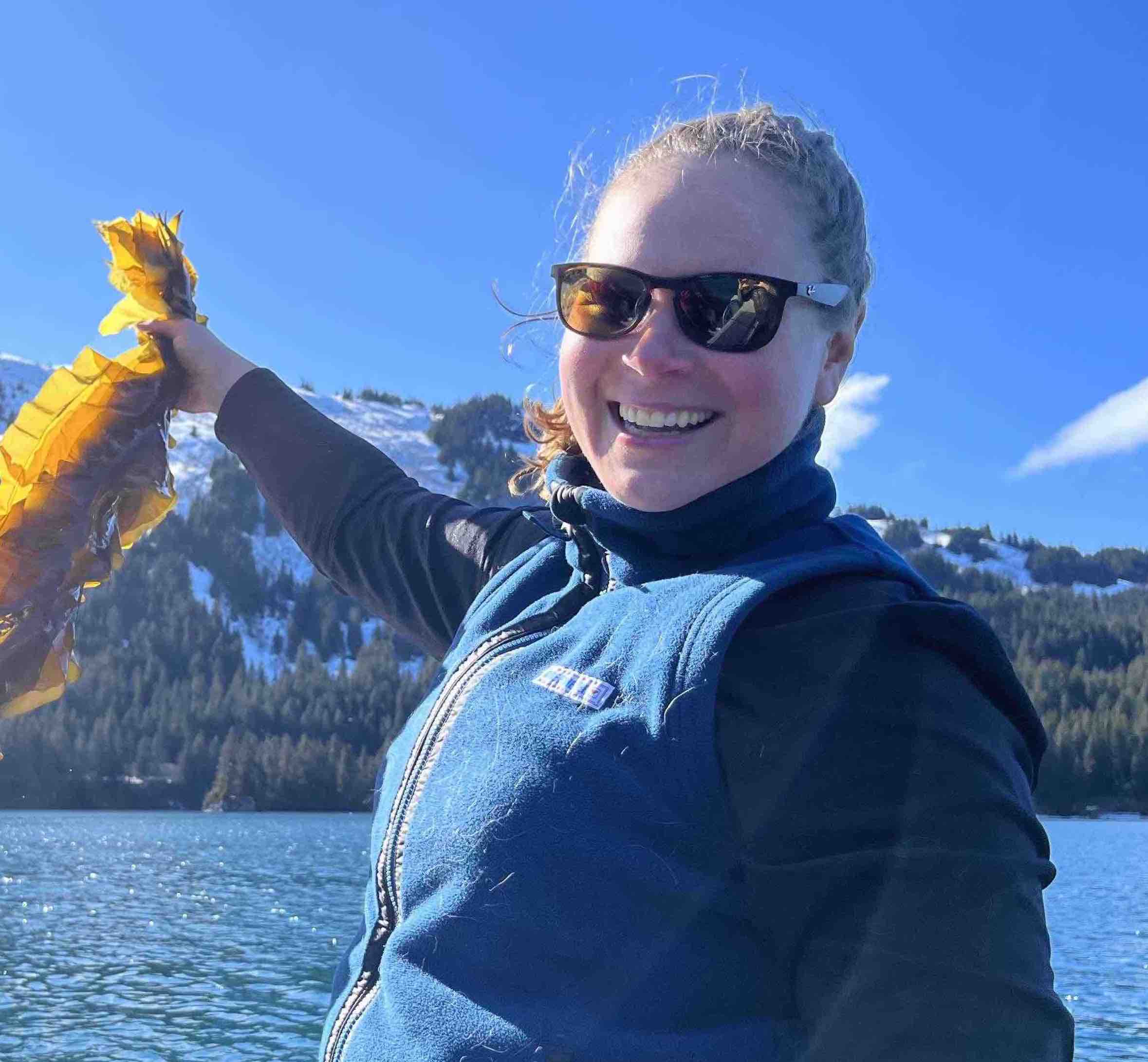
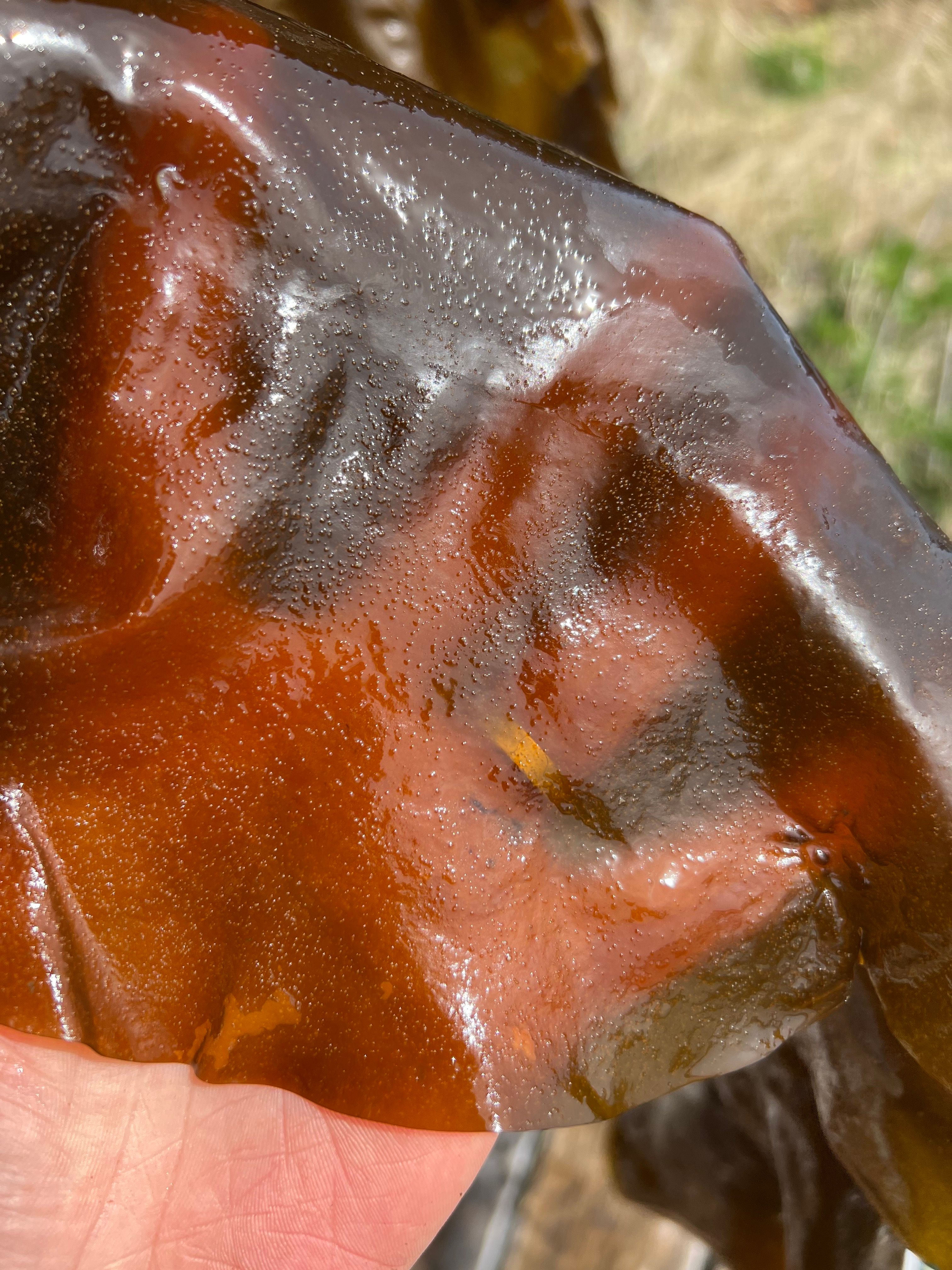
I recently helped harvest cultivated sugar kelp and alaria marginata off my family's kelp and oyster farm in Kachemak Bay, near Homer, Alaska. We saw some signs of biofouling I couldn't identify, and wanted to ask the broader community. The first was a very faint blistering, or small bubbles, almost the texture of sand, that showed up on the distal ends of the blades of Saccharina latissima. It looked like it could possibly be fresh water contamination, but because it was only on the ends of the blades deepest in the water column, and not seen on the the parts of the blade closest to the holdfast (and the surface) this didn't make a lot of sense. I've heard others says that diatoms can also cause a graininess or cloudiness on the tips of kelp blades. @tamsen_peeples, or others in AK, have you seen this grainy type of blistering before?
The other fouling we experienced was the set of small copepods with gray egg sacks that could be wiped off easily, but required extra culling. This set came on suddenly and went from very minimal occurrence to covering 30% of the crop in the course of 3 days.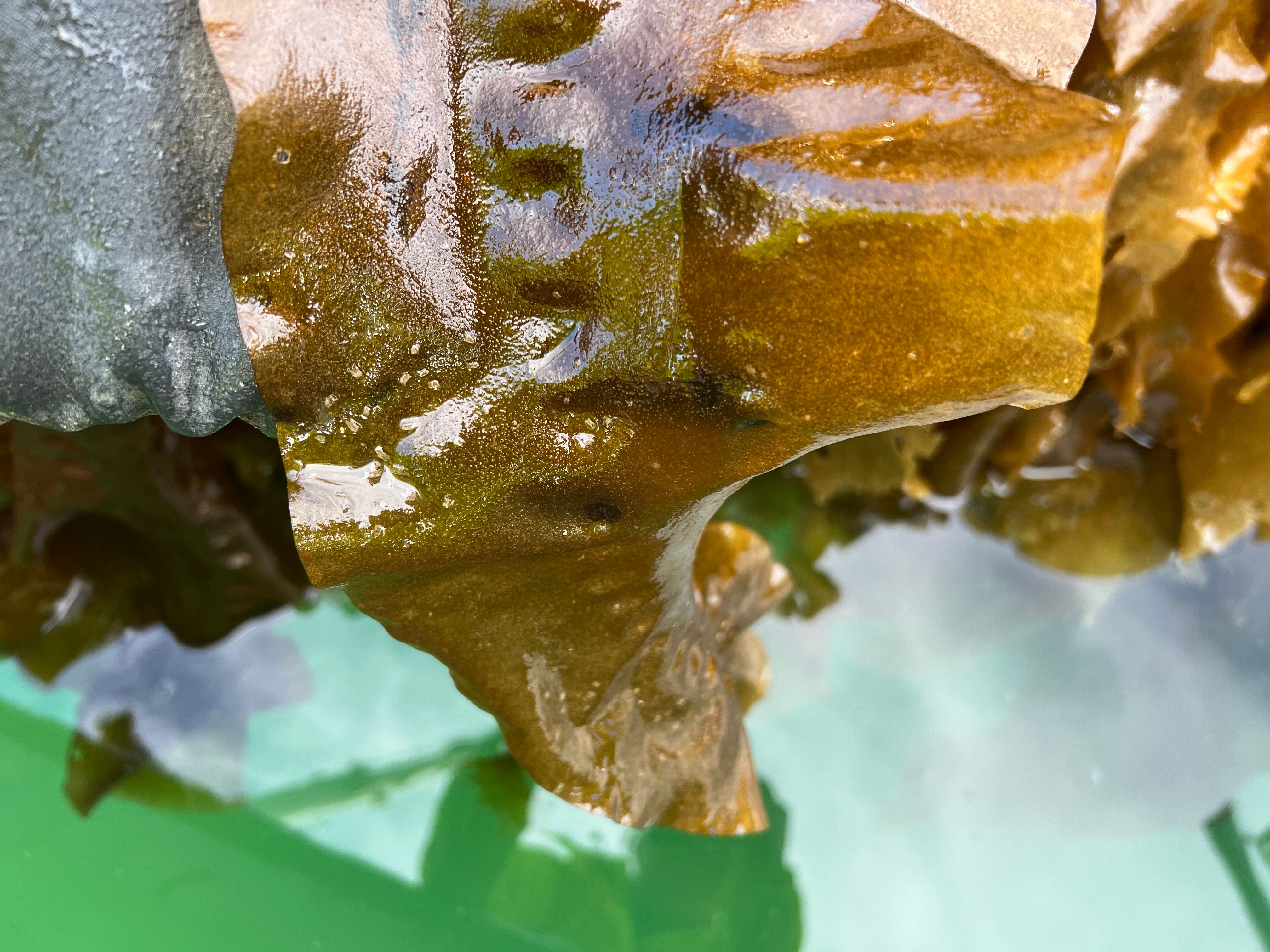
I'm curious if others have seen these types of fouling before - or what else is showing up for folks this season.

In follow up, I recently heard back from Lexa Meyer at Blue Evolution, and a kelp farmer and scientist in Kodiak, Alaska. Lexa wrote:
That is interesting, we have seen higher levels of biofouling in Kodiak this year too. We have seen an unprecedented number of sunny days this April/May, perhaps that has something to do with it? Our water temps are average. Without being able to see blade close up under a dissecting scope, it appears that the biofouling on the sugar kelp is not diatoms but likely hydrozoans. They are like little jellyfish that live attached to a substrate.