
🔥IT'S ALMOST HARVEST TIME AND THE WATERS ARE WARMING UP! 🔥
-
As we are approaching harvest season there are some things as a farmer that you need to be aware of. The days are longer and warmer and the kelp is absorbing more light and nutrients in the water column. These final weeks that the kelp grows on the farm needs to be monitored very closely. Here are a few things you need to check as the season is coming to a close.
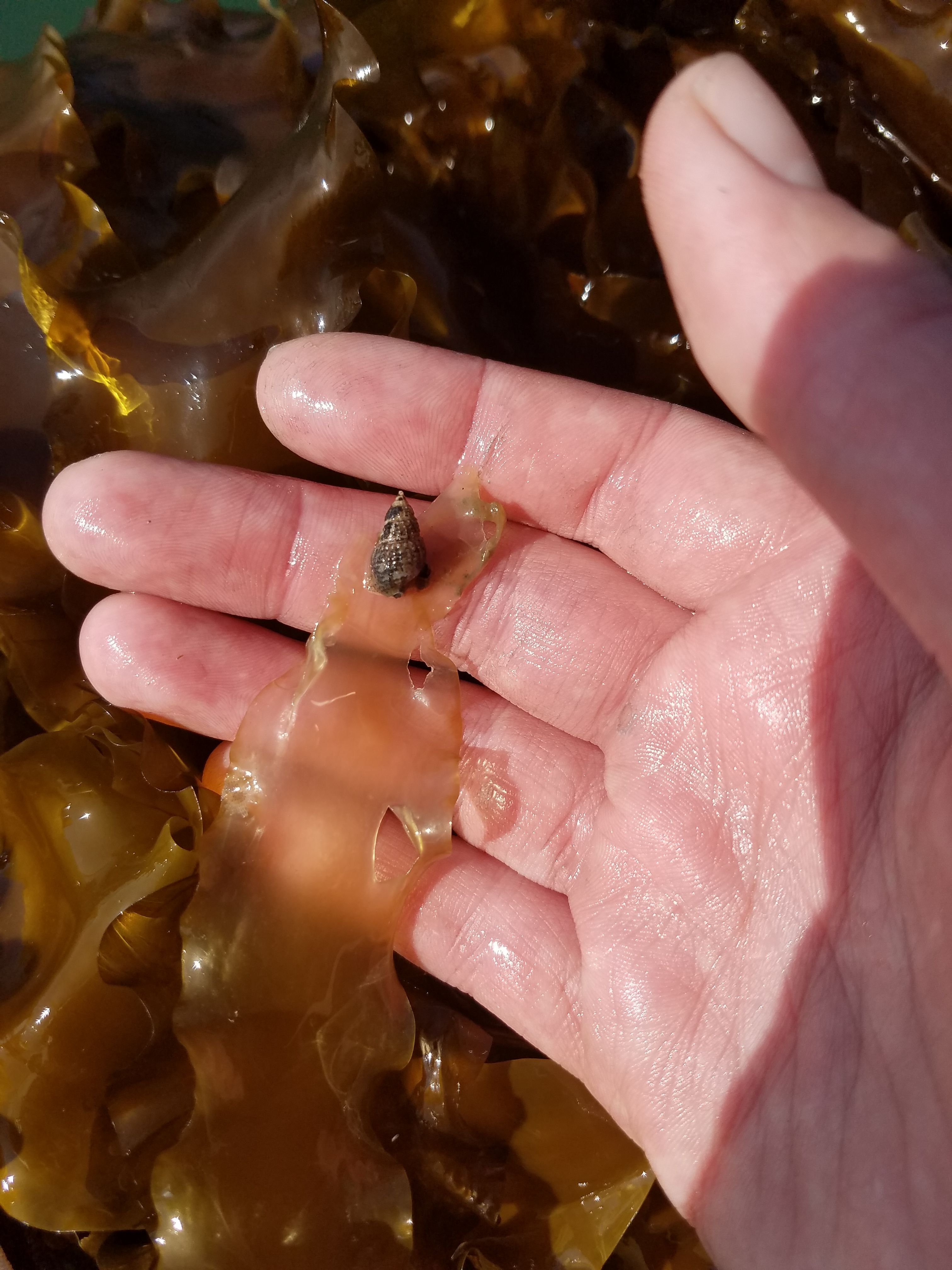
If you had a good season the kelp could be up to 10-12ft long. If that is the case and your site is in shallow water, you could be introducing new critters like snails to your crop. Snails will eat holes in the kelp and make it difficult to sell for food consumption. You can help prevent this by making sure your lines are tight and off the bottom at low tide. You can also trim the dead growth on the bottom that will eventually need to be trimmed before going to the processor. If the lines are loose and you can see mud on your kelp you need to get that kelp off the sea floor.
As a farmer you also need to be aware of biofouling. As the waters reach 50 degrees there are new organisms in the water column that will find a home on your beautiful crop. Although that is great for create new habitat on the reef, that is not so good for processing for food consumption. You need to keep a close eye on your crop as the waters start to warm up. You may only find a few biofouling organisms here or there, but as the waters get warmer they will quickly multiply. Make sure that you are in close contact with your processor at this stage. You may need to make a decision and harvest sooner than you originally planned to save the crop from biofouling further.
This may also depend on what the crop is going to be harvest for. If the kelp is being used for fertilizer, the biofouling adds more nutrients to the kelp that is great for land crops. In this case you want as much volume as possible because you will be selling at a lower price. The biofouling will add nutrients and you can use the longer warmer days to get as much growth as possible.
The most important part is that you are closely monitoring your crop and staying in contact with your processor. Make sure that you are on the same page before harvest and set expectations. Do they want the whole blade (holdfast, stipe, blades, and tips) or is there some processing that needs to happen on the farmer end before it goes to the processor. The more work you do on the boat, the more time it will take you as a farmer and you need to incorporate that labor into the cost of the crop.
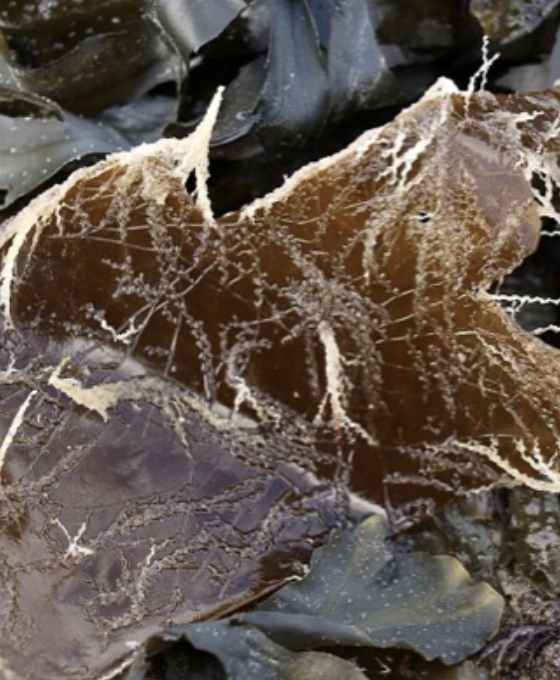
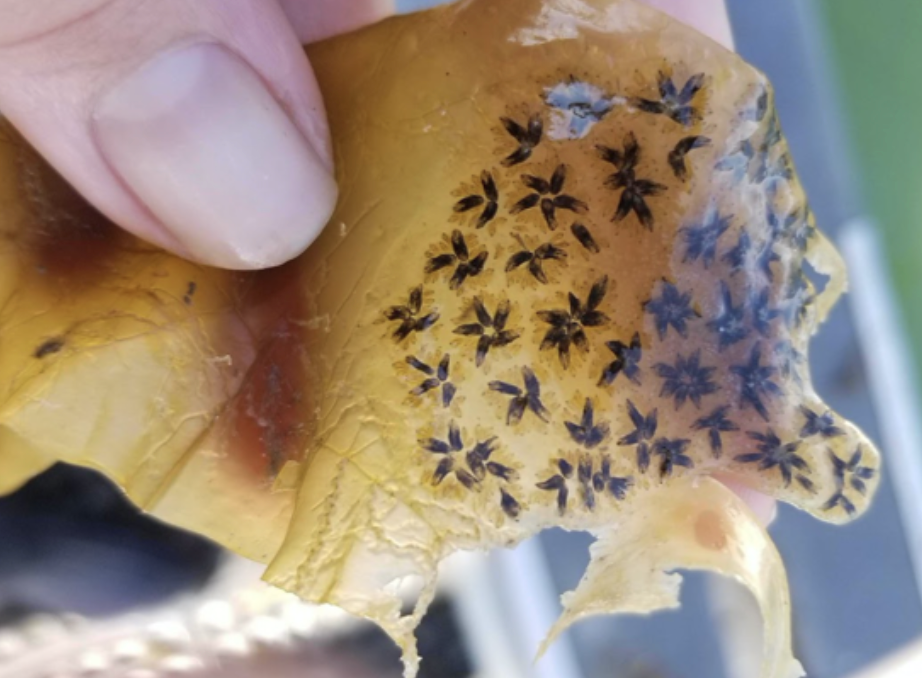
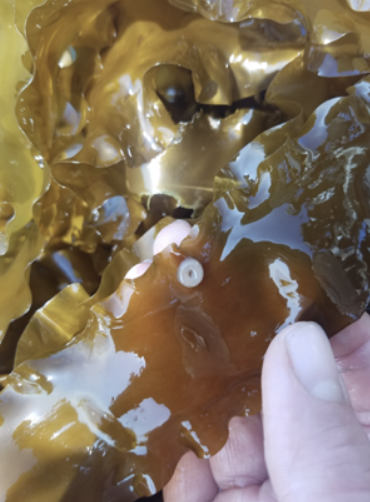
Below are some pictures of biofouling you might find on your crop.
@jill_pegnataro -
I recognize the sea squirt eggs and the snails but what type of epiphytes are the top two pics?
@suzie_flores - based on the Guide to Common Biofouling Organisms it looks like they're hydrozoans (Obelia spp., sea fur) and Botryllus schlosseri, Star tunicates.
@suzie_flores -
Hmmm, Let's see if @ashley_hamilton knows this species. Any ideas Ashley?
@suzie_flores - based on the Guide to Common Biofouling Organisms it looks like they're hydrozoans (Obelia spp., sea fur) and Botryllus schlosseri, Star tunicates.
@suzie_flores -
Hmmm, Let's see if @ashley_hamilton knows this species. Any ideas Ashley?