Watch this video introduction to the 5-line array, with a walk-through of the different components laid out in a field.
Lesson 3
5-Line Array
Back to: Farm Design
5-Line Array
The 5-line array builds on the basic design of the single-line array but incorporates the use of spreaders (or spreader bars) to hold multiple growlines in close proximity to one another within the same array system. The use of spreaders dramatically increases the number of growlines that are able to be deployed per pair of anchors, and can significantly boost the growing capacity of a farm without increasing the overall site footprint.
Watch this video introduction to the 5-line array, with a walk-through of the different components laid out in a field.
5- Line Array Video
Definition
Spreader Bar
In a typical 5-line array, the spreader bar is a 10-foot long, 3-inch diameter aluminum pipe, with welded eyes to receive various line connections. The spreaders are located on either end of the array, and at 100-foot intervals along the growline. They hold five parallel growlines at a fixed distance apart.
Bridle
There are two bridles used in the 5-line array. A horizontal bridle is a trio of lines that runs from the spreader to a connection point with the anchor line underwater. The vertical bridle runs from either end of the spreader to a buoy on the surface creating a triangle.
Another unique element of the 5-line array is the bridle system.
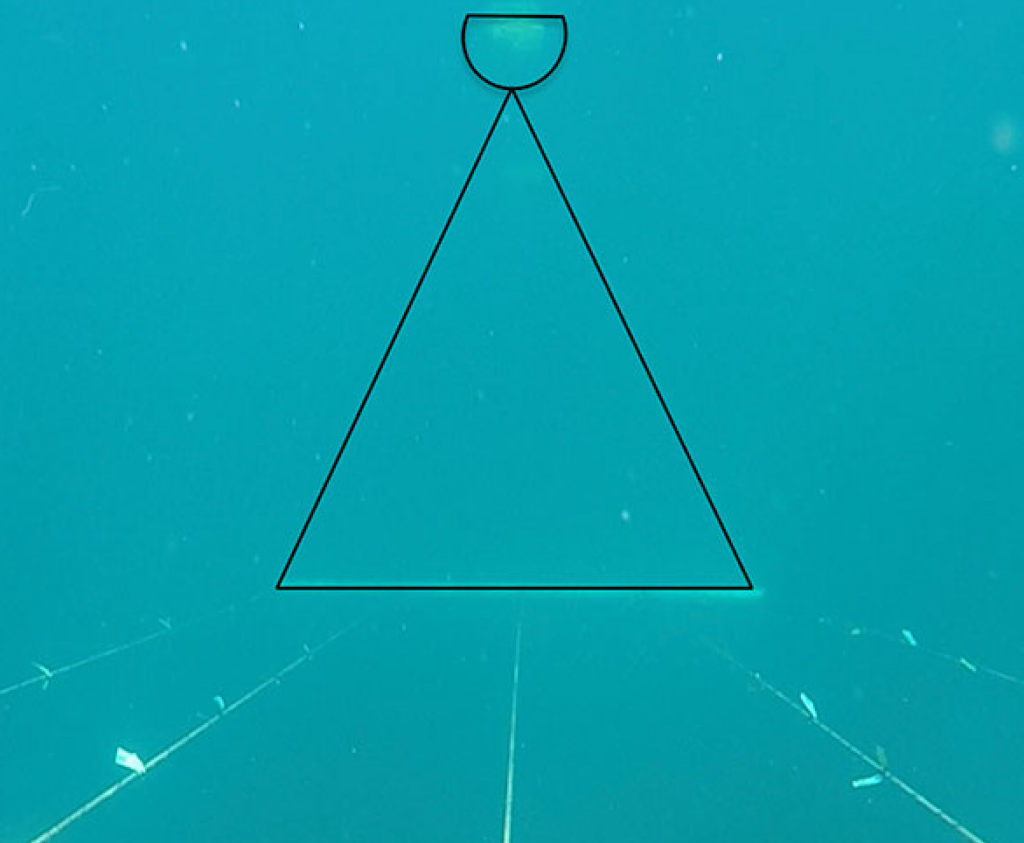
There are two bridles attached to each spreader bar. One vertical bridle connects the spreader to a buoy at the surface of the water (shown in the picture below), and one horizontal bridle connects the spreader to the anchor line.
This image shows an underwater view of the buoy and bridle system at the end of a 5-line array. The sides of the black triangle delineate the bridle lines that run from either end of the spreader bar to a buoy on the surface.
5-Line Array Diagram
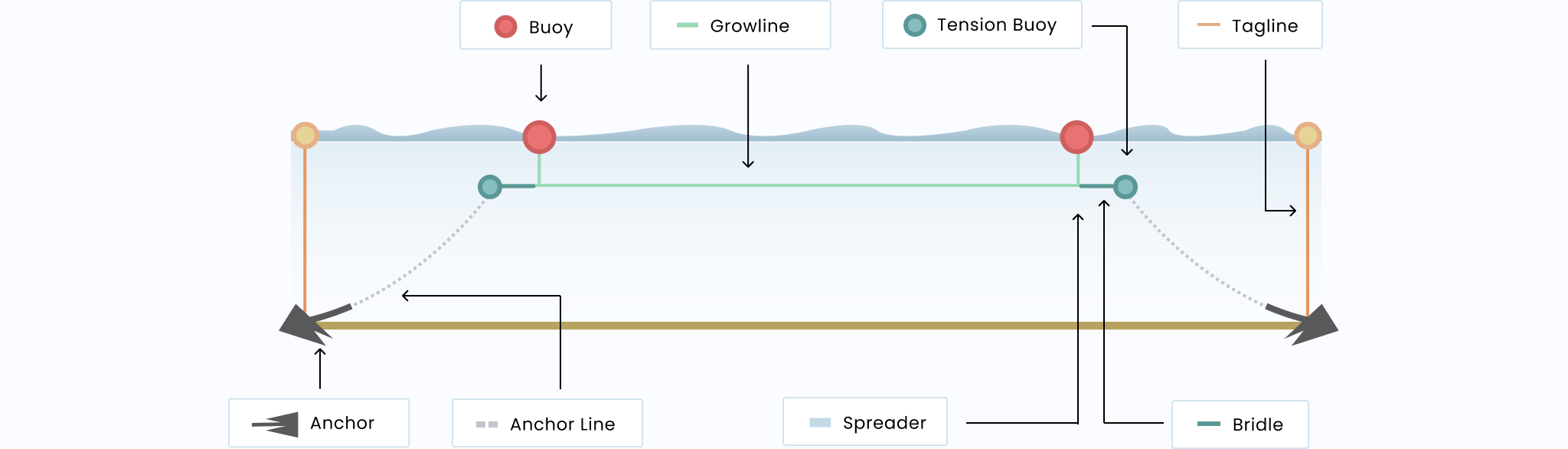
In the diagram, you’ll notice that the profile view of the 5-line array looks similar to that of the single-line array. The anchoring system is virtually identical, though the anchors will need to be larger due to the increased weight and drag of the additional growlines.
5-Line Array – Profile View
5-Line Array – Aerial View
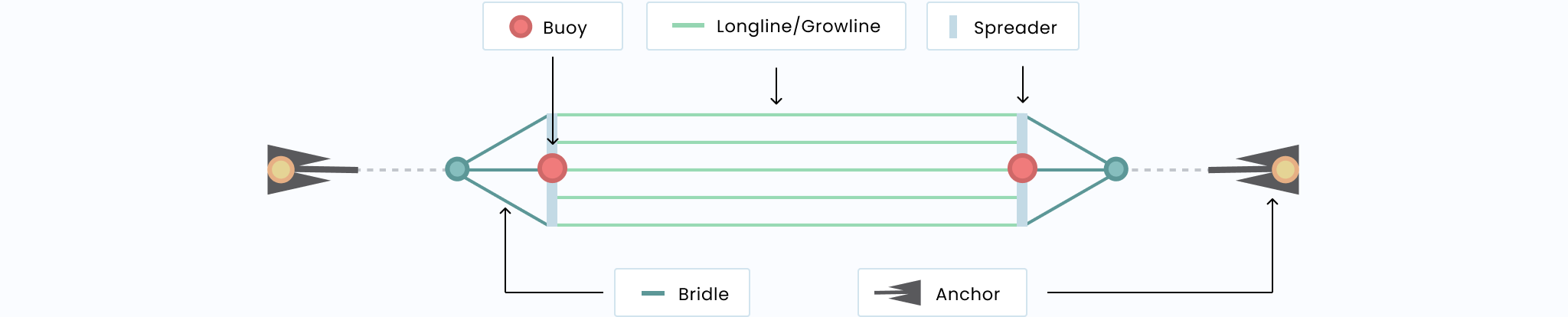
One notable difference, however, is that the 5-line array does not incorporate buoys spliced directly to the growline. Instead, flotation buoys are attached with a bridle to the spreaders themselves.
The diagram above shows a 100-foot span between spreader bars, where no intermediary flotation is used. But some farms use much longer 5-line systems, in which case an intermediary spreader, called a mid-span spreader, with a buoy and bridle is used to provide flotation along the growlines. Generally, we recommend adding a mid-span spreader every 100 feet of growline.
The 5-line array is a fairly new concept, and farmers are still teasing out the best designs, including when and where additional spreaders and buoys are needed along the span of the growlines.
You may need to experiment a bit to find out what works best for your site and your system. Some farmers suggest starting out with minimal flotation and adding mid-span spreaders and flotation buoys once the kelp has started to grow.
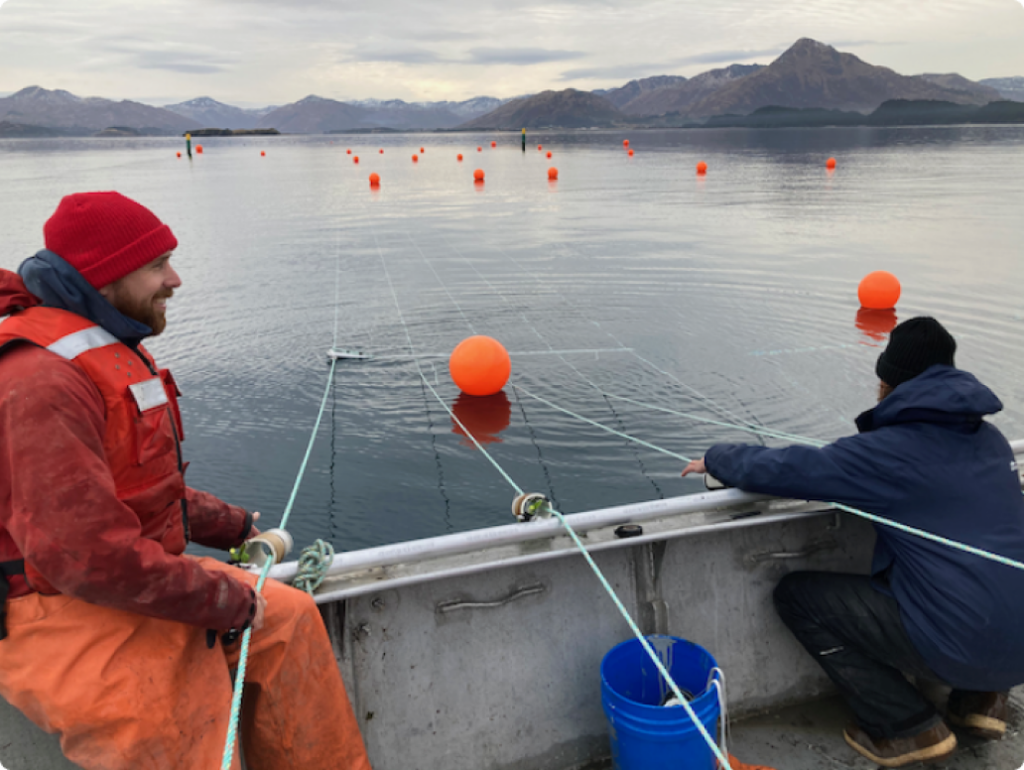
Maintaining even tension throughout the 5-line system is crucial to its success and stability. This can be achieved with careful preparation and monitoring once it has been deployed. When assembling the system on land, it’s critical that the growlines are measured under tension and cut to matching lengths; otherwise, the system will hang lopsided in the water.
To ensure the whole system is held under constant tension, we recommend using drag embedment anchors, which can be adjusted once the array is in the water. Additionally, tensioning buoys and/or a length of chain along the anchor rode reduces slack on the lines during low tide.
The 5-line system is more complex than the single-line array and requires a bit of precision and finagling to get right, so we don’t typically recommend it for first-year farmers. But, again, the benefit of the 5-line is that it allows for significantly higher production without an increase in farm footprint.