Back to: Introduction to Kelp Hatcheries
It would be difficult to find two hatcheries that look the same. Your setup can be dictated by the space that’s available, the materials you have access to, and the species of seaweed you are trying to grow. As long as you have the essential equipment: seawater, lights, nutrients, etc. (all of which you’ll learn about in a following course) the design is largely up to your creativity.
Below you’ll find a visual tour of several different hatchery setups operating in the U.S. We’ll dive into the specifics of the systems in the courses to come, but for now, notice the wide diversity of hatchery designs that are operating across the industry.
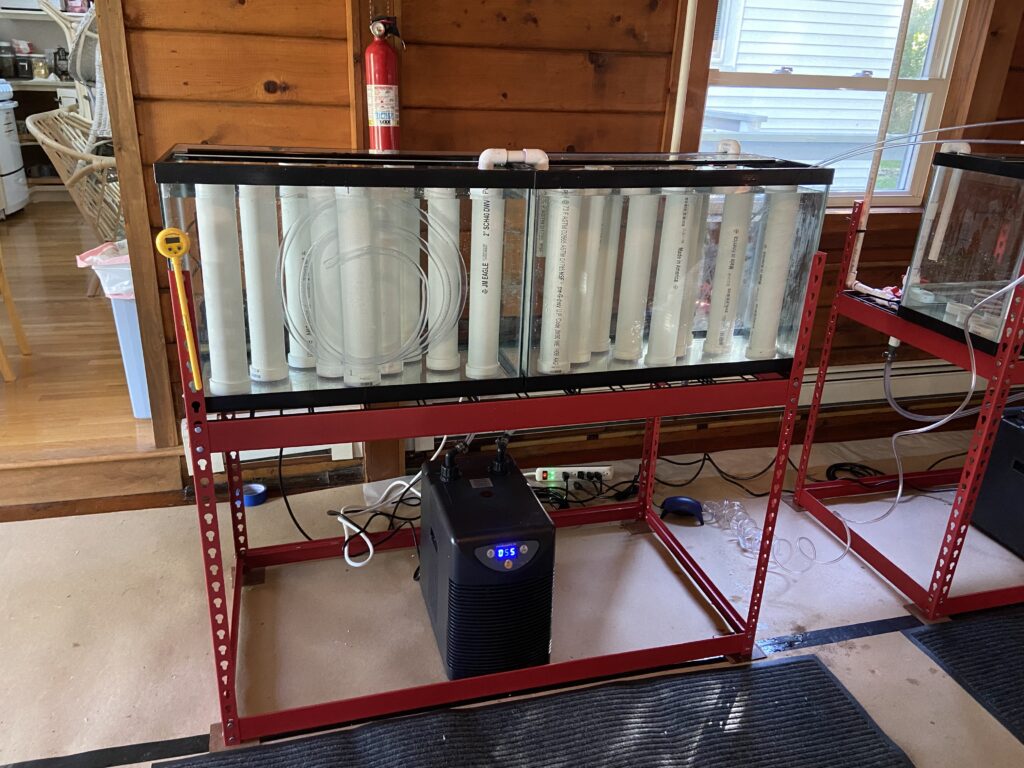
GreenWave, Connecticut
The first iteration of the GreenWave hatchery consisted of 40 20-gallon tanks, with only half operating at one time. Each week, 20 of the tanks were holding spools, while the other 20 were being cleaned and prepped to receive those spools during the weekly water changes. Hard plumbing brought filtered sea water directly to individual tanks, but the tanks were then plumbed in pairs in order to use a single chiller per two tanks. T-12 fluorescents were used as the light source, and due to the heat emitted by both the lights and the chillers, an AC unit was required as an offset.
The current GreenWave nursery model is a more streamlined approach. It consists of a water processing hallway and a 20 ft refrigerated shipping container that holds all of the tanks. Instead of chilling the water in individual tanks we chill the air in the container. For more details on this new nursery model, check out the Seed Production Pathways to Scale course.
Seagrove Kelp Co., Alaska
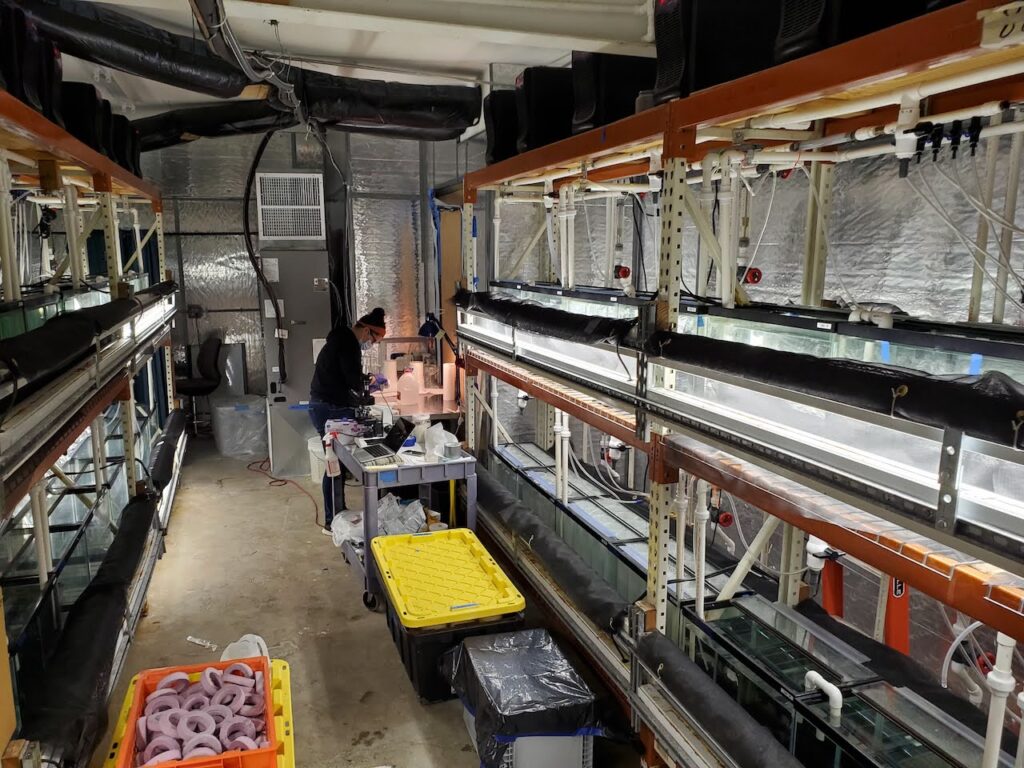
The hatchery depicted here has lots of open space and operates in a refrigerated room. The main components are moveable shelving and acrylic tanks. Their system has some soft plumbing (which is built from a type of flexible tubing rather than PVC) which connects to chillers located in another room. They also have plumbing for filling and draining their tanks with ease. The light ballasts hang on either side of the acrylic tank using a PVC frame that hangs from the top of the tank stands.
Alutiiq Pride Marine Institute, Alaska
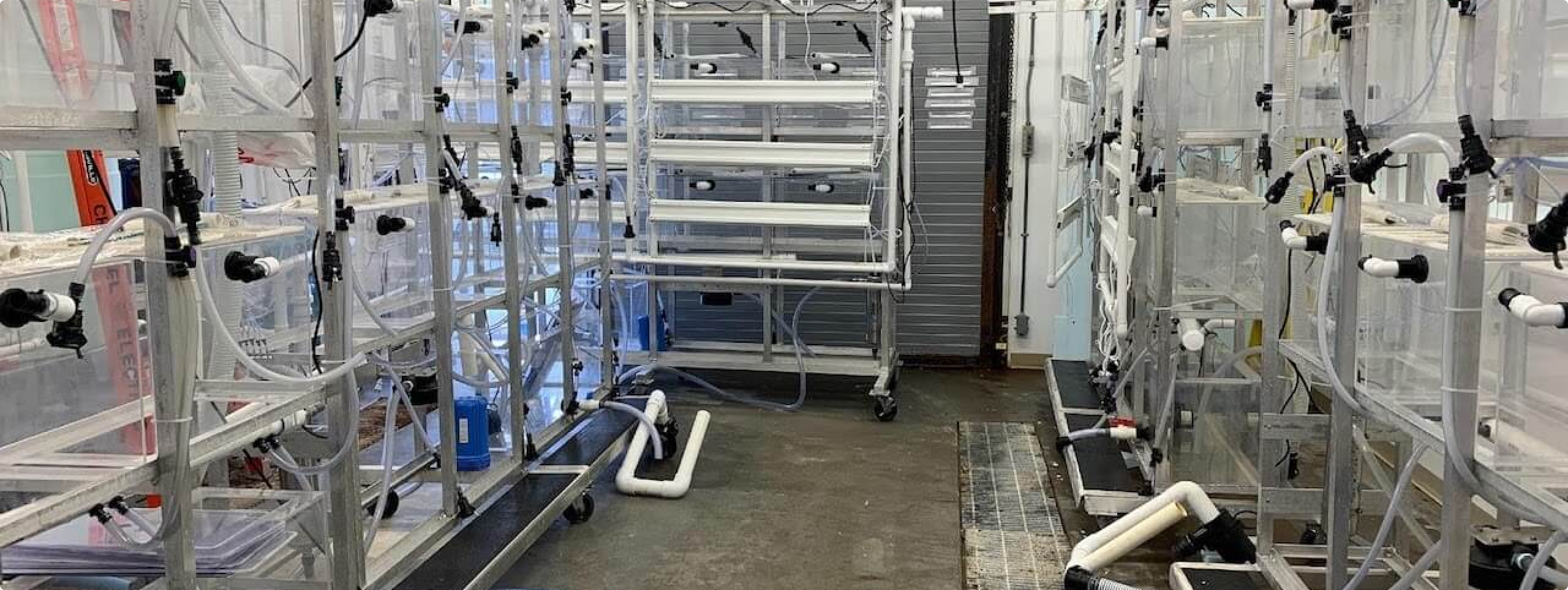
This hatchery utilizes a room in their shellfish hatchery to grow kelp. They use one chiller for every pair of tanks and have supplementary heating and cooling to manage the temperature of the room.
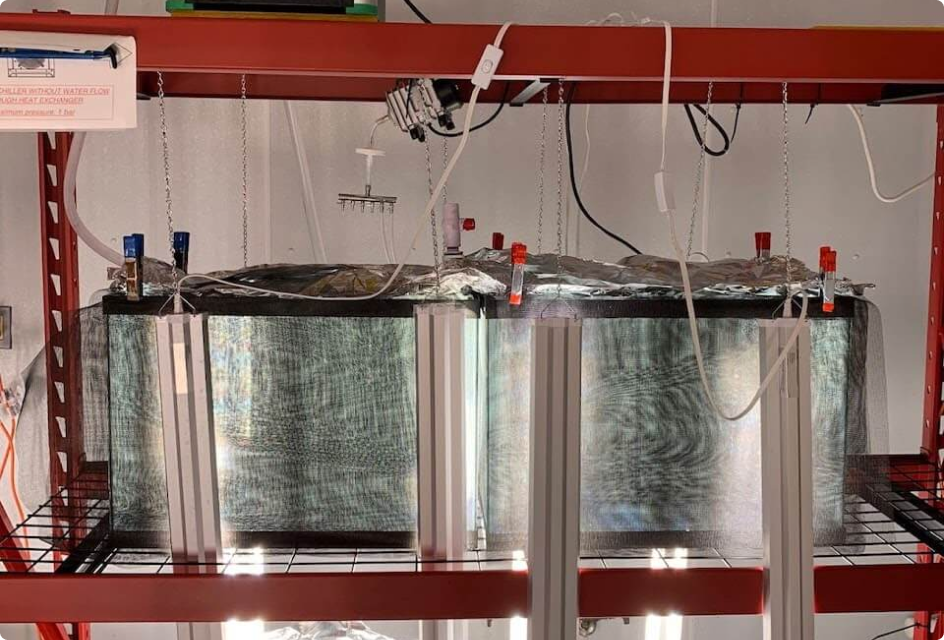
Woods Hole Oceanographic Institution, Massachusetts
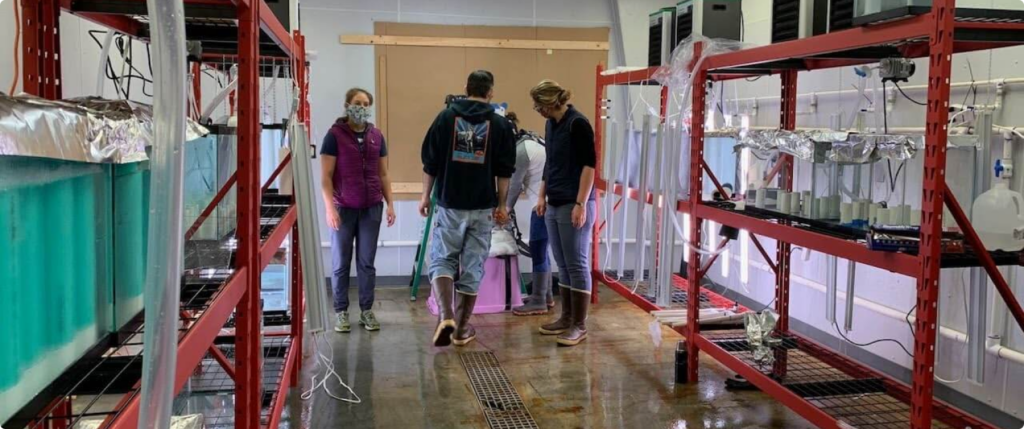
WHOI has tried growing seed spools in several different culturing systems, ranging from 10-gallon aquaria lit from the side to 80-gallon tanks with lighting from the top. Over the years, WHOI has moved away from using chillers and now operates with all spools growing in a temperature-controlled, walk-in room. Their lighting has shifted from compact fluorescent tubes to LED strips or panels, as seen in the photos. Tank circulation has also been increased to promote nutrient absorption.
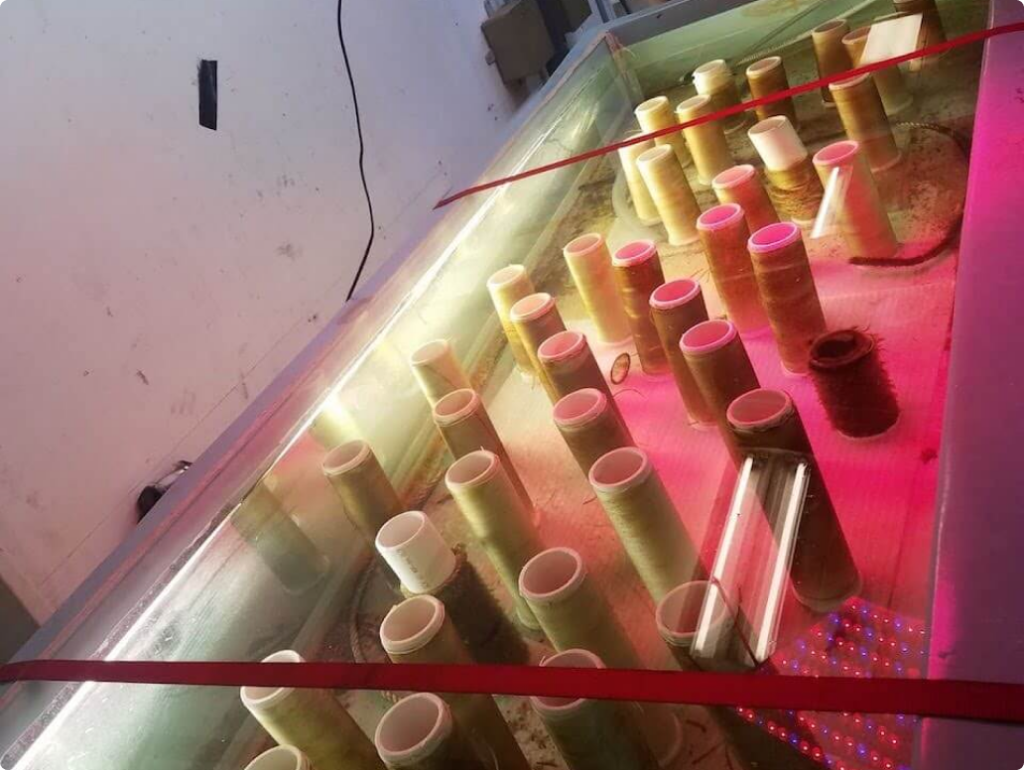
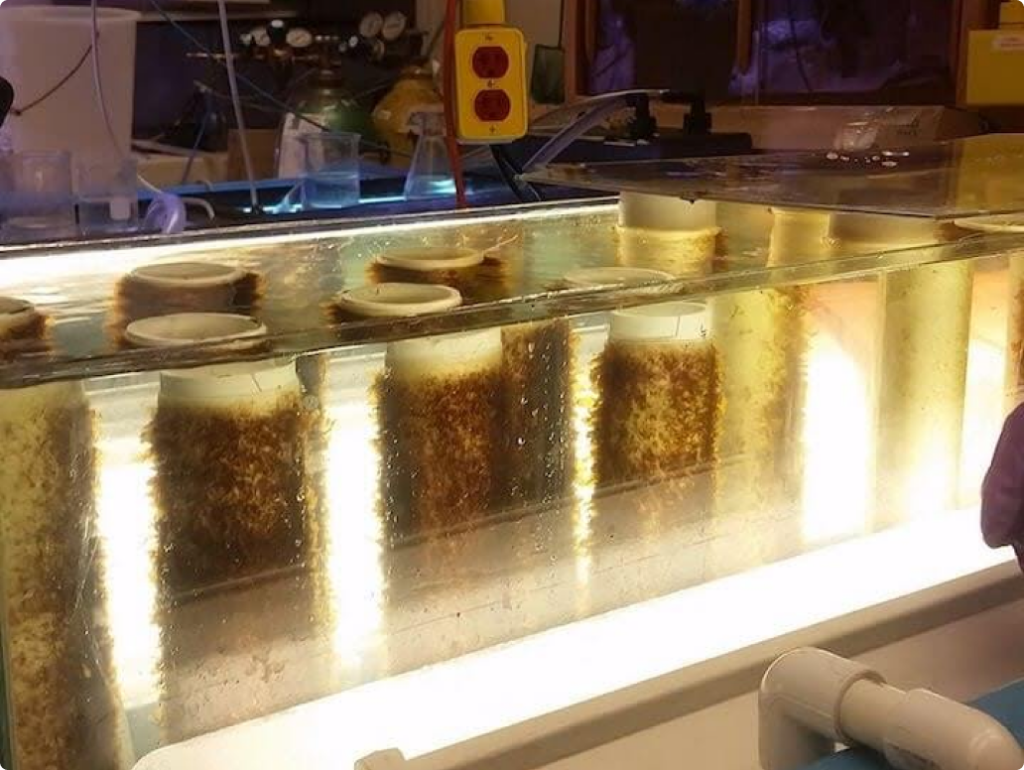
Stony Brook University Southampton Marine Station, New York
Seawater is piped directly into 20-gallon aquaria housed within an 8-by-7-by-7.6 environmental chamber that is temperature-controlled. This hatchery isn’t much larger than a broom closet! The seawater is filtered through a series of cartridge filters and passed through a 5-foot ultraviolet (UV) sterilization column before entering the tanks. The hatchery uses fluorescent light bulbs with window screens to regulate the intensity.
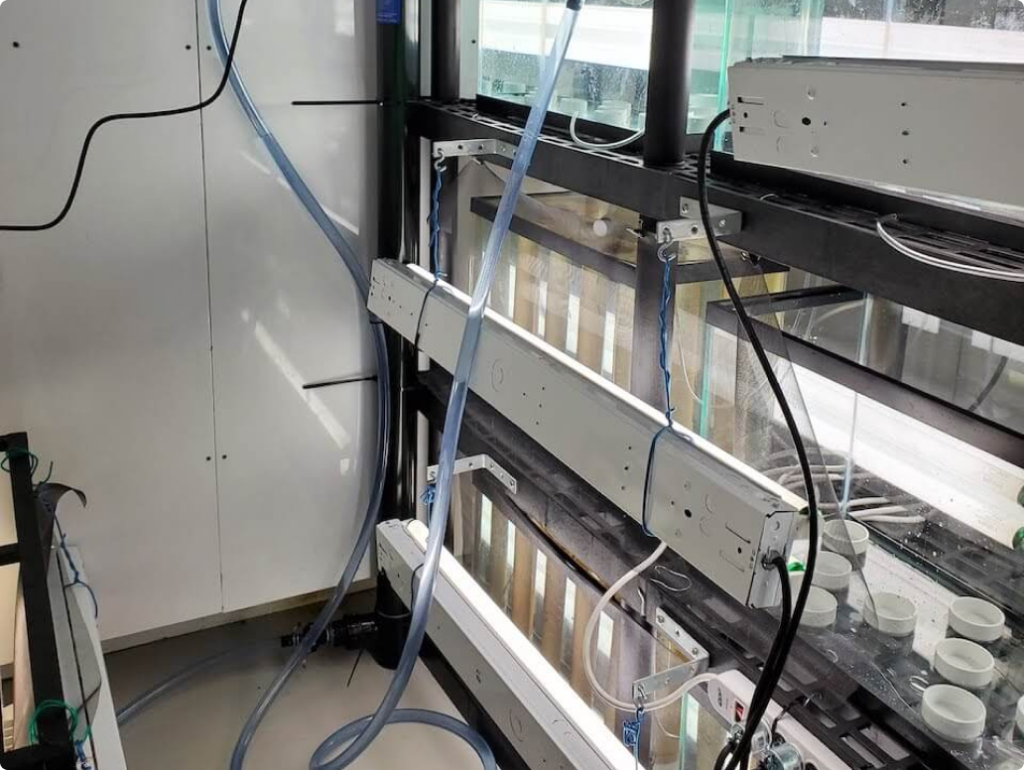
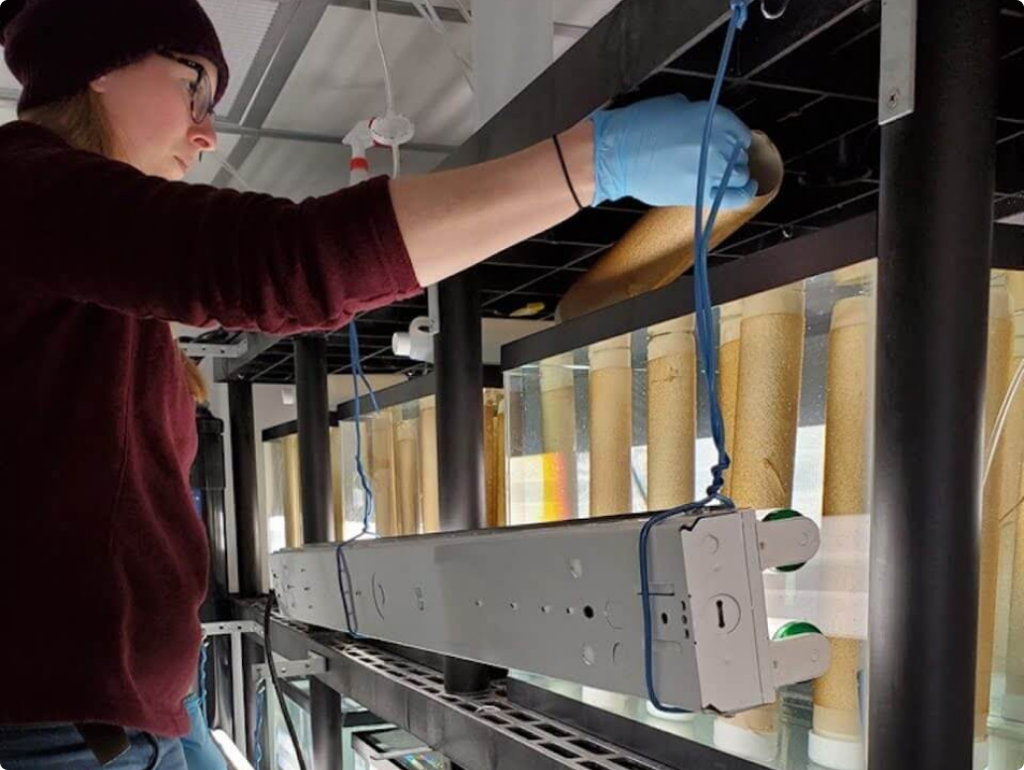
Shinnecock Kelp Farmers, New York
The tanks are plumbed in pairs to save money on the number of chillers and pumps that are needed. Only one pair of tanks is operational at a time, while the other set is cleaned and prepared for weekly water changes.