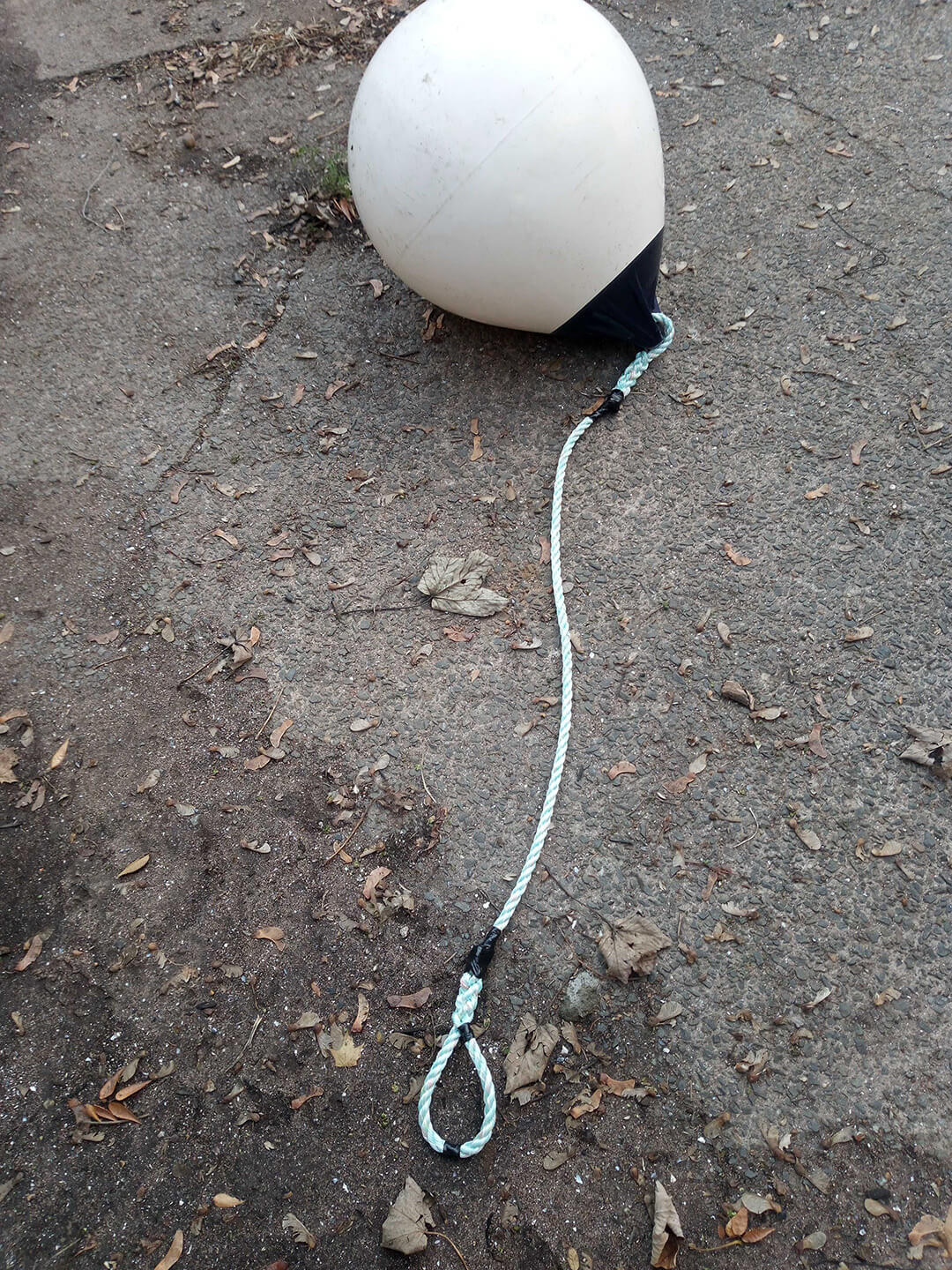
To review our recommendations for line type and diameter for different parts of your arrays, visit the lesson on lines in the Gear Selection course.
Lesson 3
Prep Your Lines
Back to: Gear Prep
Identify Different Lines
You’ll need a variety of different types and lengths of line to perform different functions on your farm: anchor lines, growlines, buoy lines, etc. The same type and diameter of line can often be used for multiple functions on your farm. At the beginning of the season, you might purchase one or two big coils of bulk line that contain enough length to build all of these different components. Once the bulk line arrives, you’ll need to measure and cut it to the appropriate lengths to build all of the individual components of your arrays. This can be a time-consuming task.
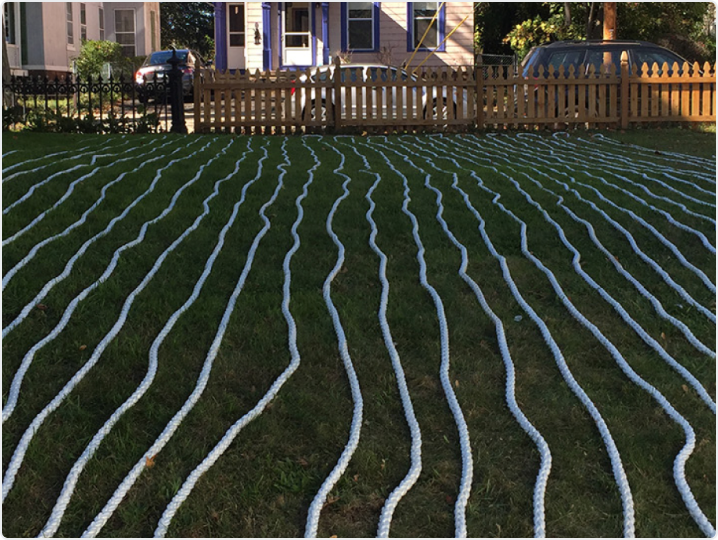
The first step in prepping your lines is to determine the appropriate length of each component of your array. This will depend on the specifics of your site and farm design.

GreenWave Tip
Anchor line
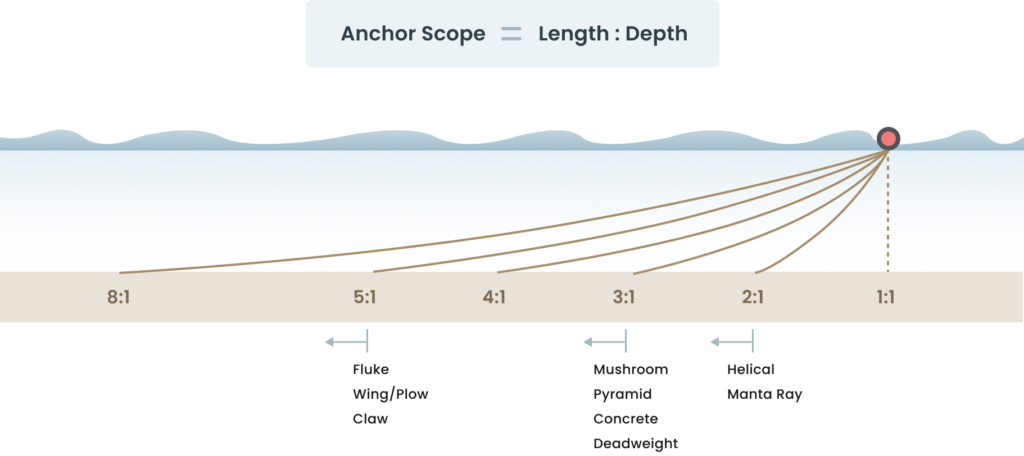
To determine the length of your anchor line, you’ll first want to confirm the depth of your farm site at mean high water. Travel out to your site at high tide, and measure the depth of the spot where you intend to install your arrays with either a depth sounder or a weight on a string. Based on your measurements and the type of anchor you’re using, multiply this dimension by the recommended ratio to gain the appropriate scope (refer to the Farm Design Tool or the Anchor Lesson in the Gear Selection course for more details on the recommended scope of your anchor lines). Whatever distance you calculate, we recommend adding an additional 20 feet of length to leave space for knots and tails on either end. You can always trim the tail later.
Growline
The growline should be sized to match whatever length you specified in your permit application and farm design. Growlines typically range anywhere from 100 to 400 feet. Multiply the total length of your growlines by the number of growlines on your farm, and this will also correspond to the amount of seed string you request from your hatchery.
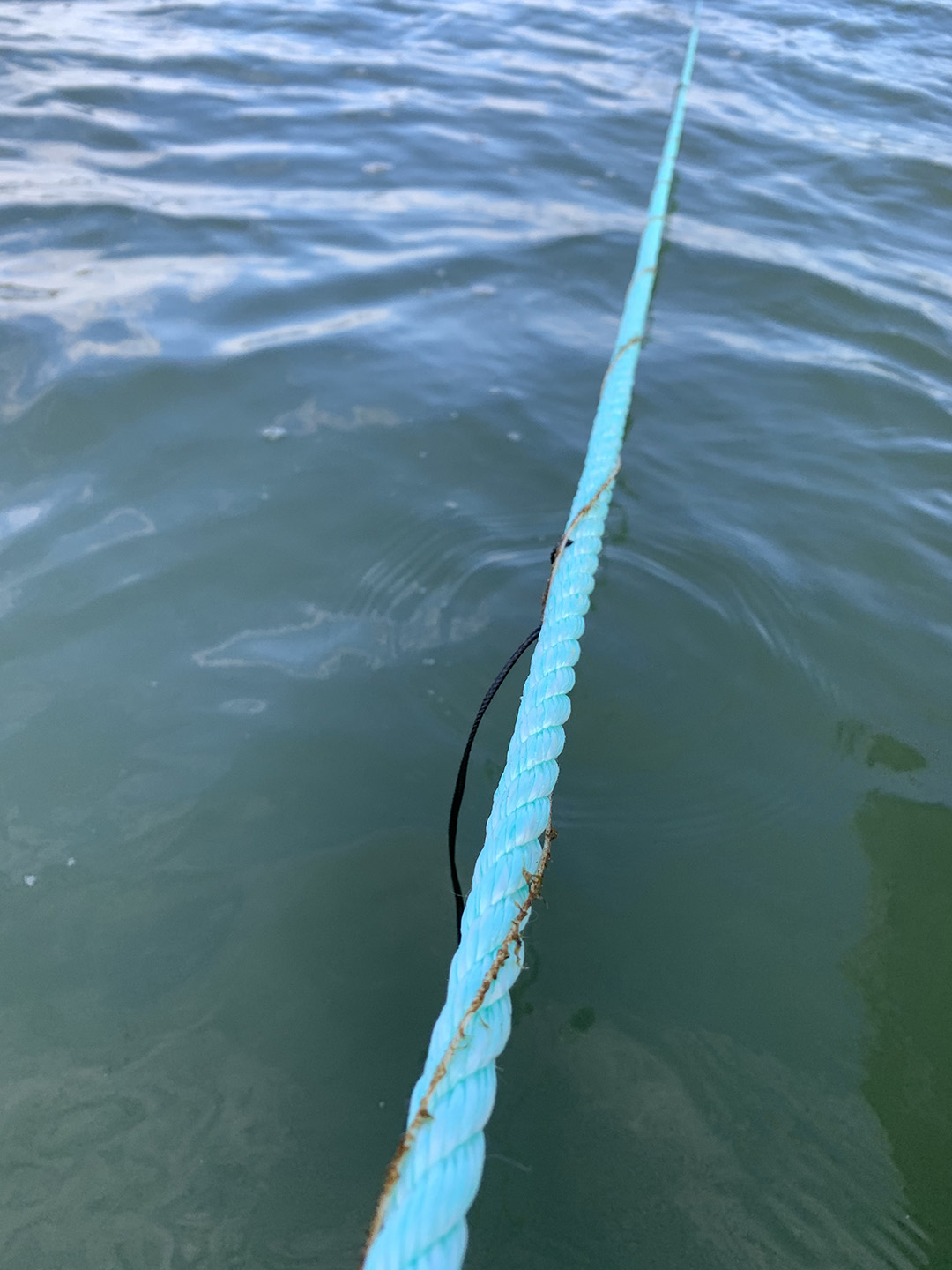
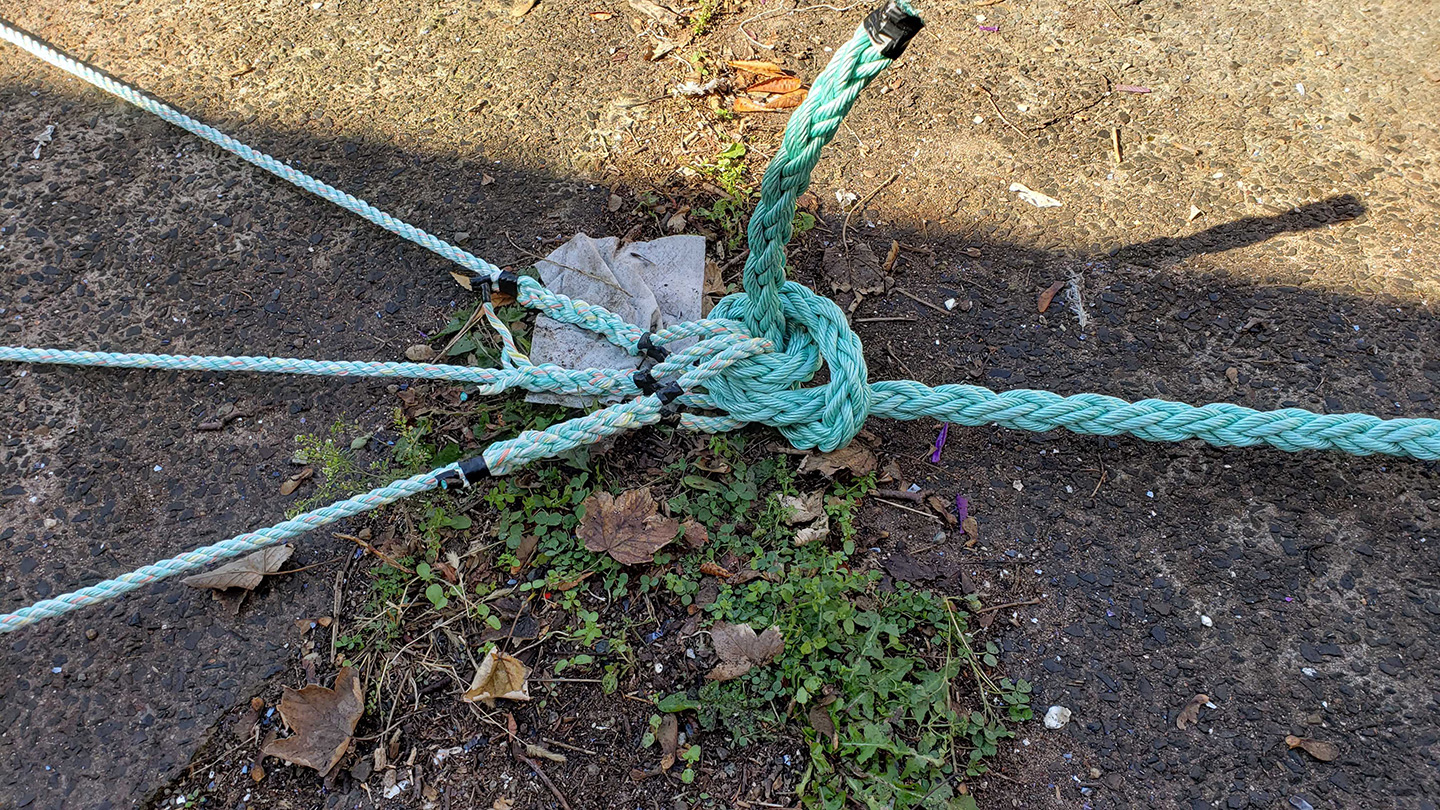
For single-line arrays, your growline can be connected to your anchor lines on either end with a bowline knot. We recommend adding 10 feet of line per side for these knots, for a total of 20 extra feet per array. For a 5-line array, you’ll splice in a c-link to the end of your growline, so you’ll only need to add approximately one foot per side to make this connection.
Dummy lines
A dummy line is essentially a stand-in for your growline and should match in length. This could be a worn or repurposed growline from a past season or a different type of line entirely. The reason we use dummy lines is that if your growline sits in the water for too long before seeding, it could become biofouled with organisms that might outcompete your kelp. To avoid this, we recommend using dummy lines in place of growlines when you install your arrays. On the day of seeding, or a few days before, you can swap out the dummy line for the growline.
Pigtails
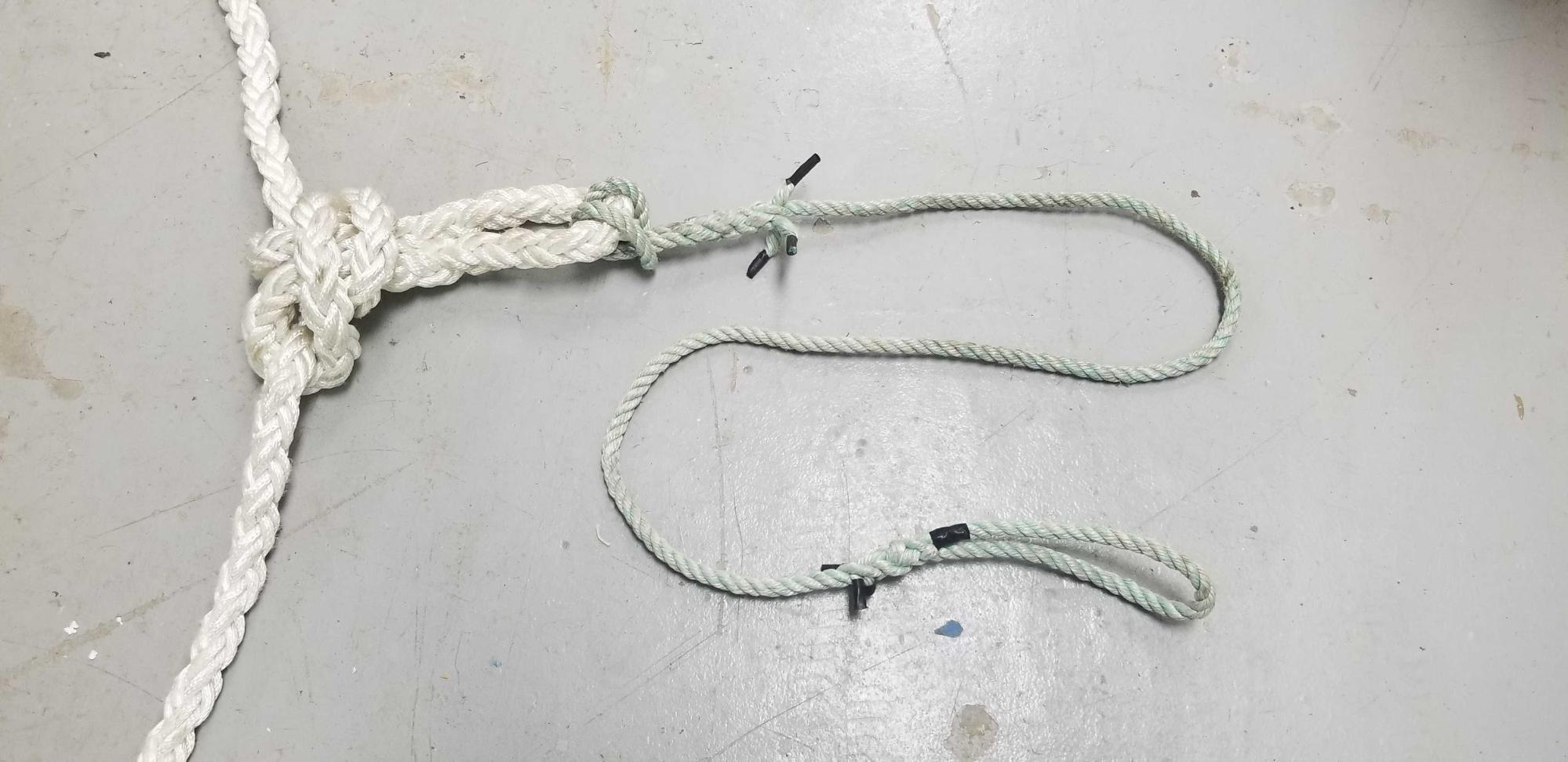
Pigtails are short lengths of line (usually 10 feet or shorter) with an eye spliced into either end. They can be used to connect different components of the array together—such as the anchor line to the growline, which gives an access point to the growline without disturbing the kelp and makes the system easier to access when it’s under tension. Pigtails are also commonly used for the 5-line array to connect the growlines to the spreader bar.
Buoy lines
For connections to your growline buoys, we suggest sizing your buoy lines so that they’re around 4-8 feet in length. The goal of the growline buoys is to keep the kelp lines suspended at the optimal level for growth by being near enough to the surface to absorb the energy of the sun, but far enough below the waterline to absorb maximum nutrients. It’s important to note that during rough weather, your buoy lines can swing around and strip the kelp off your lines. They can also snag and become tangled with floating debris. Throughout the season you may want to adjust the length of your buoy lines depending on the type of growth you’re seeing on your lines and other issues that may arise.