Back to: Gear Prep
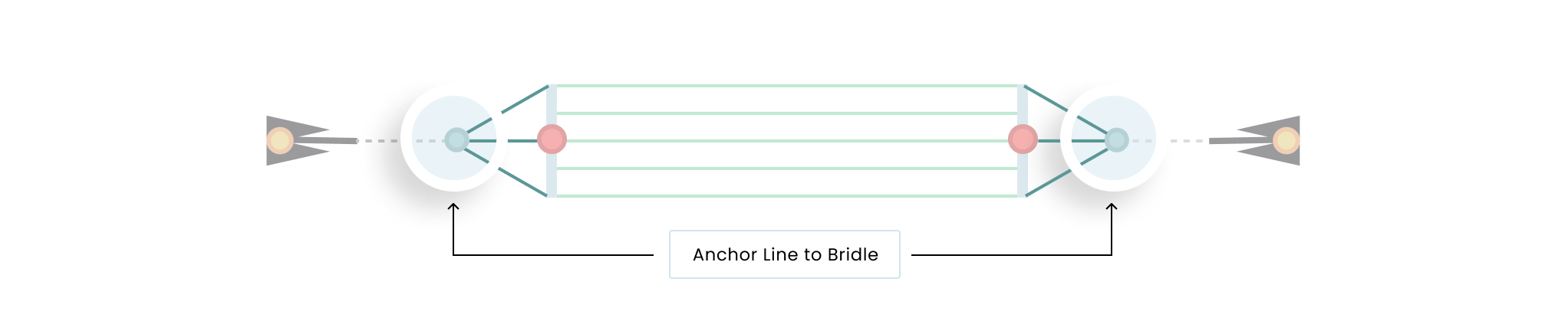
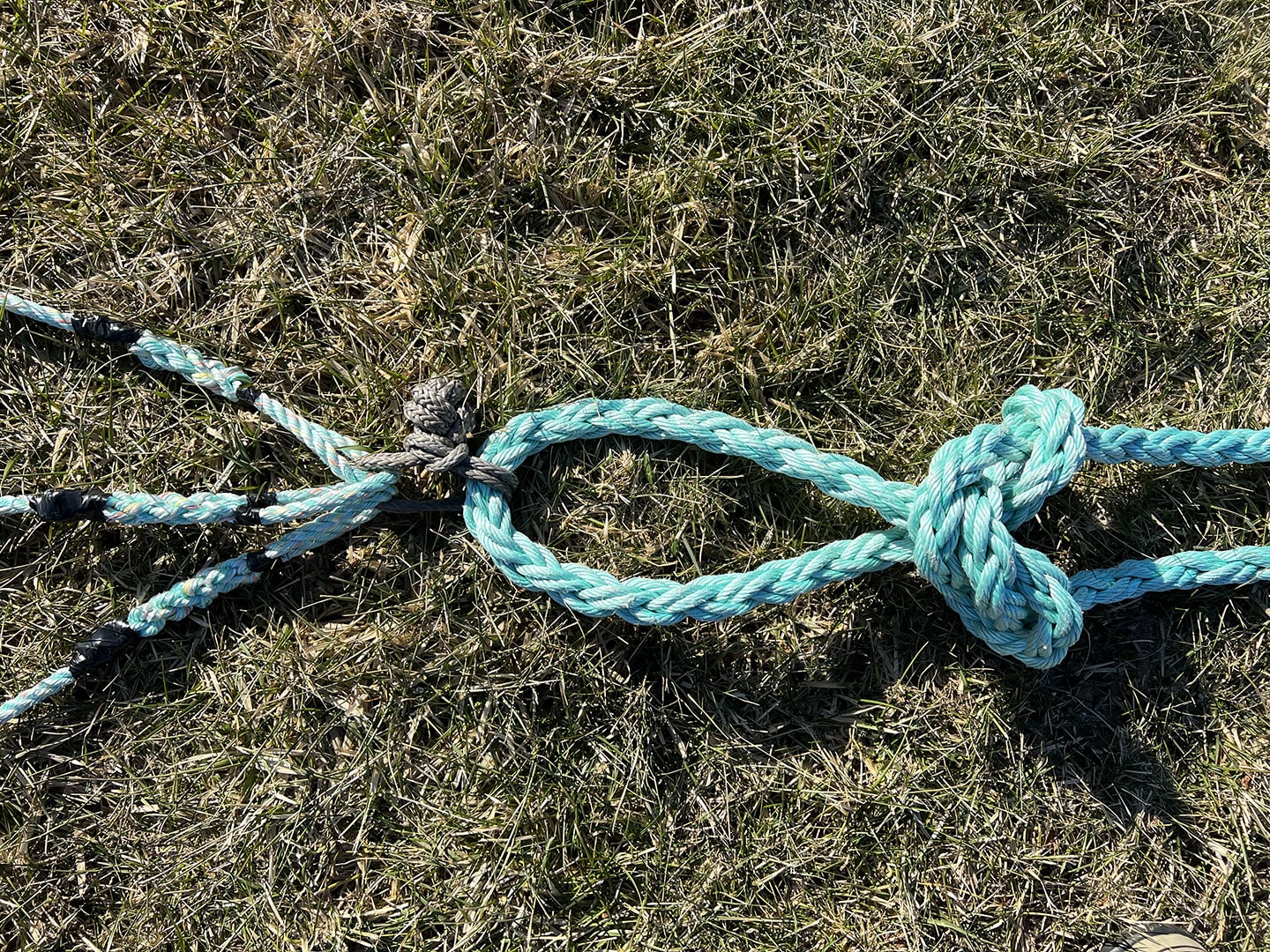
When using the 5-line array, the end of the anchor line is typically spliced into a loop. From there, three connector lines, which have been pre-spliced with a loop and threaded through themselves, form the bridle that connects the anchor line to the welded eyes on the spreader bar.
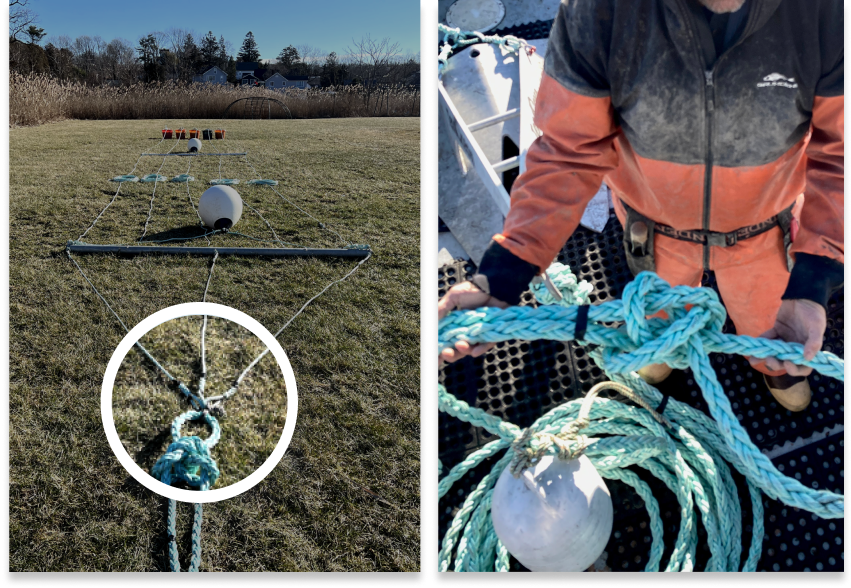
The connection between the anchor line and the bridle lines is a good place for a soft shackle. It allows you to easily remove the array if needed and more easily install the system on the water.
Alternative configuration: use a deadeye
An alternative connection point for the junction between the anchor line and the 5-line array bridle is to integrate a deadeye tensioning system. The advantage of a deadeye system is that it allows you to adjust the tension of the array after the anchors have been set. The disadvantage is that it is one more design element to add to the system, and deadeyes can become fouled throughout the season, which makes them hard to adjust.
Deadeyes function much like a built-in block and tackle system and allow you to create and relieve tension within the 5-line system. Deadeyes are used in pairs, and each one has three holes. One deadeye is attached to the anchor line while the other is attached to the spreader bridle. A line called a lanyard is run back and forth between each deadeye. Pulling in on the lanyard brings the pair of deadeyes closer together, tensioning the system. Releasing the lanyard moves the pair of deadeyes further apart, adding slack to the system. The distance between the deadeye pairs will determine how much tension you can put in the system. We suggest having at least 15 feet between the pairs of deadeyes and at least 10 feet of extra lanyard line when deploying the system. This will allow you to tension and slack the system as needed.
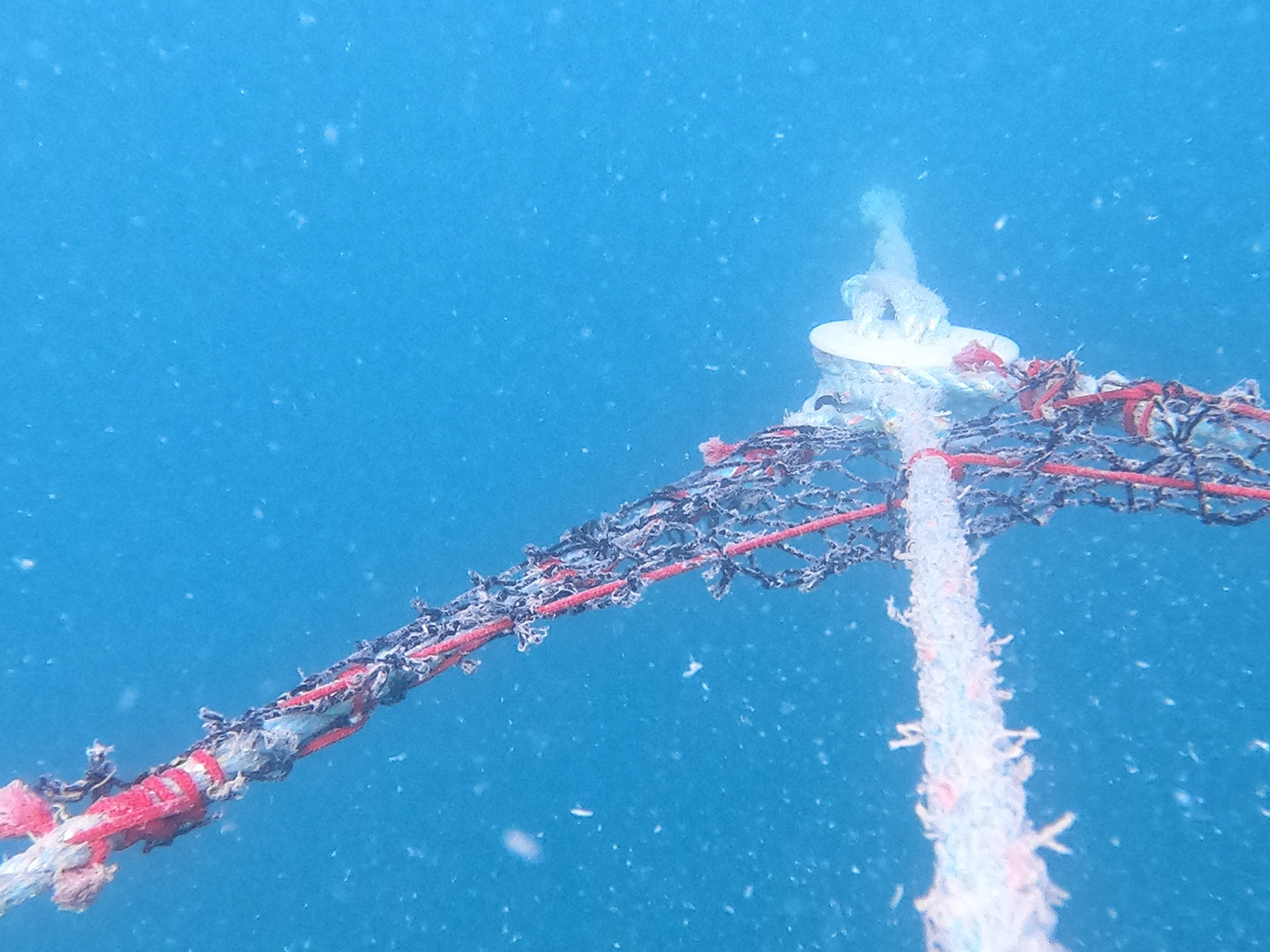
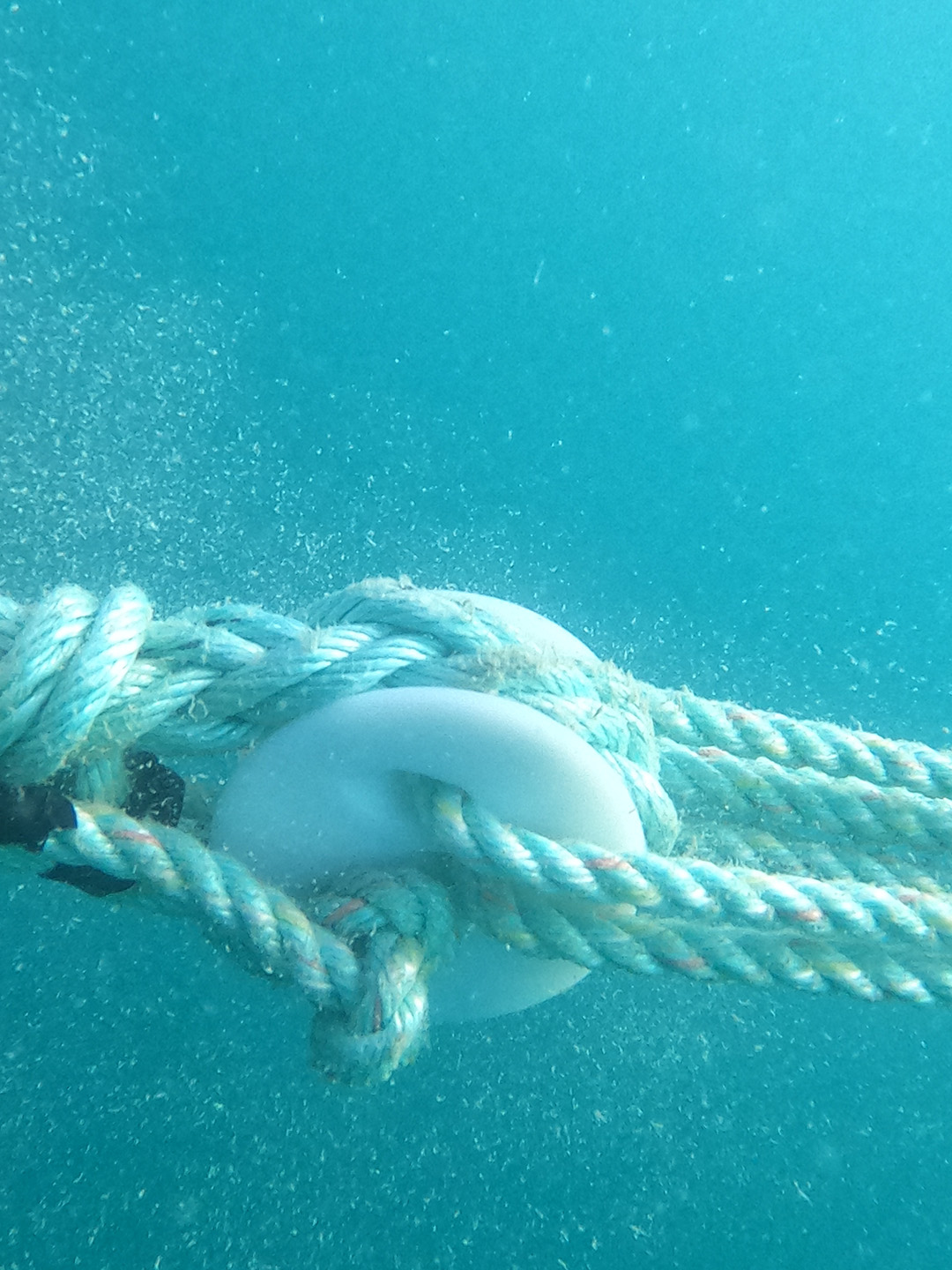
Watch this video of a deadeye system integrated between the anchor line and the bridle lines, as seen underwater (note that this system has twisted; ideally the system should be free of twists).
In this video, you can see how the deadeye system is tensioned using a line hauler.