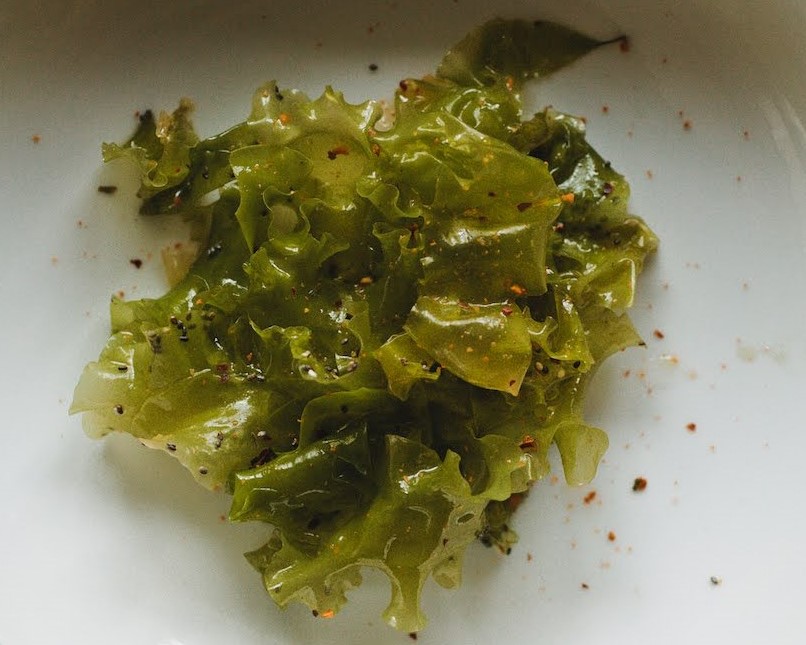
When creating recipes, use a kitchen scale and record exact weights rather than volumes. Find a volume to weight conversion here.
Lesson 2
New Product Development
Back to: Nurturing & Preparation
Test Your Ideas
It makes sense to begin with recipes you love, and maybe even know by heart — but until it’s written down it won’t do you any good as a product concept. As you dial in your recipe, make sure you’re documenting instructions so clear that someone who’s never made your product before could do it and have it come out the same every time. This means getting extremely specific about measurements and processes.
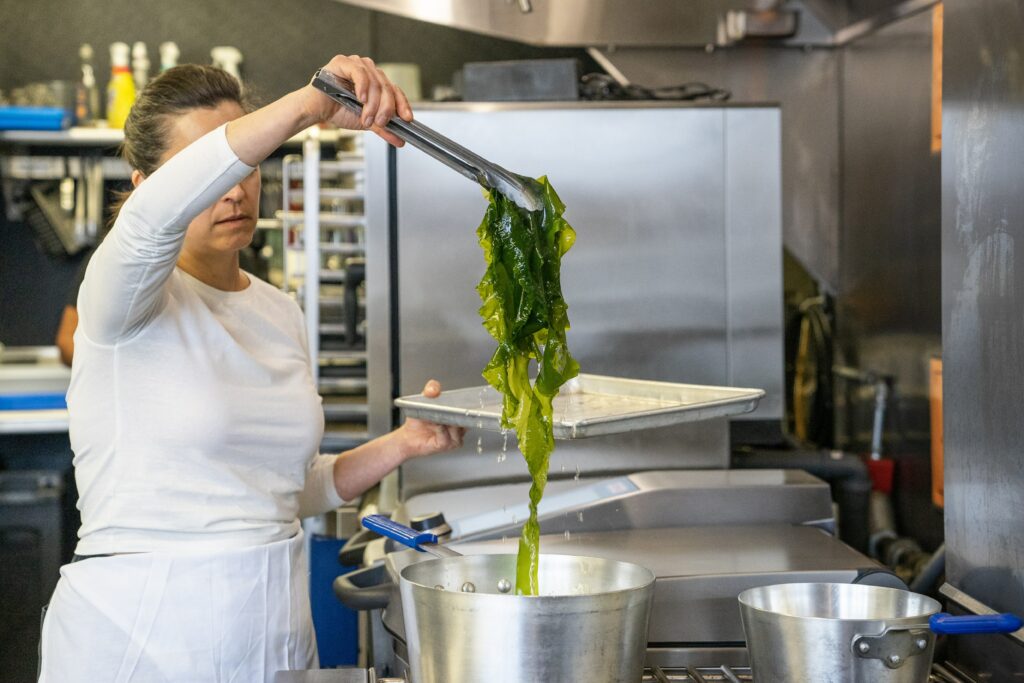
For kelp in particular, make sure you’re extremely clear about how the raw ingredient should be handled post-harvest, as this can have an impact on its water content and weight. For example, after your kelp is rinsed in fresh water, you may want to consider a dewatering step (like a spin, drip-dry, or press) to ensure a minimal amount of surface water remains on the kelp at the time of weighing.
Once your recipe is foolproof, start providing samples of your product to family and friends and collect feedback on flavor, texture, and appearance. Modify your product based on the feedback, and repeat. Gradually expand your circle. Farmers markets and specialty stores can be a great venue to demonstrate products and hear directly from prospective customers what they think about your recipe. If you’re having trouble figuring out how to incorporate feedback, it might make sense to hire a chef to help achieve your desired end product.
Industry Tip
At some point, you might also choose to pay for a wider audience to provide more rigorous feedback on your product through sensory evaluation testing. While there are private companies that offer this service, land grant universities often have food innovation labs with similar offerings at more competitive prices.
Scale Up Your Recipe
When you have a product you like, it’s time to figure out how to produce it at higher volumes. A good start-up volume for a liquid product is 5-10 gallons; for a solid product, consider 15-25 pounds. When you do this, you may find that the ratios of certain ingredients need to be modified, or that processes that make sense at a small scale simply don’t translate to larger batches.