Learn more about how gametophyte culturing and direct seeding could transform the ocean farming industry in this article from GreenWave’s farmer newsletter, “Holdfast.”
Lesson 2
Kelp Hatchery Techniques
Back to: Kelp Culturing 101
Gametophyte Culture
Gametophyte culturing is a method that has primarily been practiced in laboratory and research settings to date, but new knowledge and techniques are emerging that will allow commercial hatcheries to start utilizing this method.
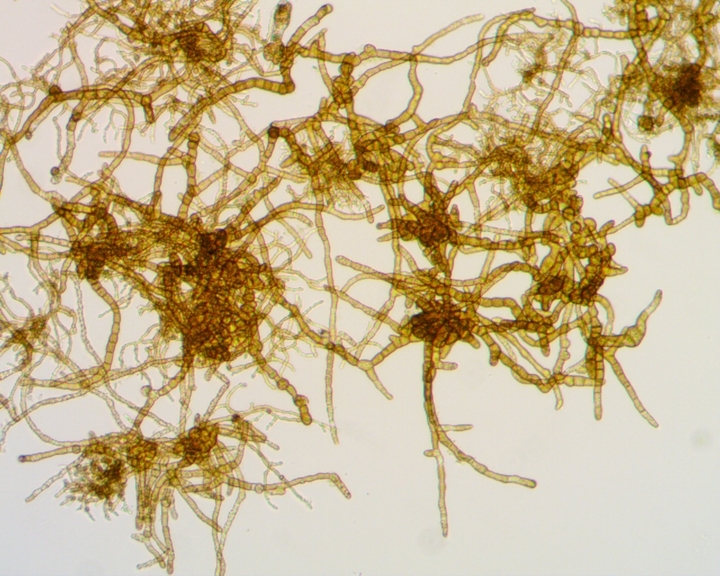
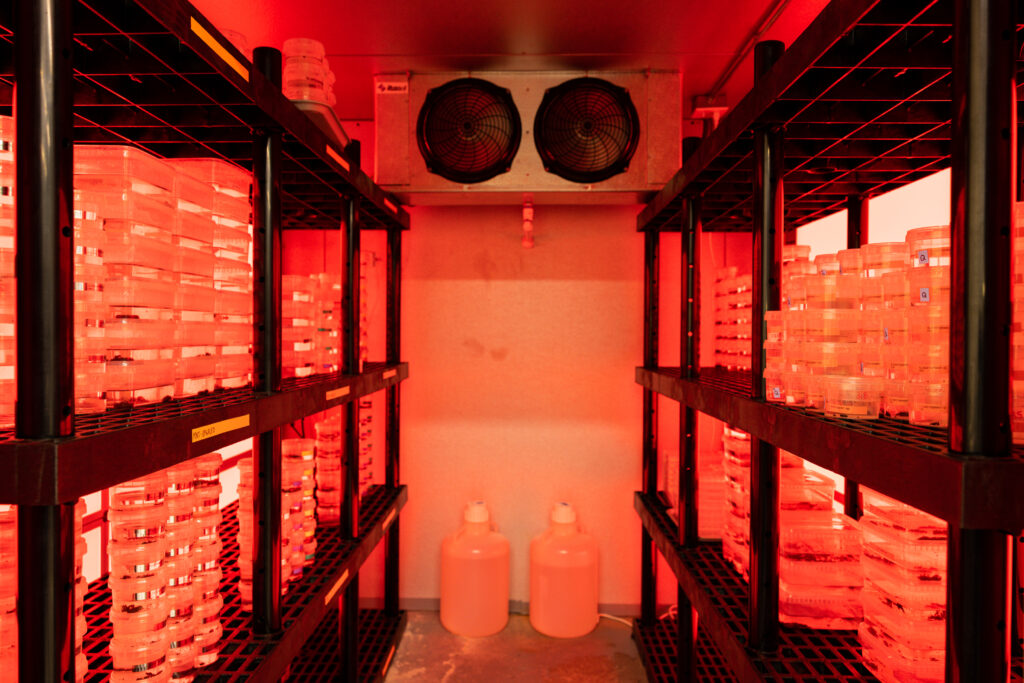
Gametophyte culturing is a method that capitalizes on the unique life cycle of kelp. Instead of wild kelp spores attaching to and growing directly on seed string, they are instead released and allowed to settle in a container, where they will develop into the next stage of life—gametophytes. During this process, it is critical that the containers are stored under red light. The red light prevents the gametophytes from becoming reproductive and developing into sporophytes (the life stage that is outplanted on the farm).
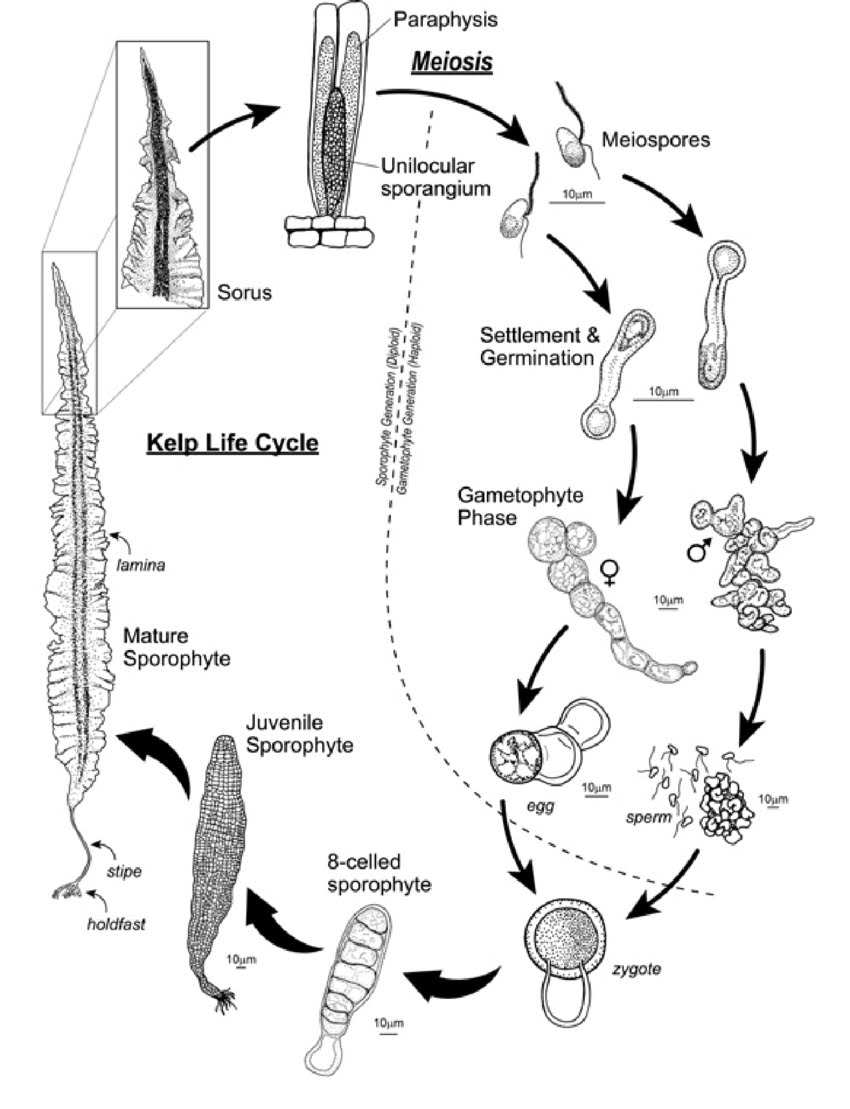
As a reminder, here is the lifecycle of Saccharina latissima (sugar kelp); notice how the gametophyte phase comes after the spore phase and before the sexually mature sporophyte phase. Credit: Morphology and life cycle of the kelp, Saccharina latissima.
Under red light, the gametophytes will continue to grow. Since they are not becoming reproductive, this period is known as vegetative growth. The goal during this phase is to increase biomass. As the gametophytes continue to grow, they can be broken up to create even more gametophytes. Once the culture is at the desired biomass, the gametophytes are taken out of the red light and given a full spectrum of light, so they can develop into sporophytes. This period of time is called induction. Once the gametophytes have become reproductive and started to develop into sporophytes, they can then be applied to the seed string.
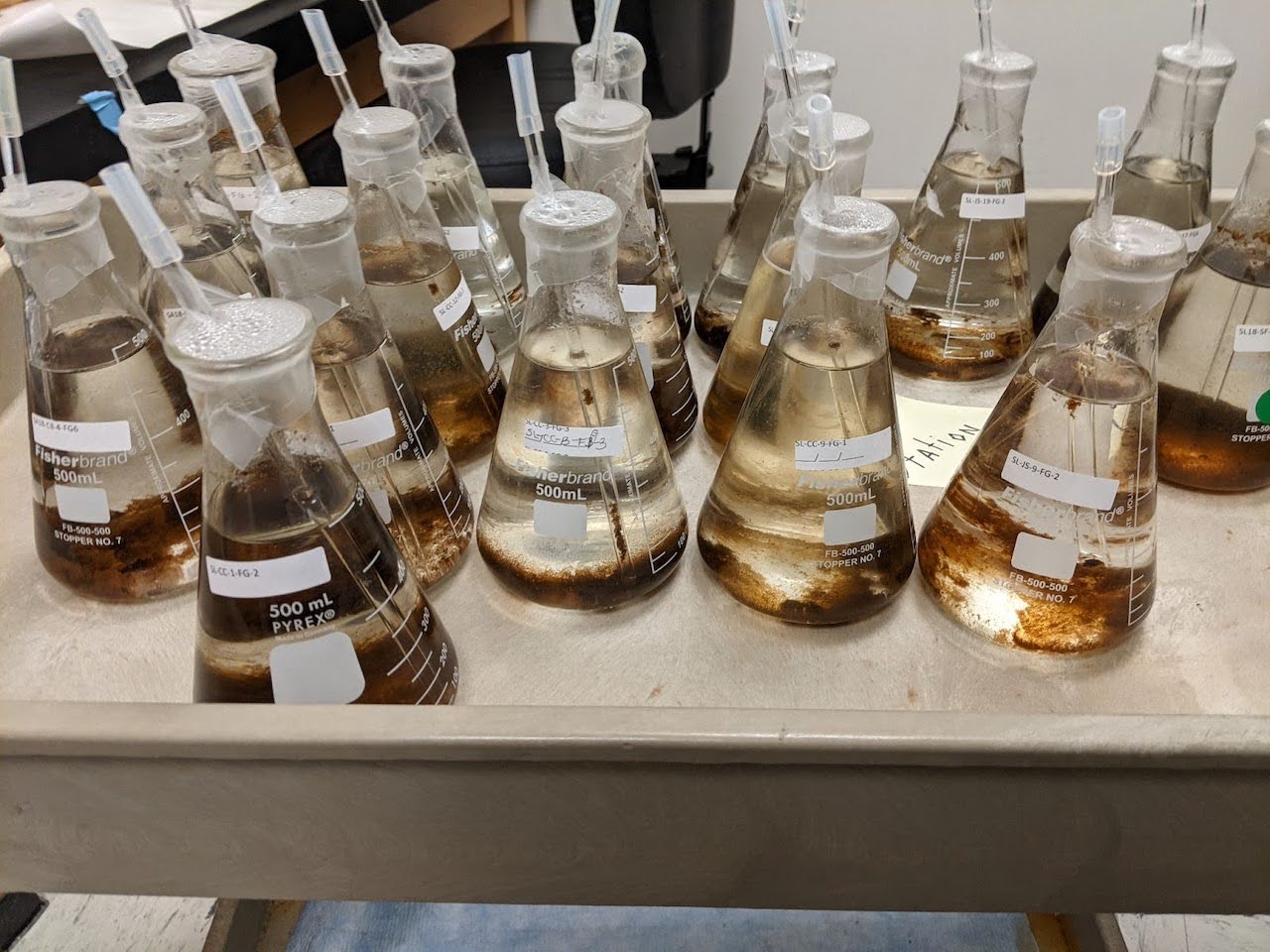
This method is beneficial because these cultures are able to be maintained for years (even decades!). Therefore, you are able to prepare the gametophytes months in advance and use them when you want, as opposed to collecting new sorus tissue each fall. This eliminates dependence on the timing of wild sorus tissue production and gives farmers and hatchery managers more control over when they plant their crops.

GreenWave Tip
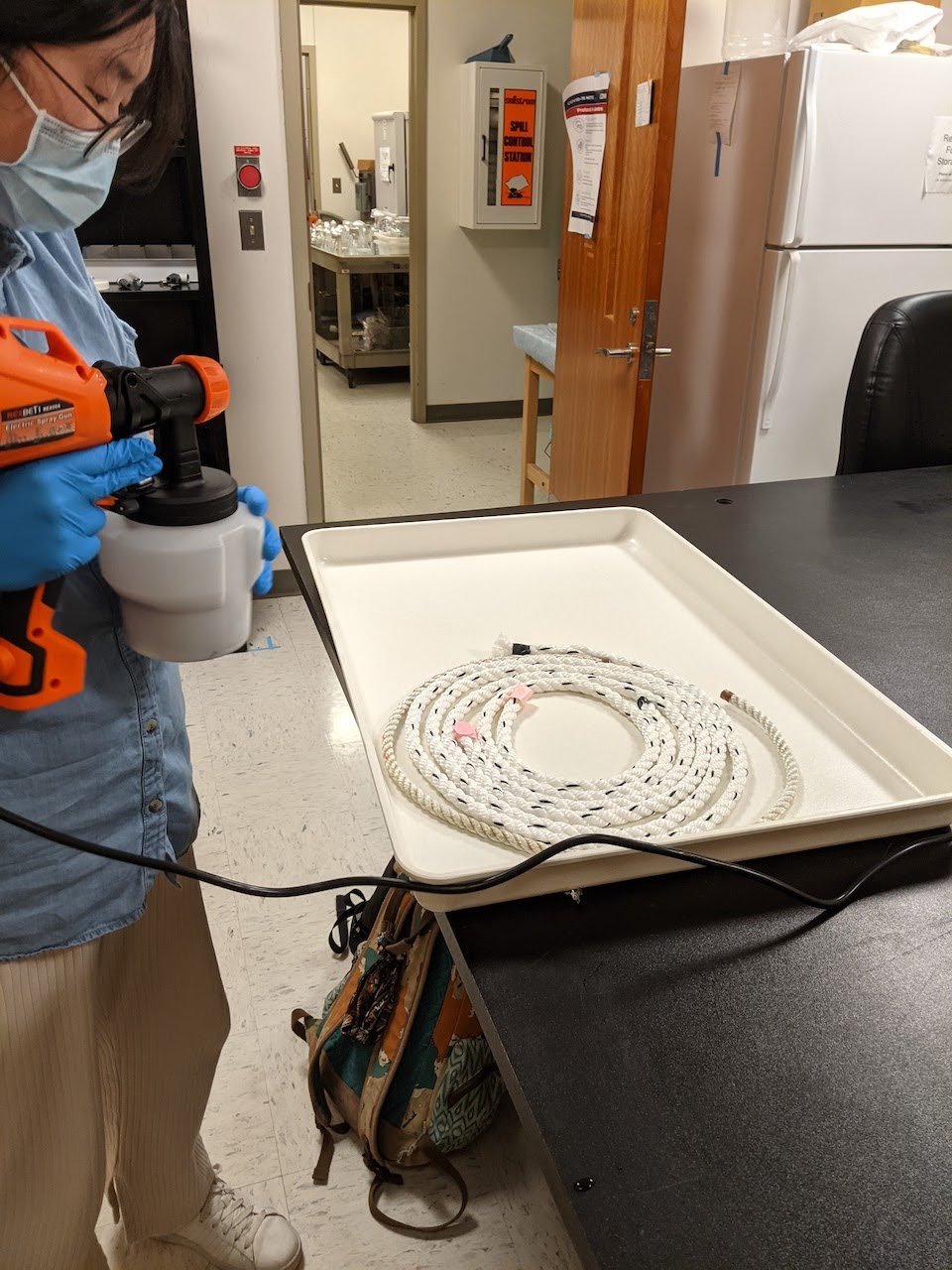
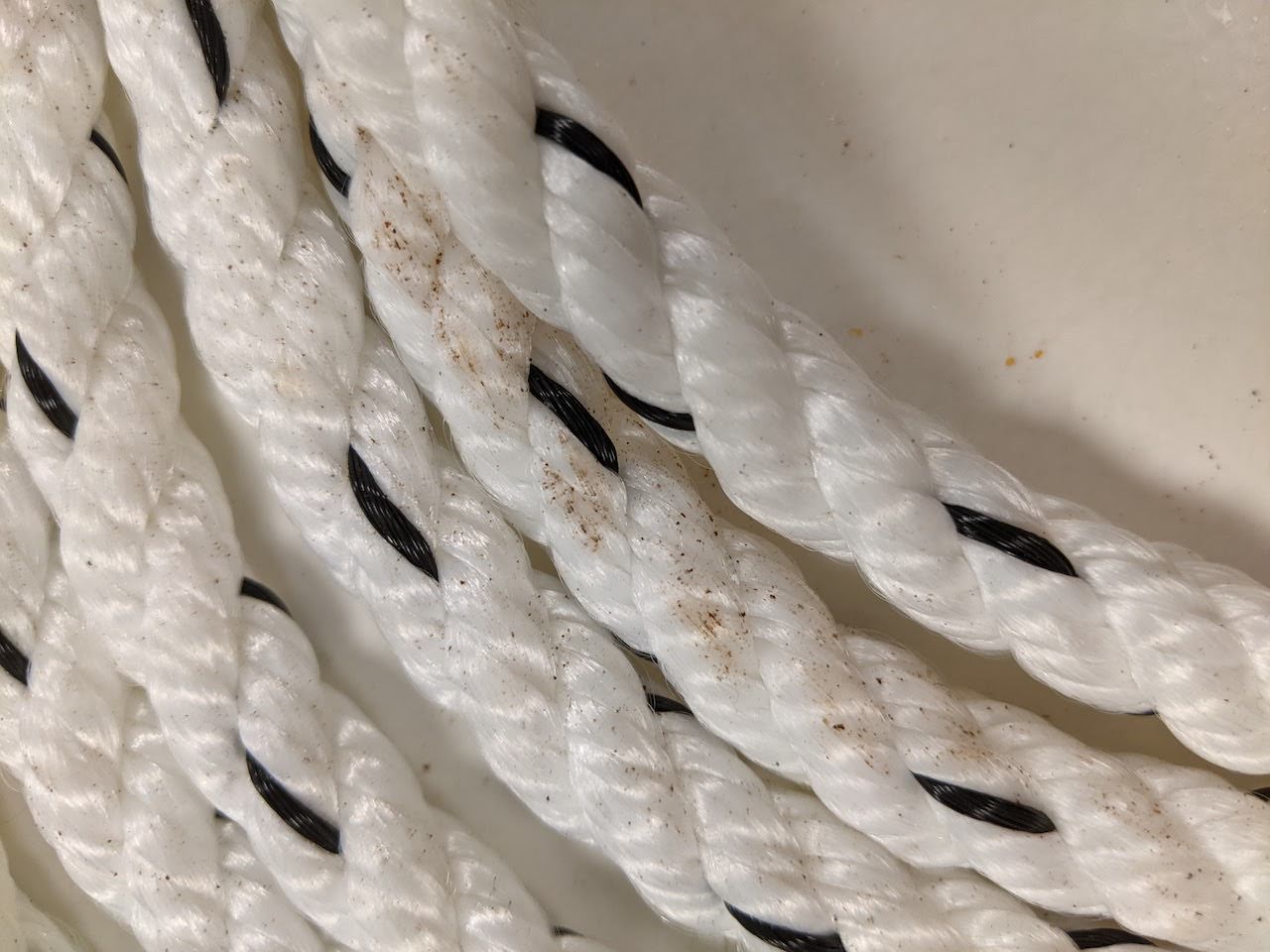
Currently, there are two main ways gametophytes make the transfer from lab to farm. One way is to adhere some of the culture to a traditional seed spool either by using a binder or by spraying them on with force. Then the spool is grown in the hatchery the same way a spore-seeded spool would be. The second method is an application called “direct seeding,” which applies the cultures directly onto the farmer’s growline, thereby eliminating the need for seed string altogether—which can be a costly hatchery expense and is a common point of failure (due to breakage) on the farm. In both scenarios, there is still discussion around the optimal binder or adhesion methods, but there have been many successful research studies to highlight the viability of gametophyte culturing and direct seeding. We expect to see this method used widely throughout the industry in the next several years.
Learn More
Check out this manual to learn more about the optimal conditions and set up for maintaining clonal gametophyte cultures: Protocols for Macroalgae Research, Chapter 3
READBoderskov, T.; et al. 2021. Effects of seeding method, timing and site selection on the production and quality of sugar kelp, Saccharina latissima: A Danish case study. Alga Research. 53: 1 – 11.
READUmanzor, S.; Li, Y.; Yarish, C. 2020. Effect of direct “seeding” binders and embryonic sporophyte sizes on the development of the sugar kelp, Saccharina latissima. Journal of Applied Phycology. 32: 4137 – 4143.
READForbord, S.; Steinhovden, K.; Solvang, T.; Handa, A.; Skjermo, J. 2020. Effect of seeding methods and hatchery periods on sea cultivation of Saccharina latissima (Phaeophyceae): a Norwegian case study. Journal of Applied Phycology. 32: 2201 – 2212.
READKerrison, P.; et al. 2019. Twine selection is essential for successful hatchery cultivation of Saccharina latissima, seeded with either meiospores or juvenile sporophytes. Journal of Applied Phycology. 31: 3-51 – 3060.
READKerrison, P.; Stanley, M.; Hughes, A. 2018. Textile substrate seeding of Saccharina latissima sporophytes using a binder: An effective method for the aquaculture of kelp. Algal Research. 33: 352 – 357.
READ