Your intended market
Lesson 3
Boat Setup
Back to: Harvest
Configure Your Boat for Harvest
When it comes time to bring your kelp to market, there is no standard or “right way” to harvest. The industry is still so new, and every farmer’s boat and farm layout is different, your chosen method will depend on several factors.
Your harvesting method will depend on:
-
-
The boat you have available
-
What equipment you have around that could be repurposed or retrofitted for the task
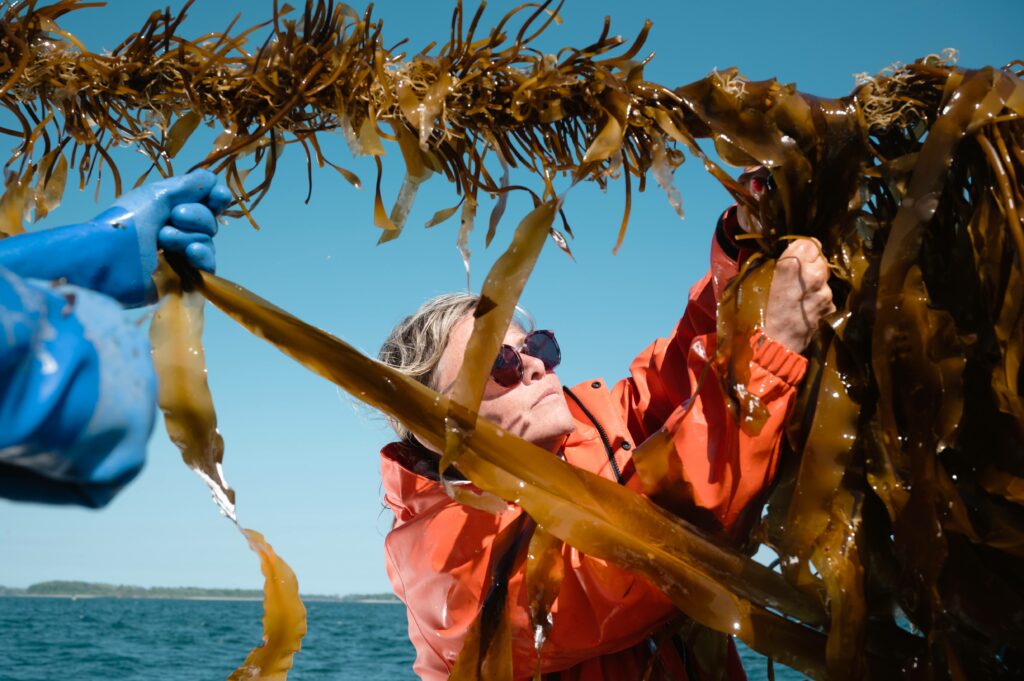
In general, harvest happens by retrieving the growline from the water and cutting the kelp blade off just past the holdfast.
It’s most comfortable, safe, and efficient to devise a harvest configuration on your boat where you can work at standing height.
Industry Tip
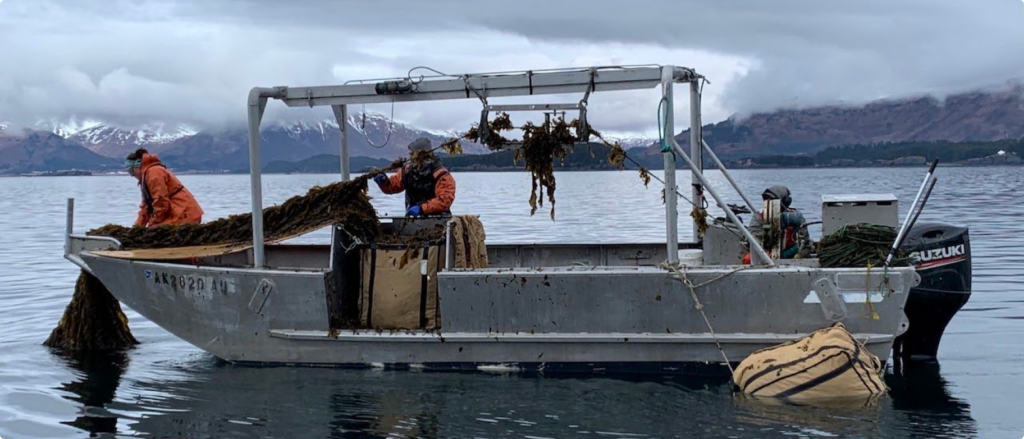
When configuring your boat for harvest, use an overhead pick point when you raise the growline out of the water so you can work at standing height.
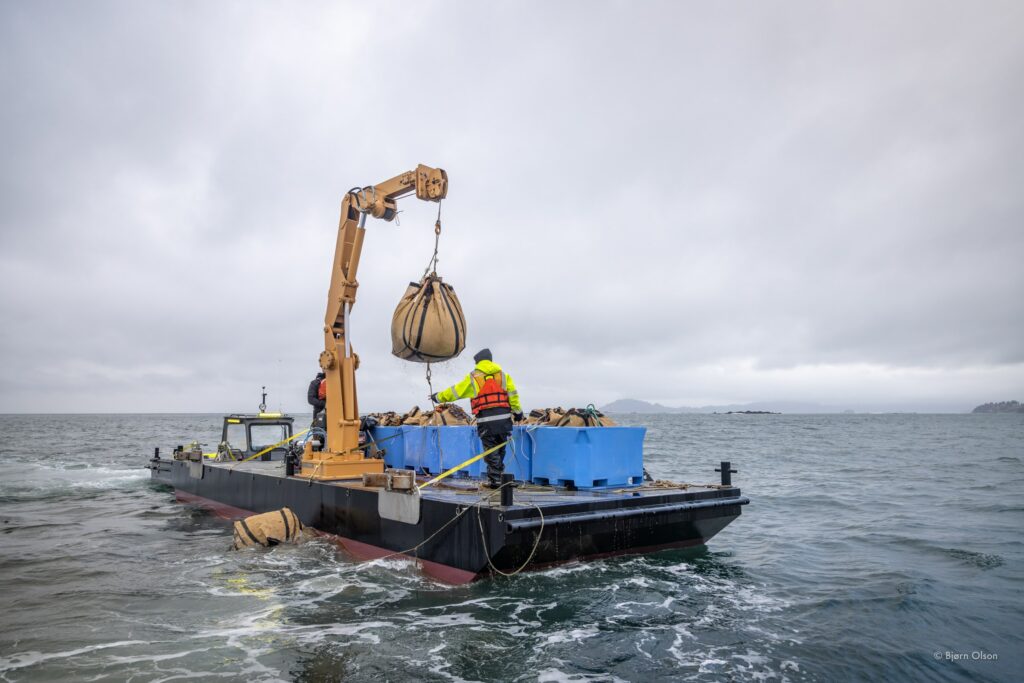
Typically, this is achieved by routing the growline through an overhead pick point with a block or roller, so that the kelp hangs overhead and can be cut at chest height. If your boat isn’t large enough to support an overhead pick point, you might consider leasing a boat for the few days that you intend to harvest. Although most ocean farming activities can be accomplished with a small skiff, harvest is one time when it’s helpful to have a larger boat to work with. By bringing your kelp aboard, you’ll be introducing a lot of weight to your boat. Make sure that whatever boat you choose can safely handle this additional load.
When considering how to configure your boat for harvest, think in terms of stations.
You’ll want a station where your kelp comes out of the water, a station where it can be rinsed or trimmed, and a station where it can be cut into your chosen harvest container. For a streamlined harvest, you’ll have a crew member in charge of one or multiple stations as you move down your line.
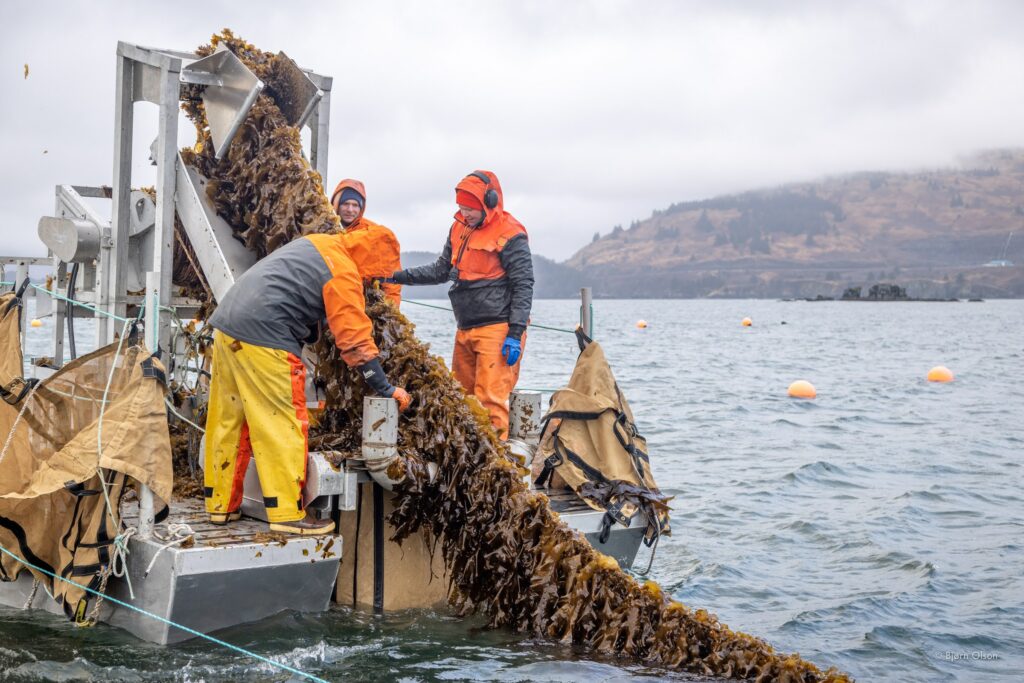
You’ll also need to think about the transition point where the kelp exits the water and comes aboard your boat.
If this happens at too sharp an angle, the kelp can sometimes get scraped off the growline and fall off into the water. Some farmers have devised small ramps or rollers to help guide the kelp onto the boat and minimize loss.
How you harvest will in large part be determined by where you plan to sell your crop. Farmers who are targeting the restaurant market may choose to handpick small batches of juvenile blades, stopping to trim off any discolored or ratty ends, and placing these in individual bins or bags. This type of selective, small-scale harvest is more time-consuming, but requires less equipment; you could use a much smaller boat.
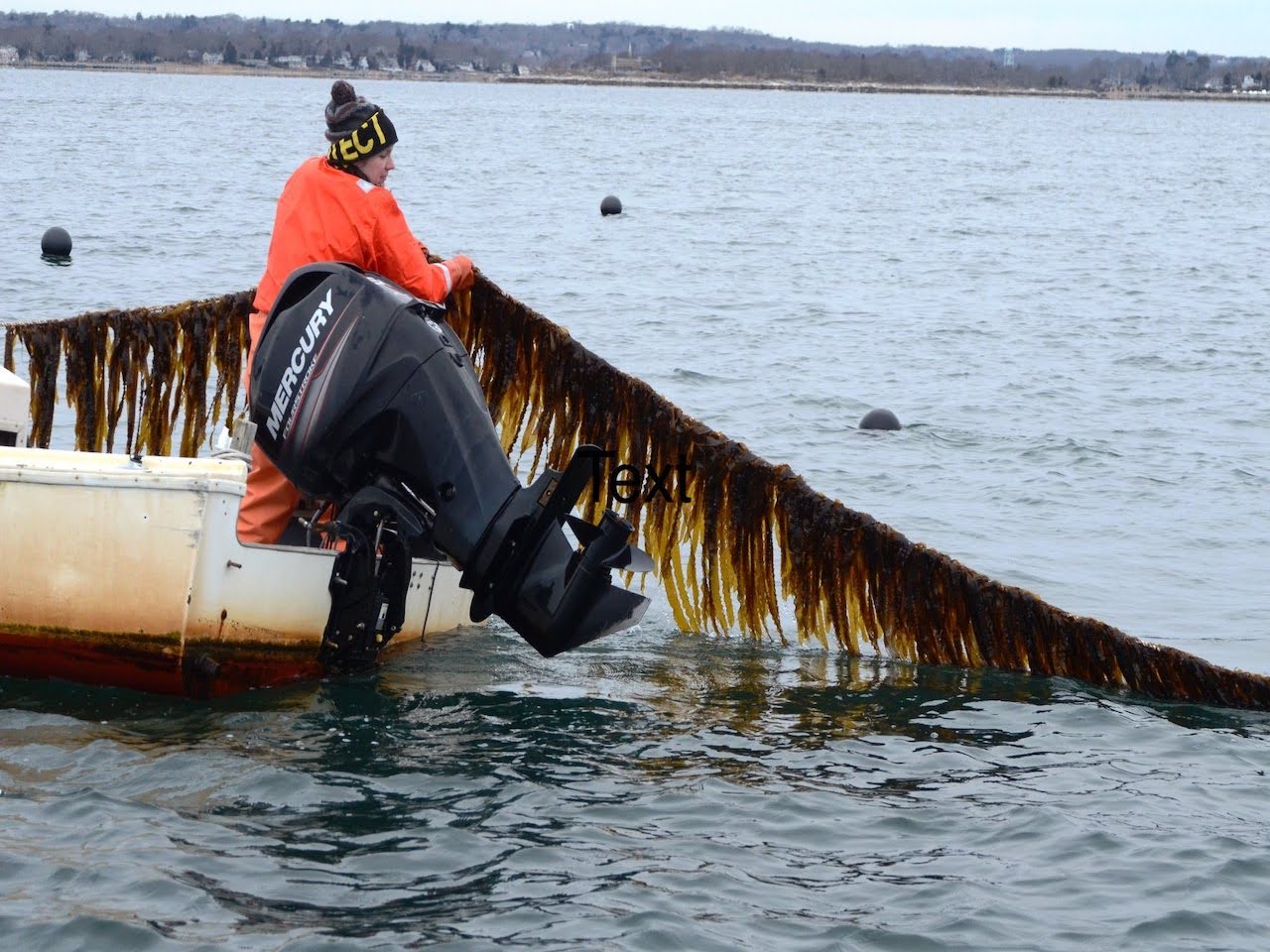
Those selling to a wholesale market, coordinating multi-thousand-pound deliveries to a buyer, will need to create a much more streamlined and mechanized system to work efficiently.
This process will look different on every boat, but generally involves a mechanical assist such as a line hauler or hydraulic reel to help pull the weight of the growline out of the water.
Again, there is no prescribed way to do this work. You’ll want to innovate your own system to fit the parameters of your boat, with the goal of maximizing efficiency while maintaining high quality. We’ll talk more about different techniques to strike this balance in the next lesson.