Back to: Fulfilling Orders
Because yield is so hard to predict, it is highly unlikely that the amount of kelp you produce will exactly line up with your sales commitments. In other words, there is only over-selling (you’ve committed to selling someone more kelp than you’re actually able to produce) or under-selling (you have excess kelp that you haven’t lined up a buyer for).
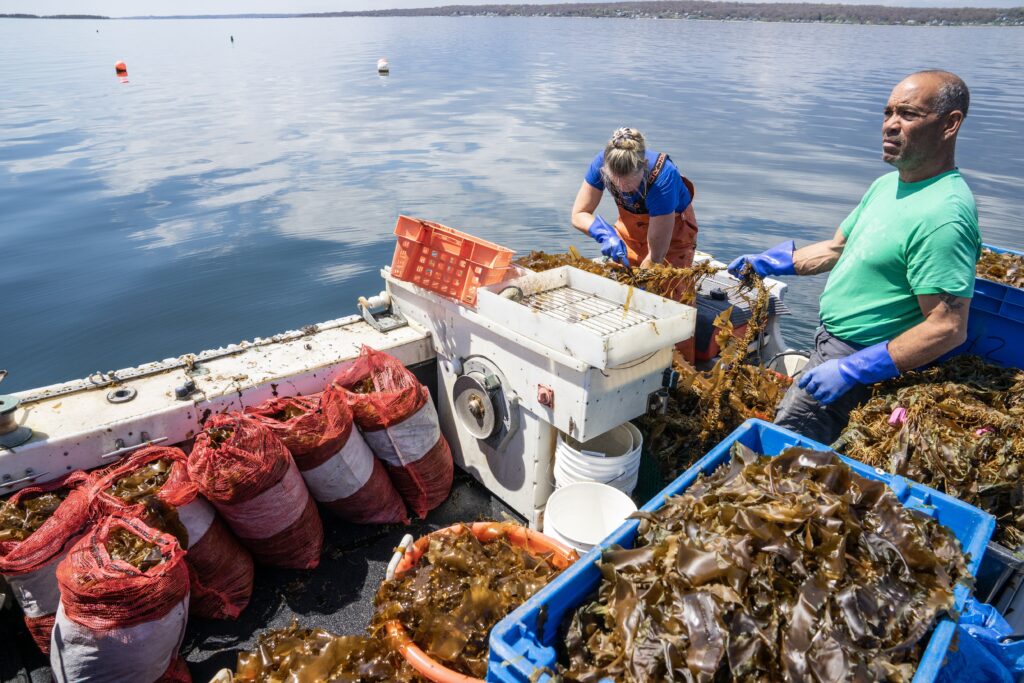
The only way to manage the risk of over-selling is through regular crop growth monitoring and exceptional ongoing communication with buyers. It’s essential to set expectations with your buyers early on about the range of possible yields, but it’s just as important to provide them with regular updates so that they can plan accordingly. As disappointing as it might be to hear that yields are not going to be what they’d initially hoped, finding out about it early will allow them to make additional purchasing arrangements if needed. If you wait until the last minute to inform someone of low yields, you may not only damage trust in the relationship but also put your customer’s business at risk.
There are a variety of ways to manage under-selling:
- Using direct-to-consumer (retail) sales to move excess kelp
- Knowing which of your wholesale buyers might be willing to buy more kelp, either at full price or a discounted rate
- Using excess kelp strategically, in the form of free samples to prospective customers (for next year), as an input to new product development, or for awareness-building
- Lining up a facility to do primary processing (stabilization) yourself, to extend the amount of time you have to sell your kelp.
- Partnering with local land-based farms who can take a flexible volume of kelp at a reduced rate or trade, for animal feed or soil amendments
Regardless of which strategy you use, we encourage you to not wait to make arrangements — scrambling is no fun, and we would hate to see any of that precious kelp go to waste!