Air and water temperatures
Lesson 4
Harvesting Techniques
Back to: Harvest
Keep Good Records
Harvest season can be a blur. Especially if you need to harvest over multiple days, it’s important to keep good records of what you’ve done, and how much kelp you still have left in the water. Leading up to harvest you may want to draw and update a map of your farm to keep track of your running estimates of how much kelp you have on your lines at any given point.
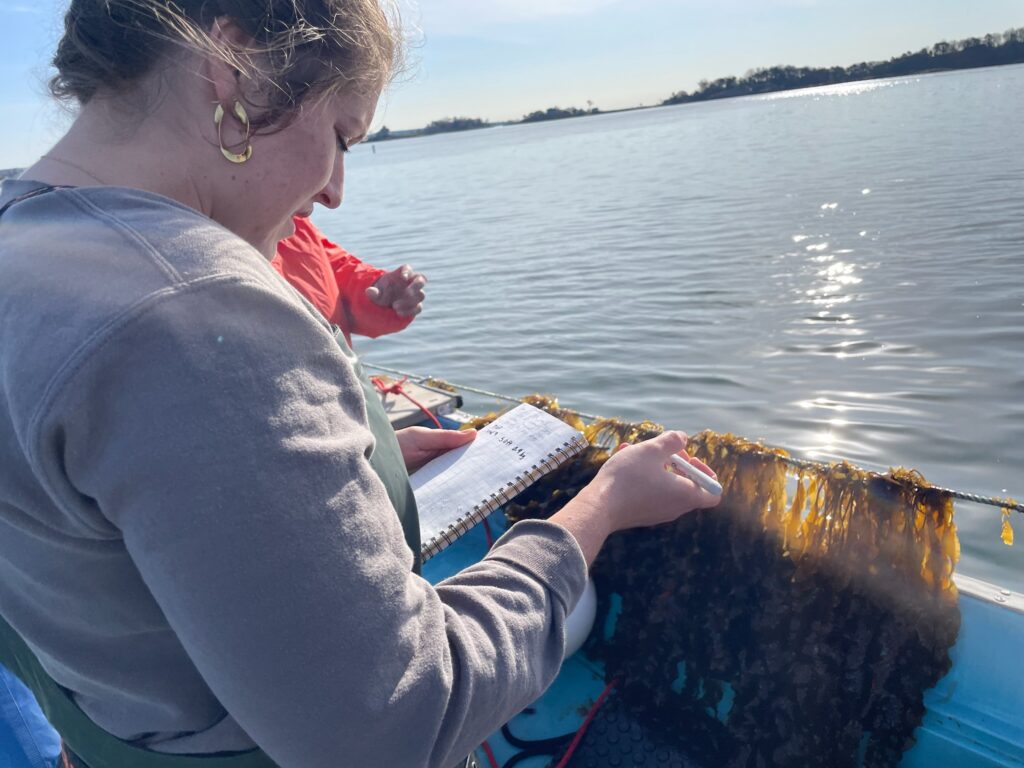
On the days that you harvest, record the date, weather conditions, air and water temperatures, as well as where each line of kelp was sold, and the time it was delivered.
Make sure to note the date, temperature, and organisms when you first start to see biofouling on your lines.
On harvest days, record:
-
-
Weather conditions
-
Whether any biofouling is present
-
Which lines were harvested
-
Where the kelp was sold or delivered
On the GreenWave farm, we use this harvest tracking map to keep tabs on how much kelp we have available at any given time. Use this as a model to make a map for your own farm.
GreenWave Resource
Harvest Tracking Farm Map
Keeping good records is also an important aspect of ensuring food safety.
While food safety regulations vary by state, most require producers to have a documented process diagram outlining steps from harvest to sale if they are intending to sell seaweed for human food. Each container of harvested kelp should be tagged with a harvest location and lot number, the time harvest began, and the time that the container was placed on ice/gel packs or under mechanical refrigeration. During harvest and transport at all times, the seaweed must only touch cleanable, food-safe surfaces, and remain protected from dirt and foreign objects. We’ll go into this process in more detail in the next lesson on Post-Harvest Handling.