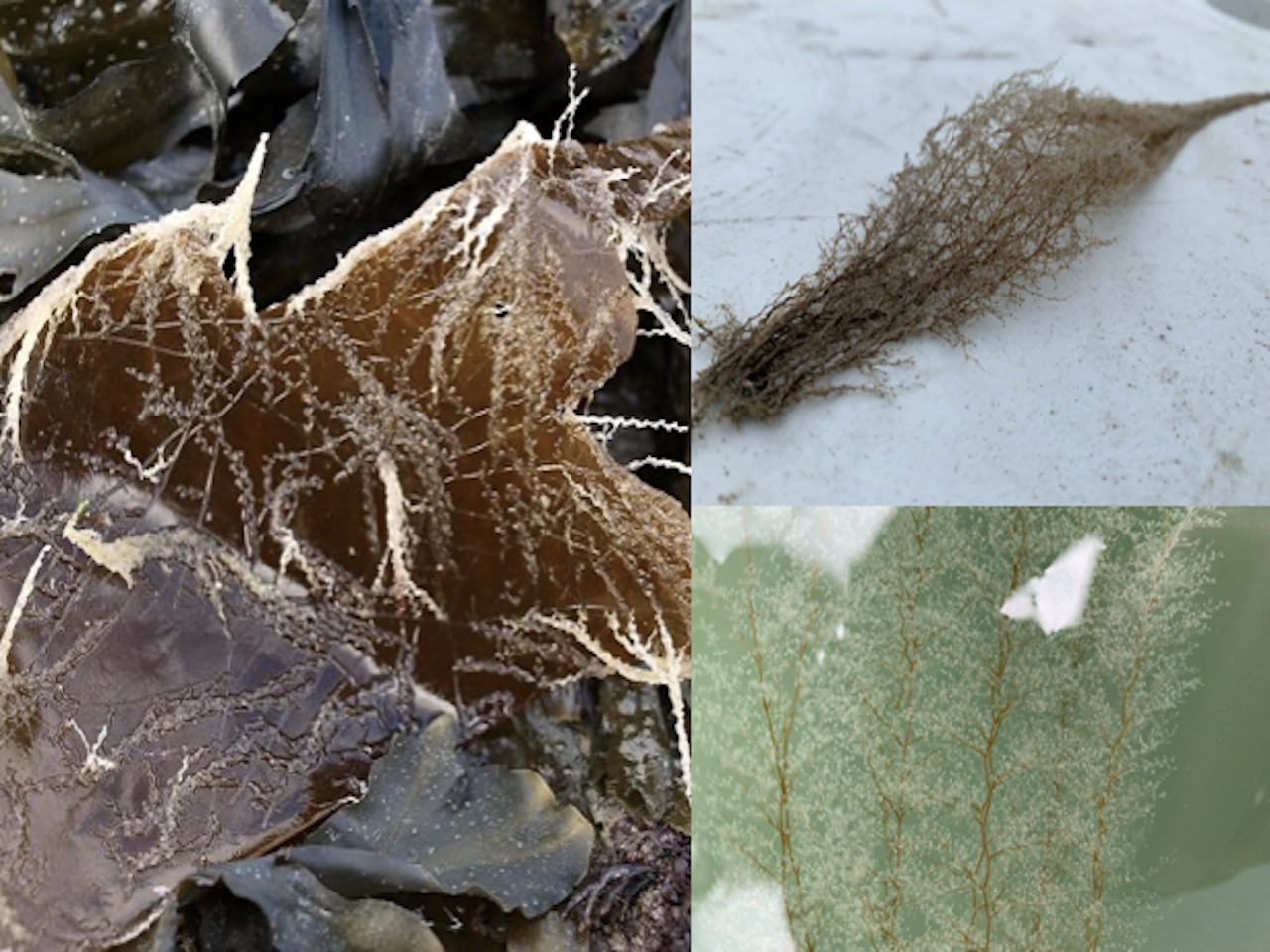
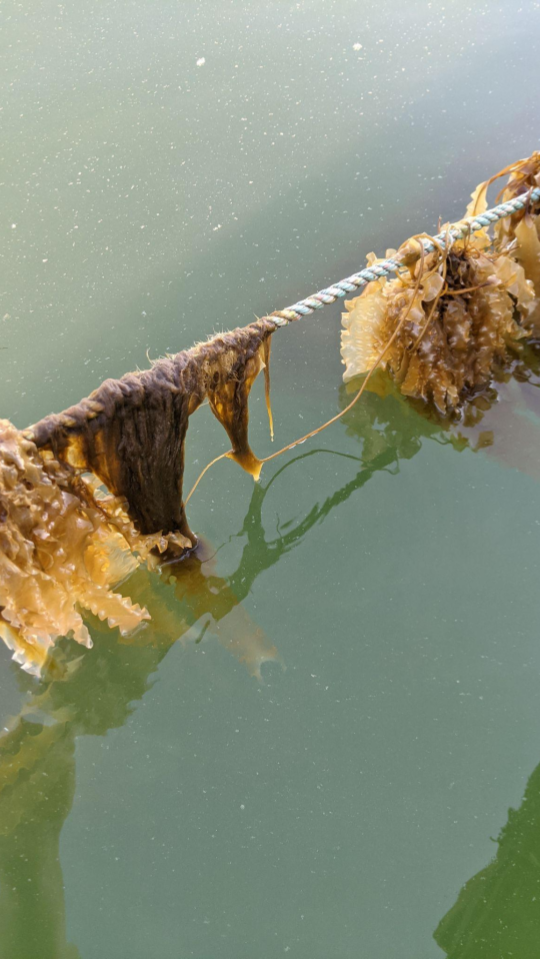
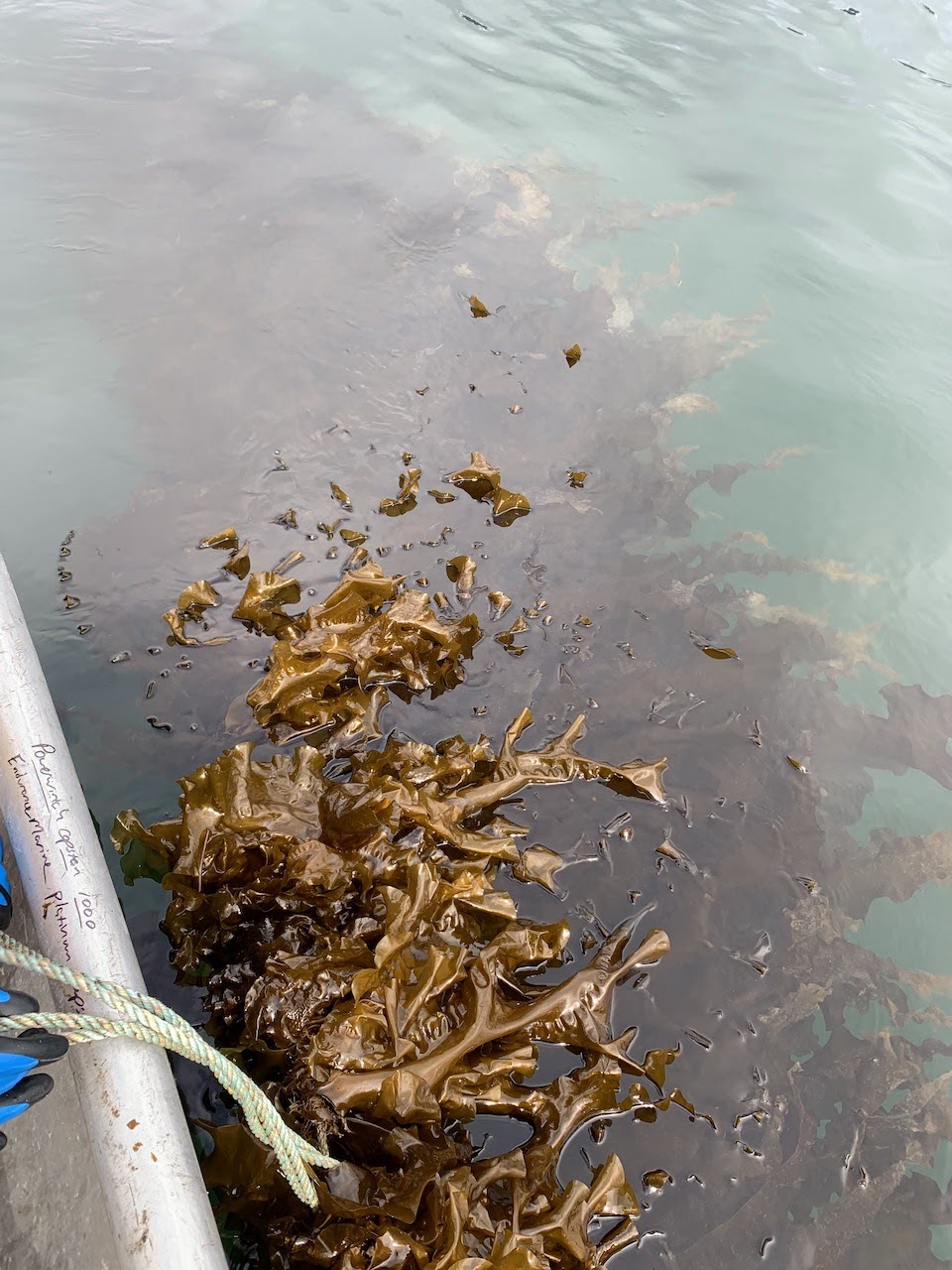
Whether on land or sea, the bane of any farmer are the organisms that nibble, spoil, and degrade one’s crops. In the sea, those are the snails who chew holes in your blades, the bryozoa that create a white film on the surface of the kelp, and the whole host of other creatures that can find a home on your kelp and degrade the quality of your harvest. As a category – the unwelcome marine organisms that grow on kelp are called biofouling.
Definition
Biofouling
The accumulation of marine organisms (such as algae, snails, bryozoa, or hydroids) that grow on submerged
surfaces, including kelp blades. Biofouling is most likely to occur in the late spring, and can quickly degrade the
quality of kelp prior to harvest.
Once biofouling starts, it’s hard to control. Biofouling on your kelp is an indication that you should harvest as soon as possible to maintain quality.
Biofouling can be present at any time of year, but it tends to become a significant concern in the spring.
As water temperatures warm, your kelp will start to grow quickly. But so will everything else! If you notice biofouling organisms on your kelp it’s an indication that you will need to harvest soon. Many types of biofouling are colonial organisms, and can very quickly grow to overwhelm your crop, and significantly degrade the quality of your harvest. The timing of when biofouling appears on your farm tends to vary by region and year. Especially your first year, it’s wise to take note of the water temperatures when you first start to notice biofouling appear on your kelp. This will give you a reference point in the future for predicting when it might occur in your region.
GreenWave Tip
During your first year farming, leave some kelp in the water as long as possible to record the types of biofouling in your area. Keep seasonal records to track when biofouling starts, and at what water temps and depths. And take a final weight measurement of your biofouled test kelp to know how much it grew past when you harvested the rest of your farm.
One strategy for avoiding biofouling is to harvest your kelp early in the season when the risk of biofouling is low because water temperatures are cooler.
The downside to this approach is that the earlier you harvest, the lower your yields. Since the majority of your growth will be in the final weeks of harvest, harvesting in April versus May can mean the difference between 3 lbs versus 10 lbs of kelp per foot. It’s generally in your best interest to wait as long as possible to harvest, but if you wait too long, and aren’t frequently checking your kelp during this time, biofouling could quickly overwhelm your crop. A significantly fouled harvest may force you to sell to lower-margin markets such as fertilizer.
Starting in April, we recommend conducting weekly farm checks to monitor your kelp. If you see biofouling start to appear, inform your buyer that you will need to harvest imminently, and start checking your lines 2-3 times per week until all the kelp is out of the water.
Common Types of Biofouling
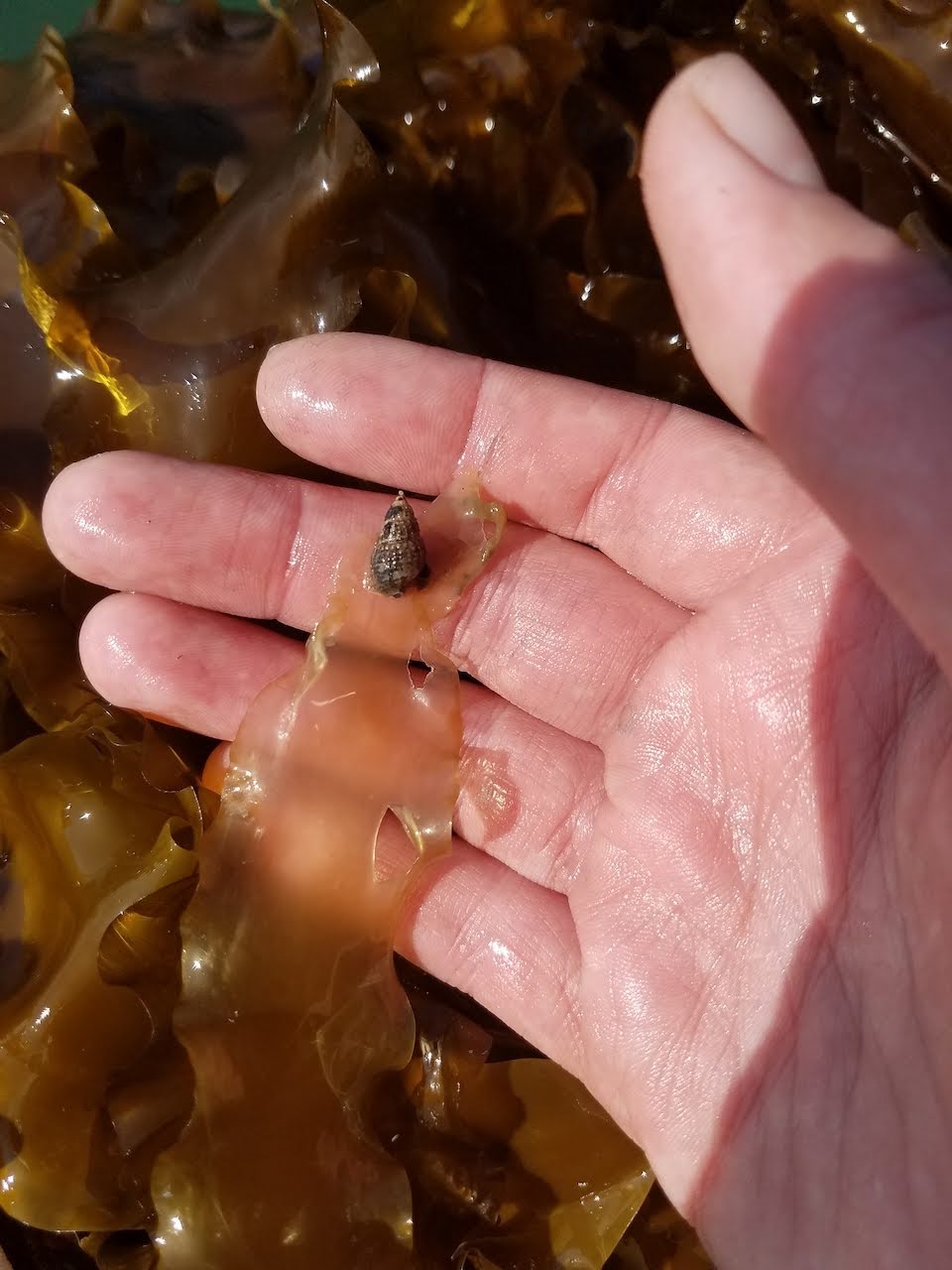
Small snails
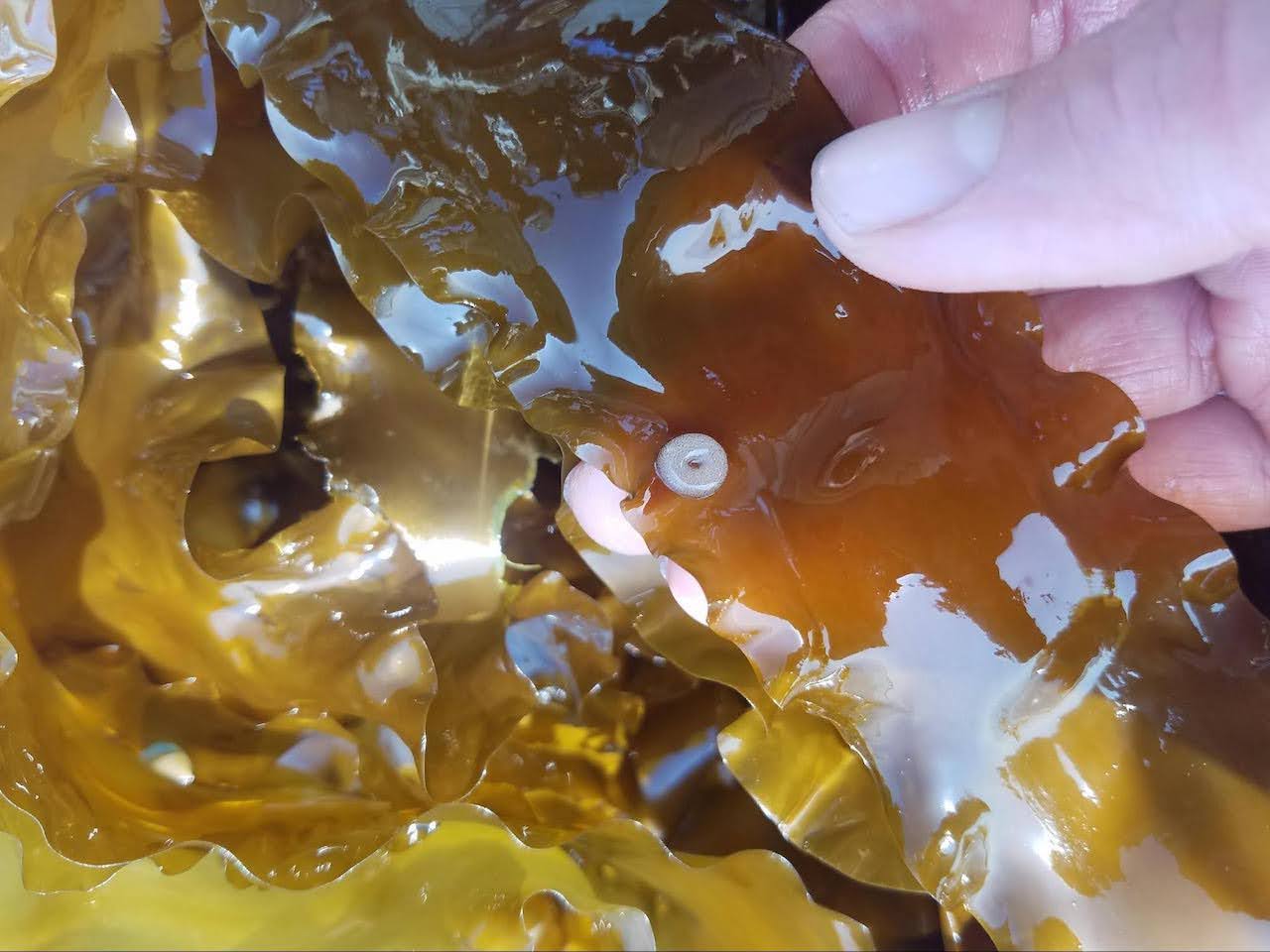
Circular coils of snail eggs
Hydroids – white or pink and feathery
Hydroids can look like pompoms in the water.
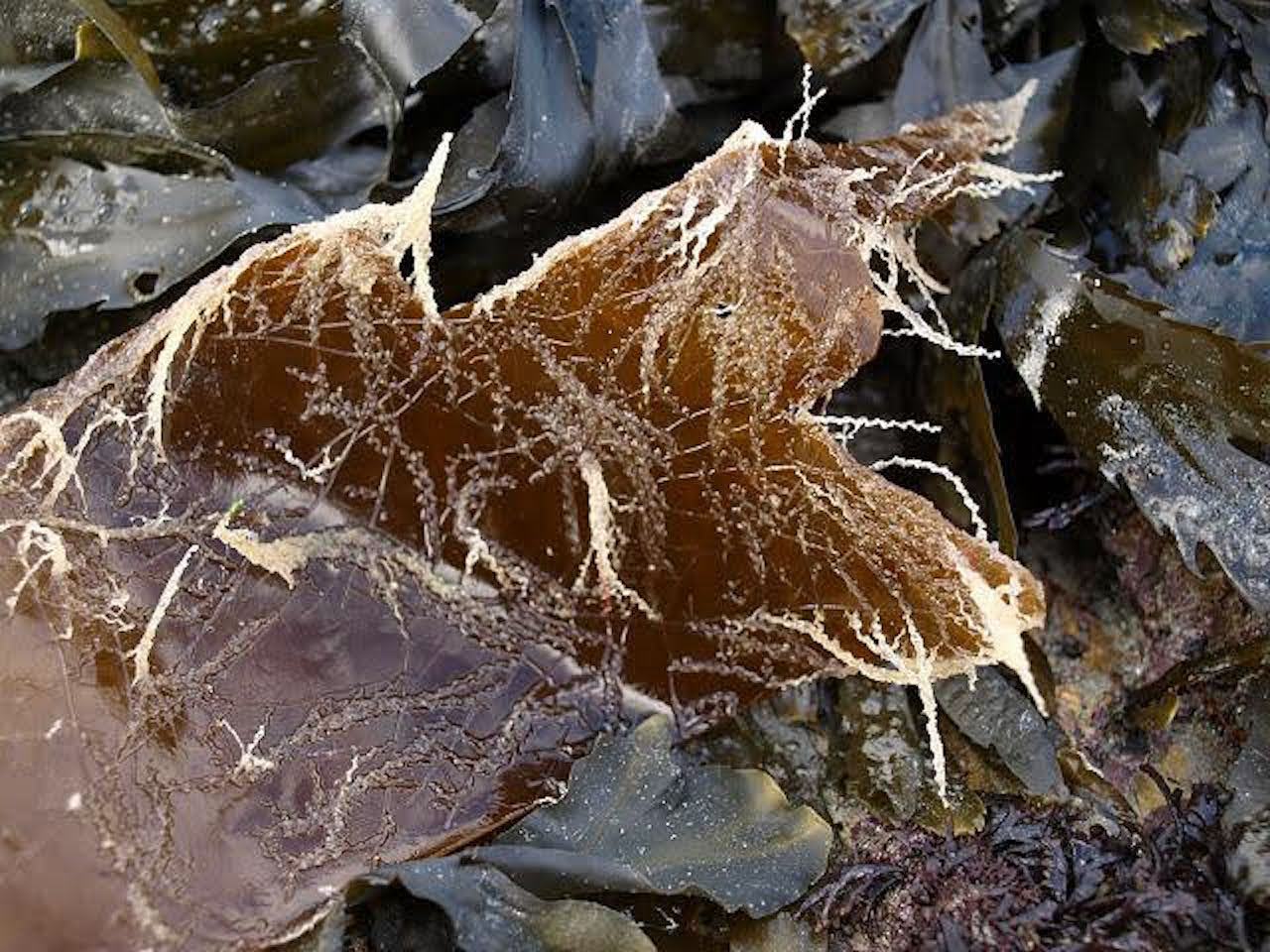
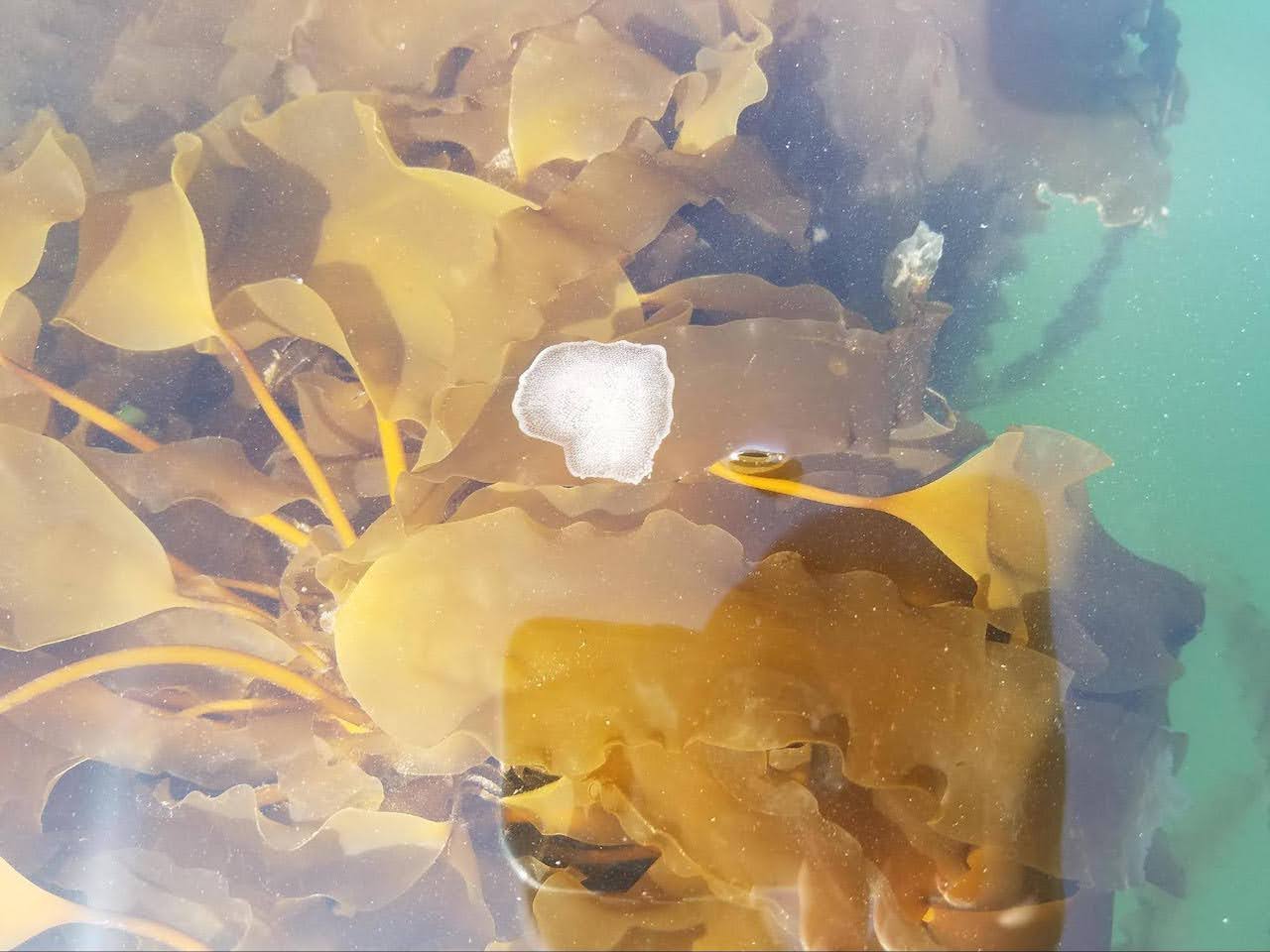
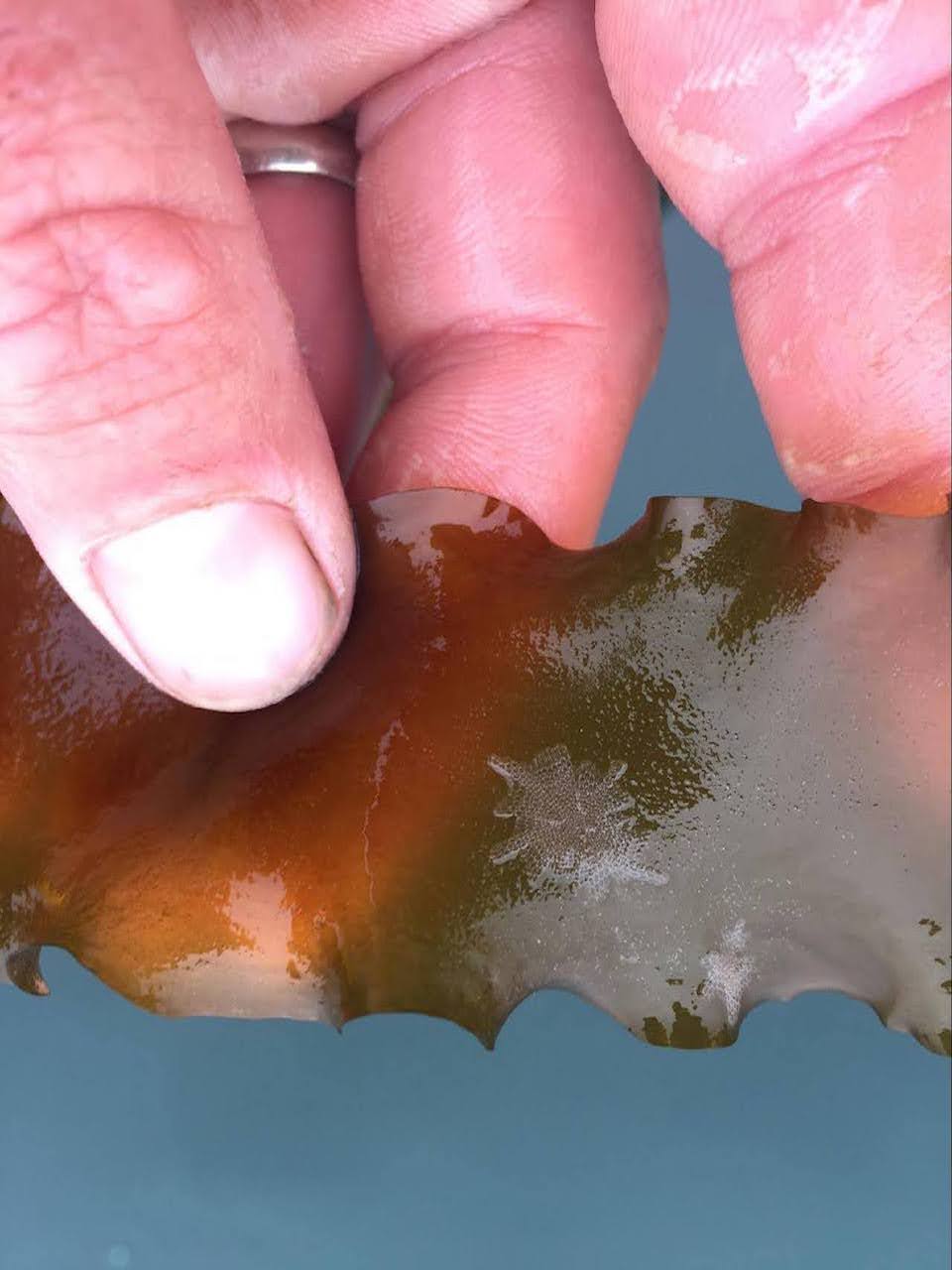
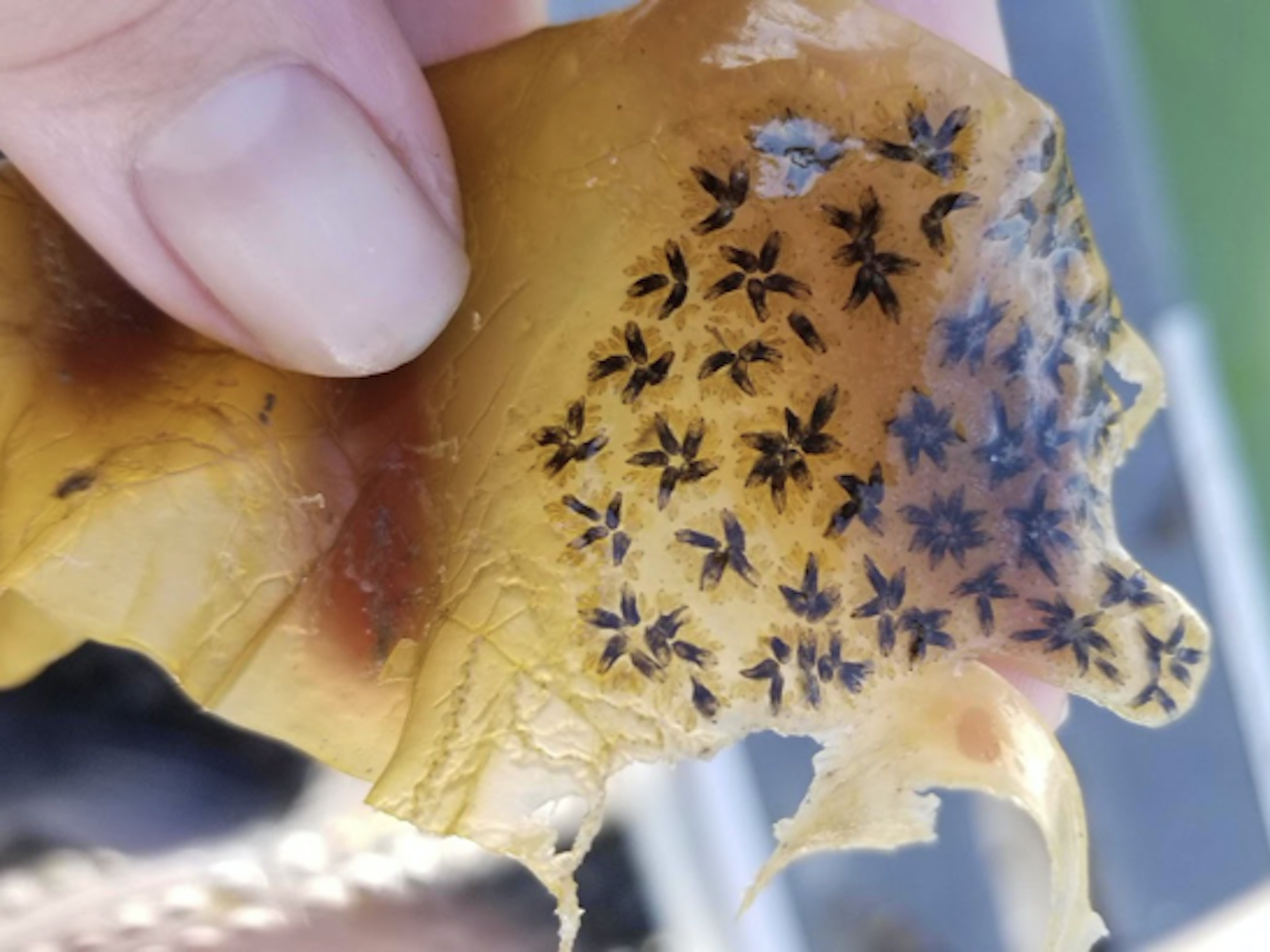
Bryozoans – a gray or white mat-like crust that can resemble a snowflake.
Byrozoans can get out of hand quickly.
Tunicates
Slip gut – a marine algae that can show up on growlines early in the season
Degraded or bleached tips – while not biofouling, bleached or degraded tips are another sign that your kelp is ready to harvest