The size and configuration of your boat
Lesson 1
Preparing for Harvest
Back to: Harvest
Choose & Order Harvest Containers
Over the winter months you’ll want to decide on your harvesting method, and order the appropriate gear and containers in advance. Some buyers will provide you with containers in which to harvest your kelp, others will require you to purchase your own. Depending on the type of container you choose to order, this could be a significant expense and impact your profit margin. It may be worth advocating for your buyer to provide containers to ensure consistent quality.
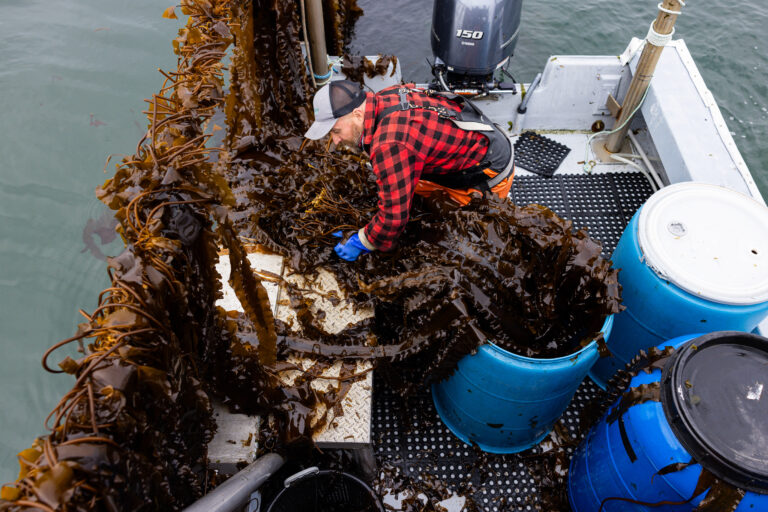
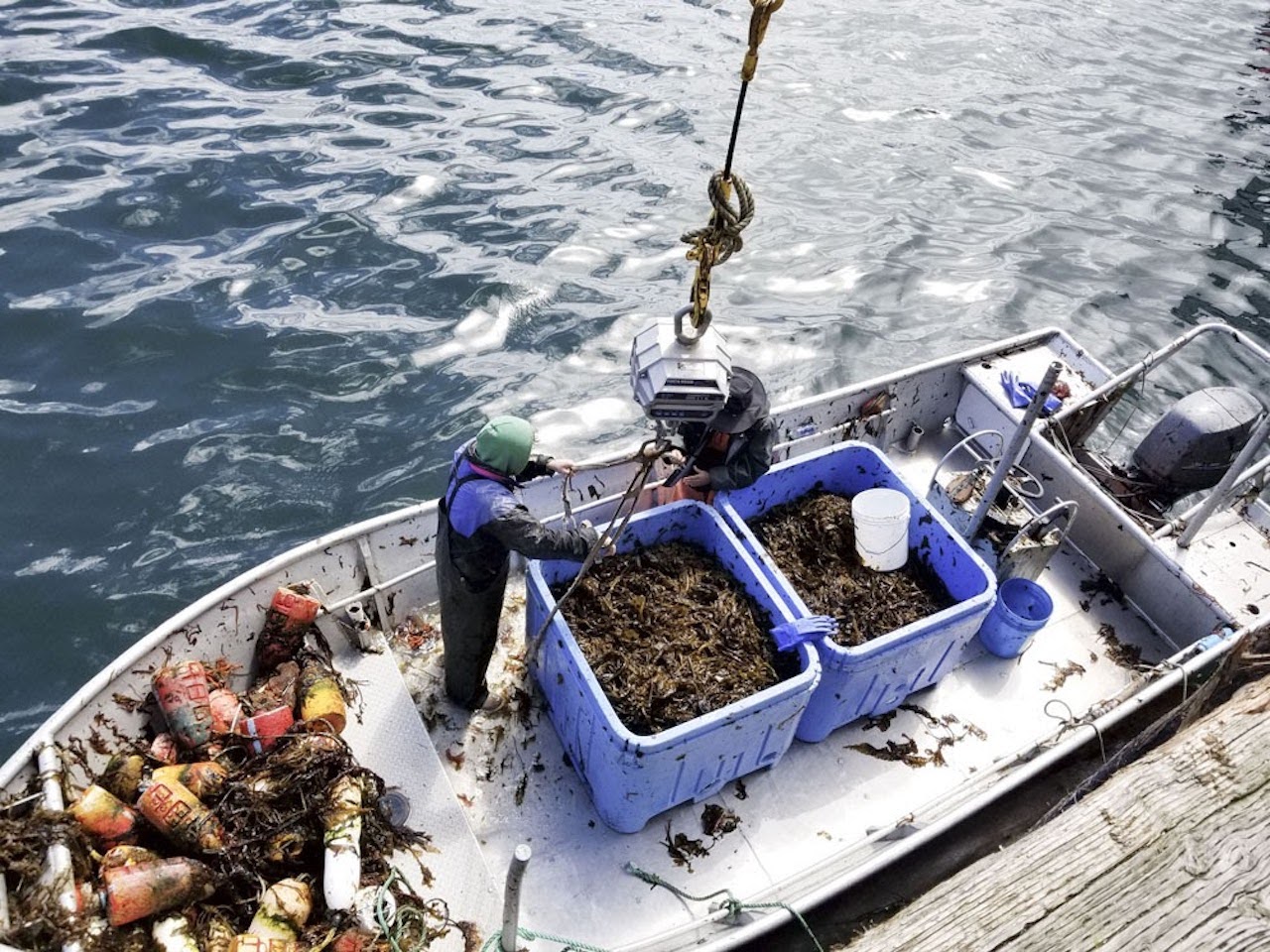
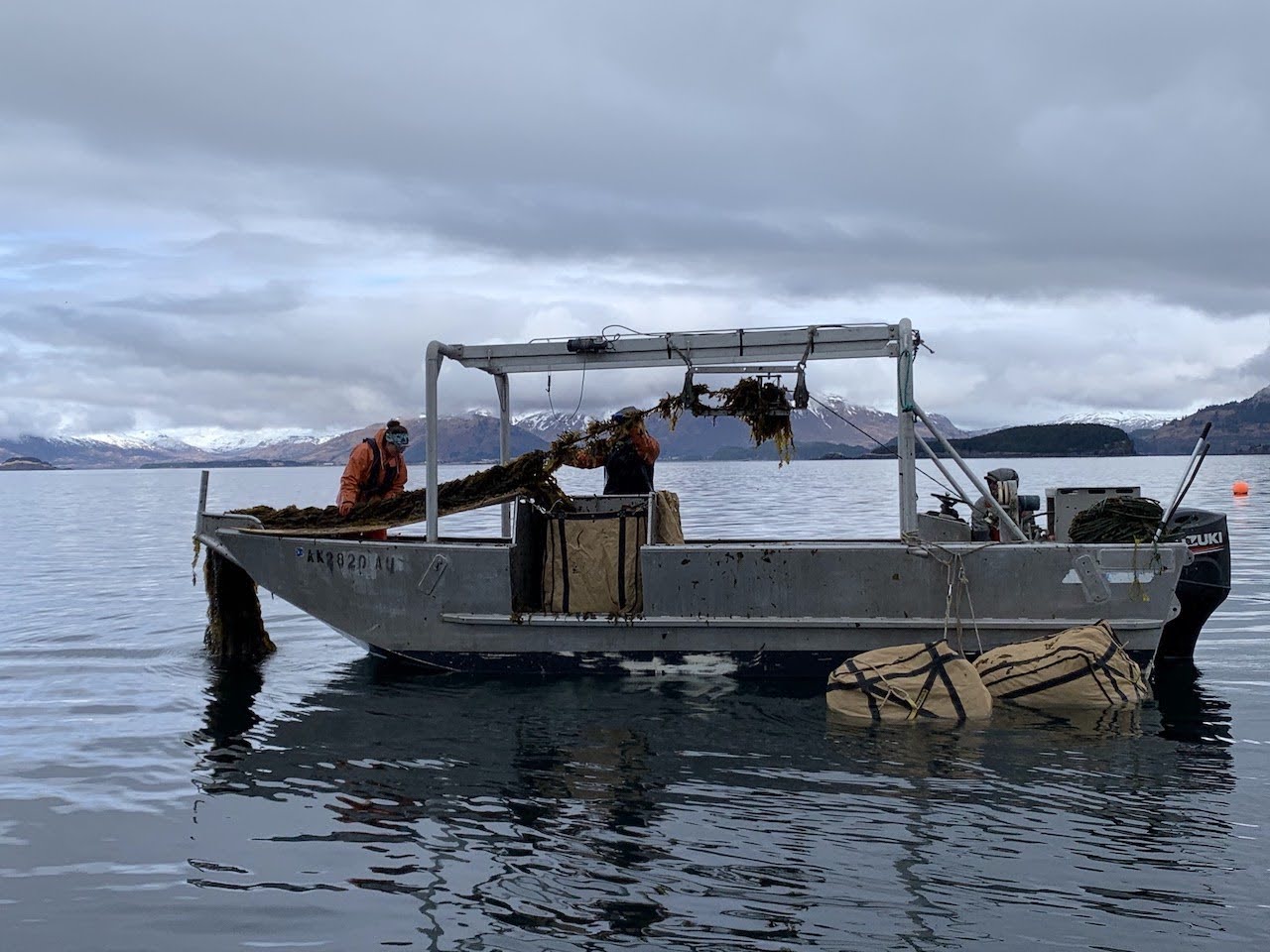
As you cut the kelp from your lines, you’ll need to immediately put it into containers for transport to the dock and beyond. There are many types of containers that could work for transporting your kelp.
The type of container you choose will depend on:
-
-
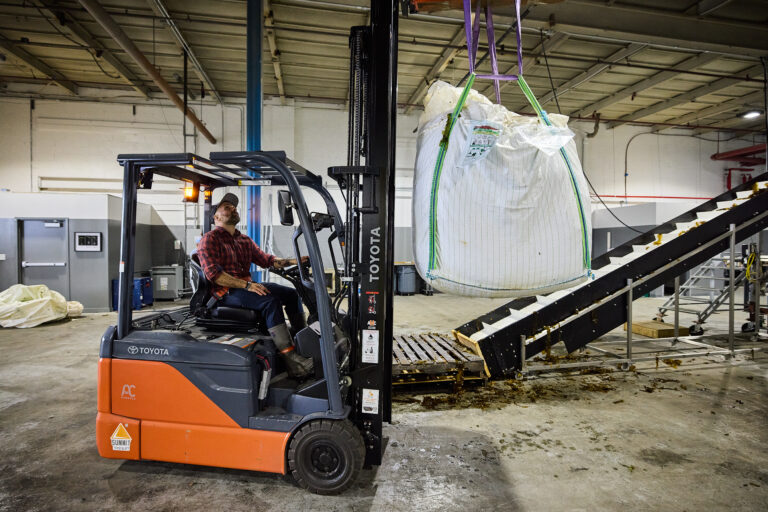
The infrastructure available at the dock where you plan to deliver
-
The requirements of your buyer
Pre-order necessary equipment for harvest:
-
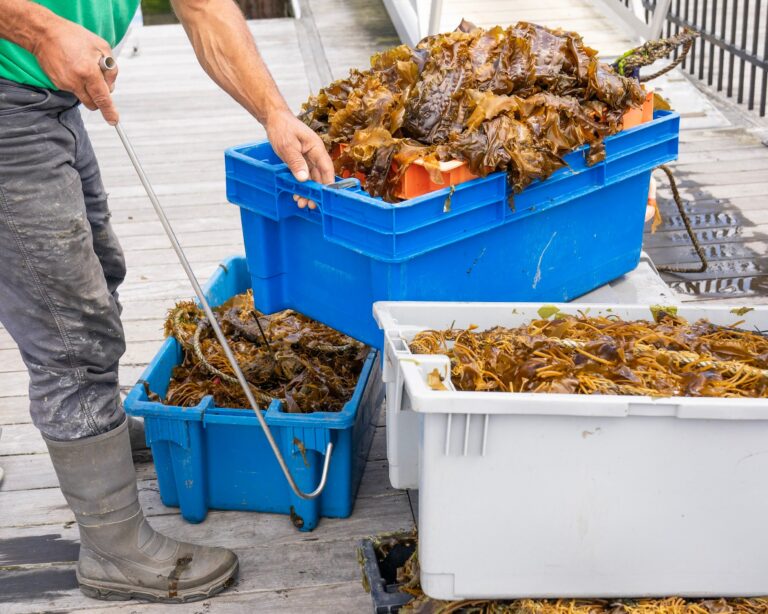
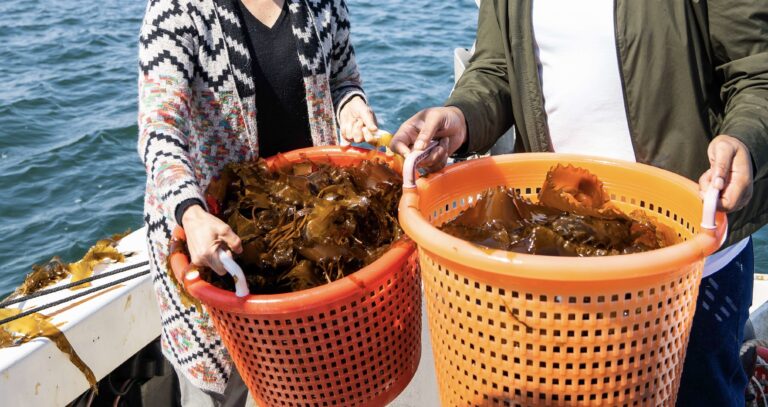
Containers (totes, bins, baskets, or bags)
-
Knives (sharp, serrated and long blades work best)
-
Packaging and labels
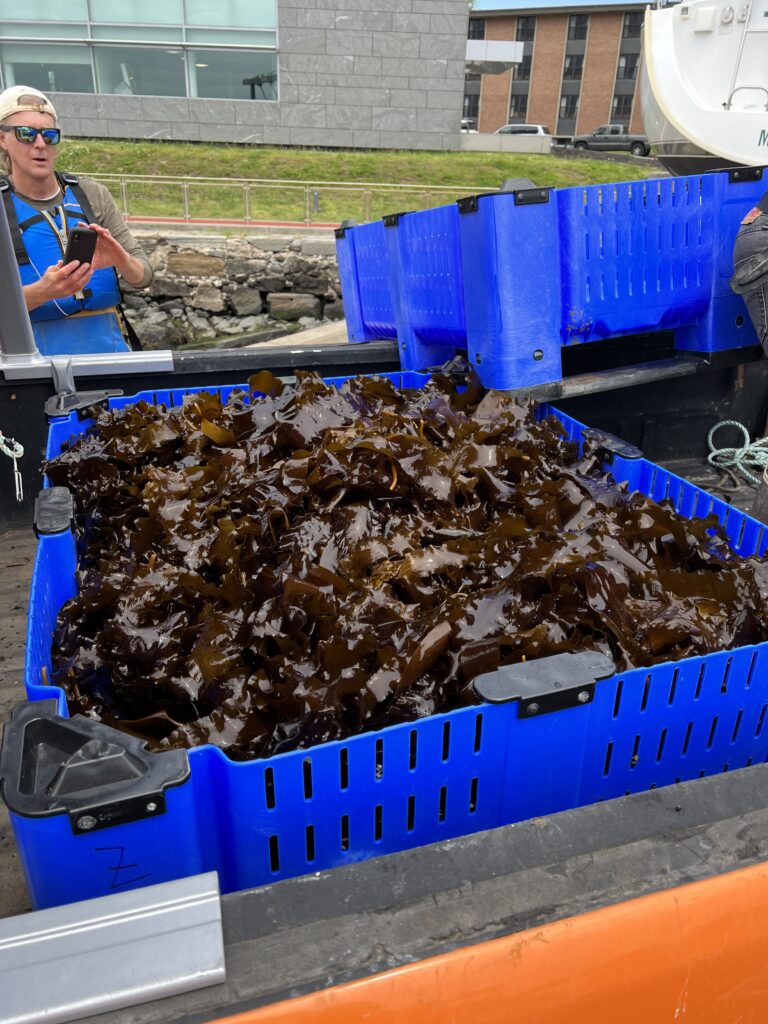
In general, you’ll want to make sure that your containers are food safe, easy to clean, easy to move, contain holes or perforations to allow for drainage and airflow, and configured so you can safely lift them to shore – either by hand or with the infrastructure available at your port.
Scientific studies conducted by QFreshLab and GreenWave in 2021 indicated that freshly-harvested sugar kelp requires access to oxygen to maintain quality. You can read more about this in the Quality Control lesson, but the implication is that the most important aspect of containerizing your kelp is to keep it “fluffy” and cool. Fluffy means not over-packing. If you over-pack, then the compression weight of the kelp, and the lack of oxygen at the center, can result in unsellable “mushed” or fermented kelp.
Additional research is needed to understand precisely how much oxygen is required to maximize shelf life. In the meantime, our guidance is to choose containers that ensure adequate airflow through one or more of the following methods.
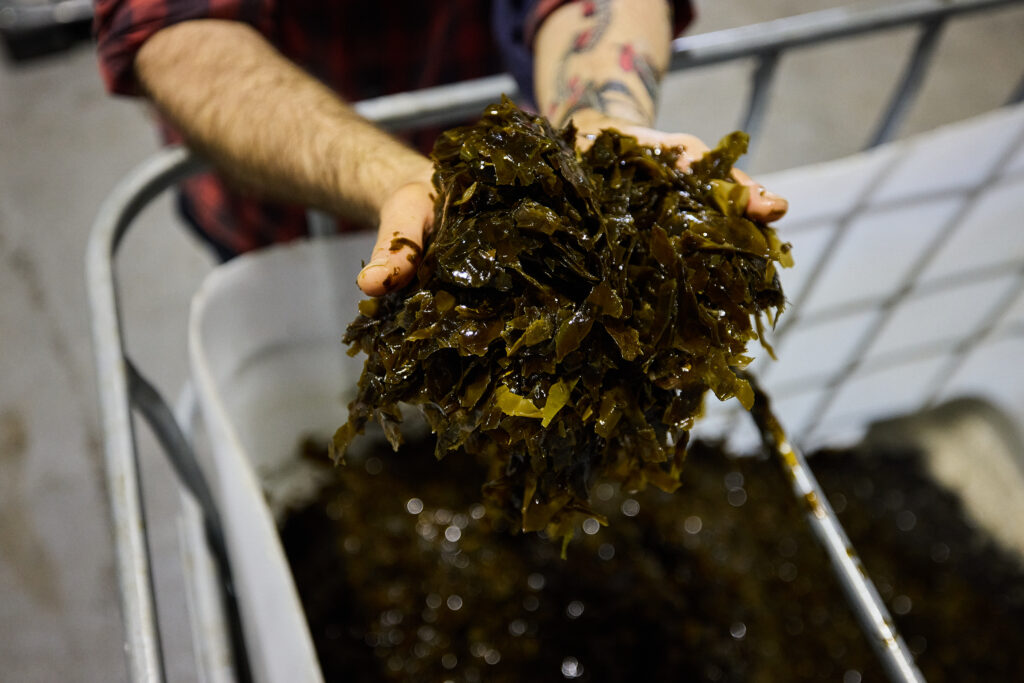
To maximize access to oxygen:
-
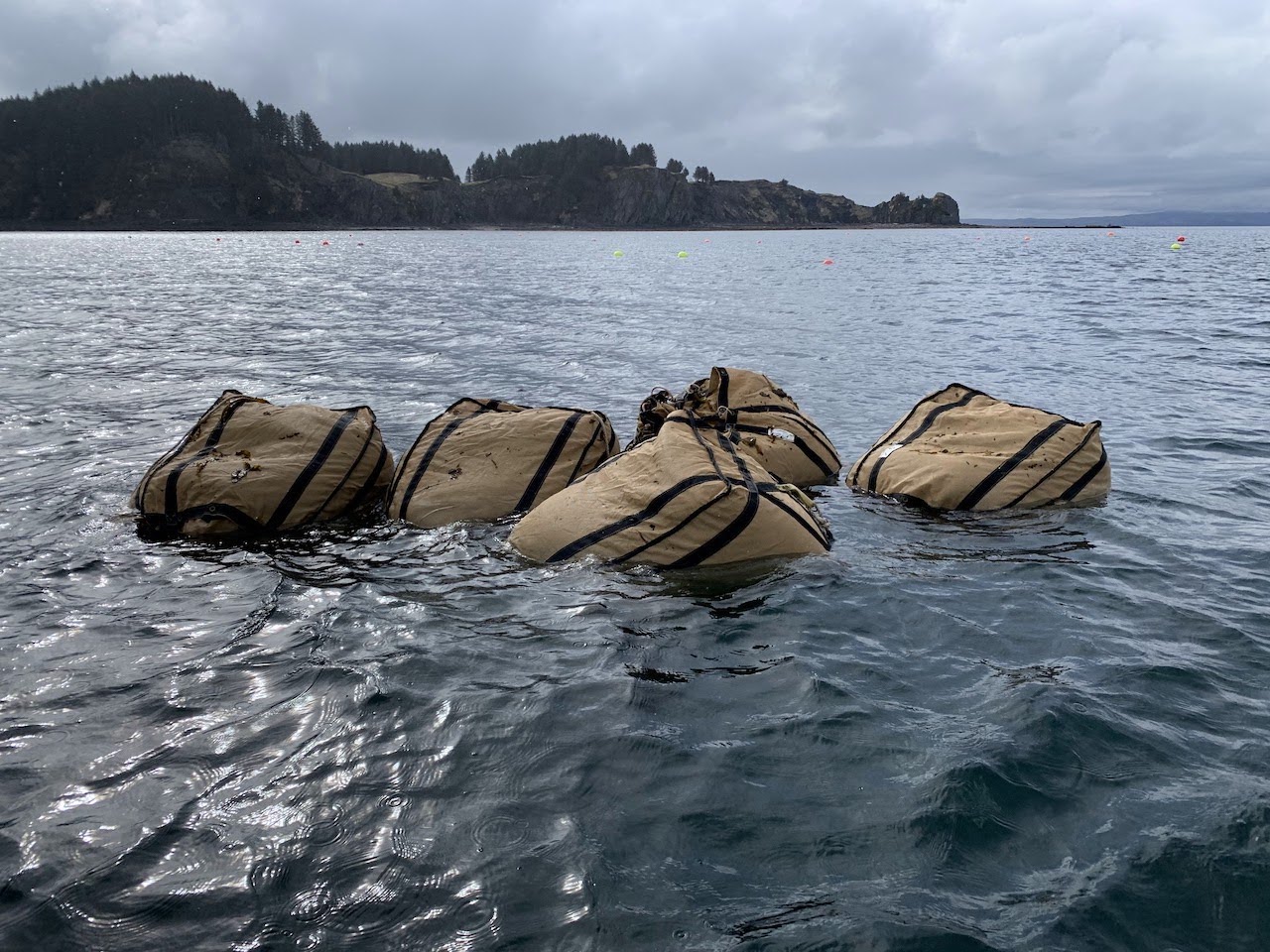
Store sugar kelp in mesh bags in the ocean (which has oxygen dissolved in it) for as long as possible before bringing it onto the harvest vessel
-
Use more, smaller containers rather than fewer, larger containers
-
Use perforated or vented containers
-
Always keep kelp “fluffy” rather than packing it down
Common container types used for harvesting kelp