Using a sharp and serrated blade makes harvest easier and more efficient. Some farmers prefer to use a short but sharp Victorinox paring knife. Others like a longer blade, such as this 12” serrated Dexter knife.
Lesson 4
Harvesting Techniques
Back to: Harvest
Maintain Quality, Maximize Efficiency
Throughout the entire harvesting process, your goal should be to maintain high quality while maximizing the efficiency of your system. Before you start harvesting, make sure to speak with your buyer to discuss what level of quality they are expecting and whether there are certain cutoff points that would constitute a lower grade and price for your kelp. For example, some buyers may request that you trim the ratty or degraded ends off your kelp during harvest, while others may not. Get specific about the details (percent coverage of allowable biofouling, whether stipes should or should not be included, etc,) so that there aren’t surprises during delivery.
Before You Start
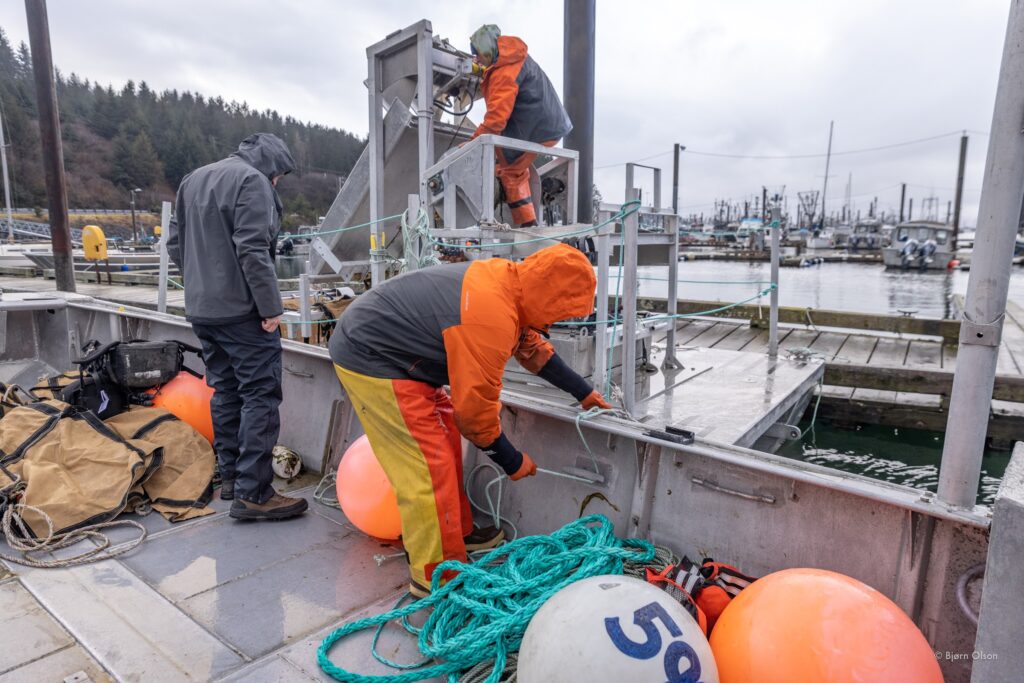
On the day of harvest, make sure you have all the equipment you need on hand. Check the wind and the tide to know which direction you’re likely to get pushed as you work your line. Sharpen your knives, and do a blade count of all the knives that are on your boat. In the chaos of harvest, it’s possible to lose track of a knife or accidentally drop one into a container of kelp. This could pose a major safety risk for the processor. Make sure to repeat the blade count at the end of the day to ensure all knives are accounted for. You’ll also want to wash your containers before you start harvesting. Rinse them in the ocean or with a deck hose, and if they look oily or greasy use a scrub brush to clean them out with soap and water.
Rinse and Trim
As you’re pulling your kelp onboard, it can be helpful to rinse off any loose sediment or biofouling by either dunking sections of the line nearest to the boat before lifting it onboard, or by hosing it down with a deck hose.
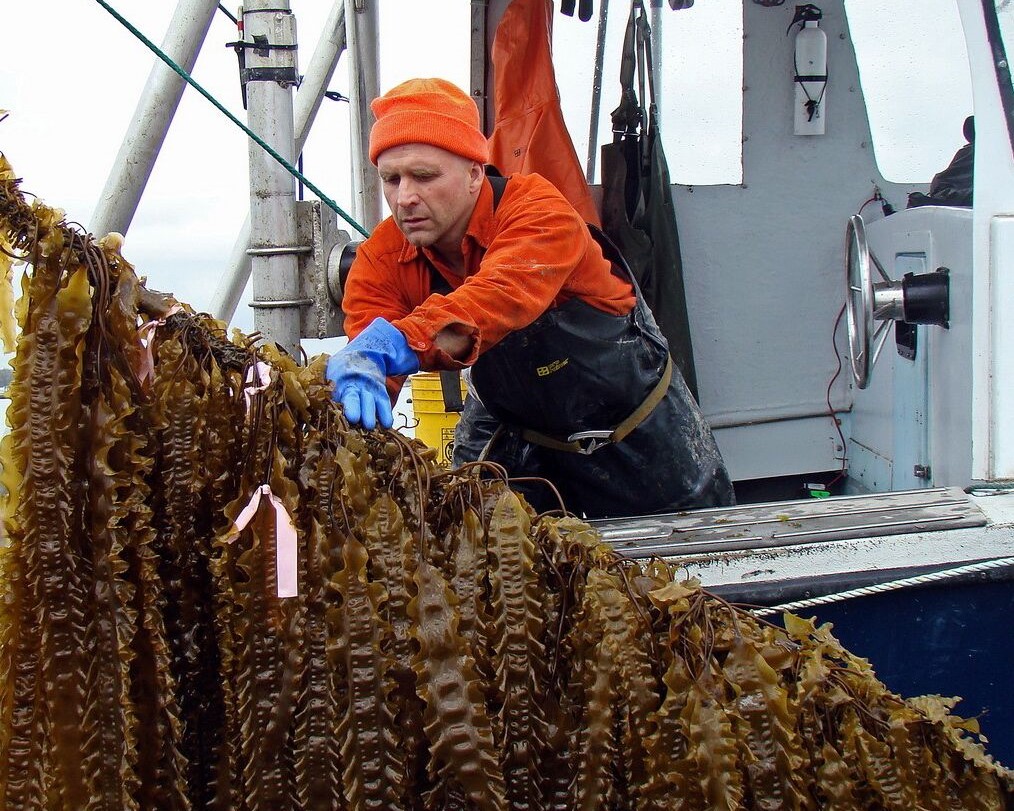
Depending on how degraded the tips of your blades look, you may want to make a preliminary cut along the bottom of your blades to trim off the fouled ends. Do this in several foot sections as your kelp is hanging from the growline overhead. Separate these discarded tips and other biofouled portions of the blade, and save them to be used as fertilizer or for other non-food use.
Industry Tip
Cut Below the Holdfast
To remove your kelp from the growline, cut through the stipe approximately 3 – 6 inches below the growline, between the holdfast and the blade of the kelp. Discuss with your buyer if they want you to include the stipe in your cut, or leave it on the line and harvest only the soft tissue of the blade. It’s important to leave the holdfasts on the line because they can often house marine organisms, and will decrease the quality of your kelp. Additionally, you want to be careful not to accidentally cut any seed string into your harvest, as this can seriously harm the processing machines.
GreenWave Tip
Stipes are the thin stem-like portion of the kelp between the holdfast and the blade. They have a different, crunchier texture than the rest of the kelp. Sometimes you can market your stipes as a specialty product to chefs or others who may wish to make them into kimchi or pickles. On sugar kelp and ribbon kelp, stipes aren’t typically very long, but on bull kelp they can be 20-feet long or more. If you’re harvesting bull kelp, separate the blades and the stipes to diversify your sales opportunities.
Pack Kelp into Containers
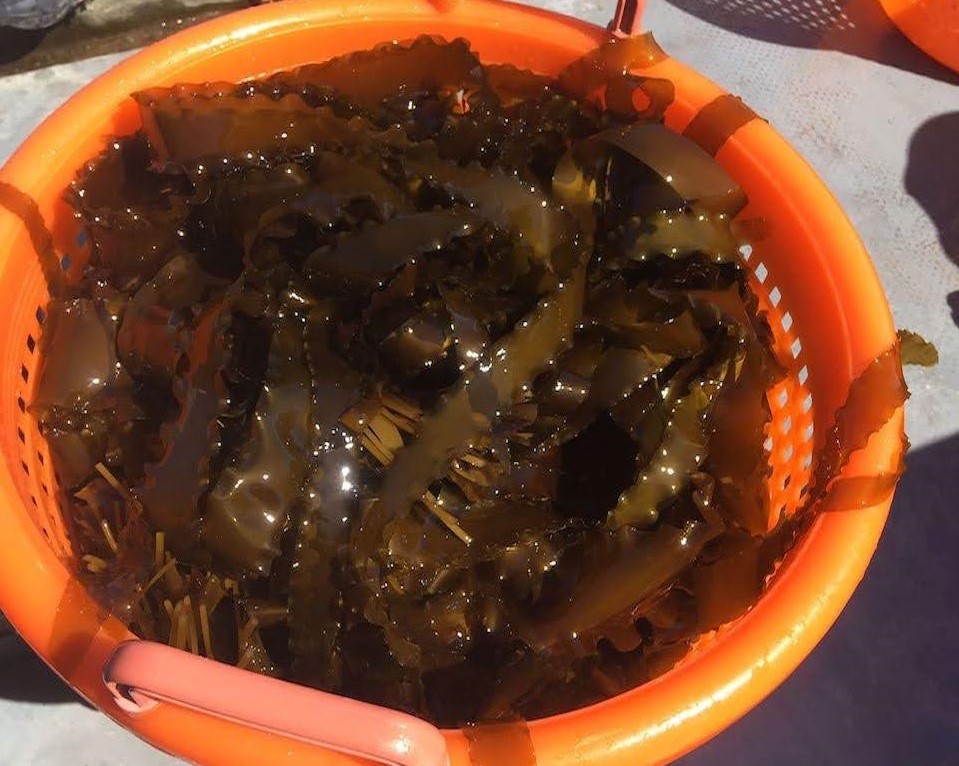
As you cut the kelp from the line, you’ll want to quickly place it into your chosen container. As you do this, make sure to keep the kelp light and fluffy. Don’t overload your containers! If a bin or bag is exhibiting signs of squishing, take kelp out so that it has space to breathe. Be careful not to stack bags or totes on top of each other unless they are designed to stack and the weight is supported by the structure of the container. We’ll discuss more considerations for maintaining quality during this stage of post-harvest handling in the next lesson.
In case you missed it, review our recommended guidance on choosing a container here.
Strip the Holdfasts
After you’ve cut the kelp from your lines, you’ll be left with a growline, wrapped in seed string and covered with holdfasts. At some point – either during your harvest process or after – you’ll need to remove the holdfasts and seed string from your line. There are a couple of strategies to do this. Some farmers have devised a stripping mechanism that integrates into their harvest system to help remove the holdfasts from the line as it is routed out of the water. Other farmers do this manually by using an adjustable wrench or a paint scraper with a groove in it, and running it down the line to strip off the holdfasts. Whatever your chosen system, at some point you will likely need to return to your growline and use a sharp knife to cut off the seed string.
